They Told Her Girls Can't Climb Mt Rinjani. She Did It Anyway.
Meet Katni, the first female guide in Lombok.
Lombok often gets called the "chiller cousin of Bali", with quieter beaches, less crowded surf spots. But Lombok isn't Bali. It's its own place, with its own culture - and a long way still to go on what women here are allowed to do.
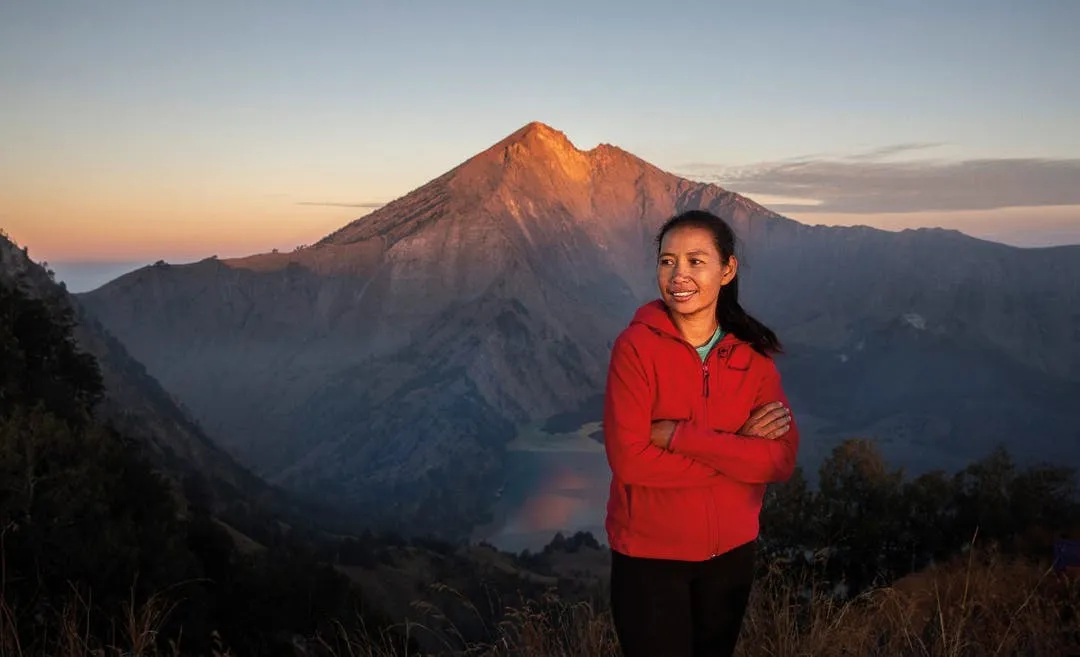
This is where we first heard about Katni. She broke all glass ceilings in Lombok when she decided that she was going to climb Mount Rinjani at a time when only men were allowed to do so.
"It's too hard for a girl"
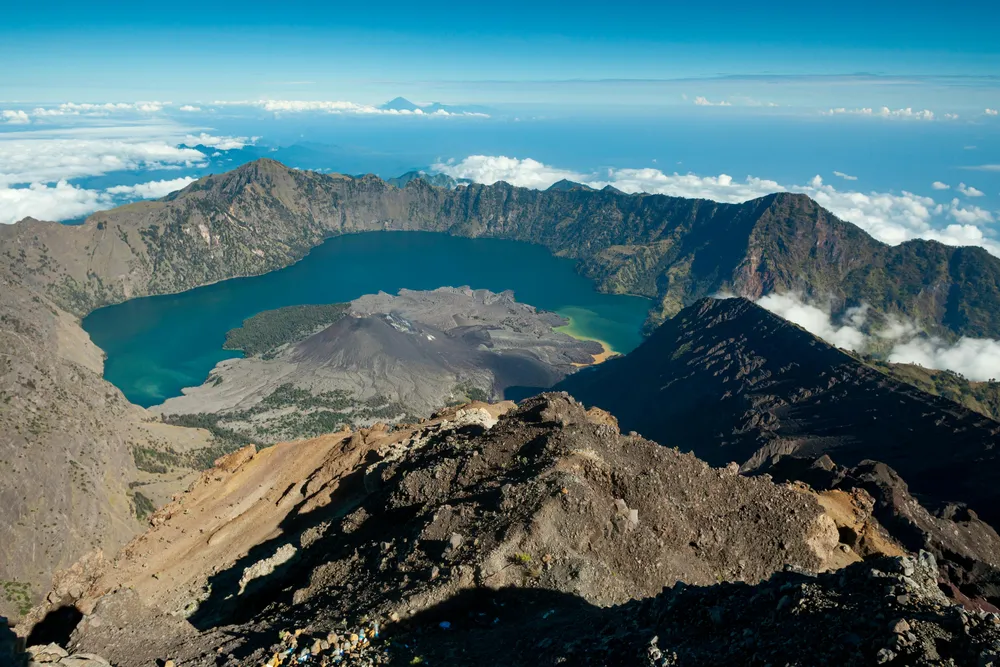
Katni grew up in a village in Lombok where Mt Rinjani is sacred. The mountain is everything to the Sasak people — and for as long as anyone could remember, climbing it had been men's work. Guiding hikers up was men's work. Earning your own money was men's work. The path for a girl was clearly laid out: marry young, stay home, raise children. Don't go up the mountain.
But Katni had been watching. Watching the men in her village come back from guiding jobs with money in their pockets. Watching the women stay home, with no income of their own, no real say. She was sick of it.
When Katni was 15, she told her parents she was going to climb Mount Rinjani anyway.
"My parents said, 'You can't do that, it's too hard for a girl. You should stay at home, give birth and look after the kids.'"
This wasn't unusual advice — it was every parent's advice in the village. Lombok is still deeply patriarchal today. Kidnap marriages, where a young woman is taken from her family and effectively forced into marriage, still happen here.
She climbed anyway.
Turns out, the climb wasn't the hard part
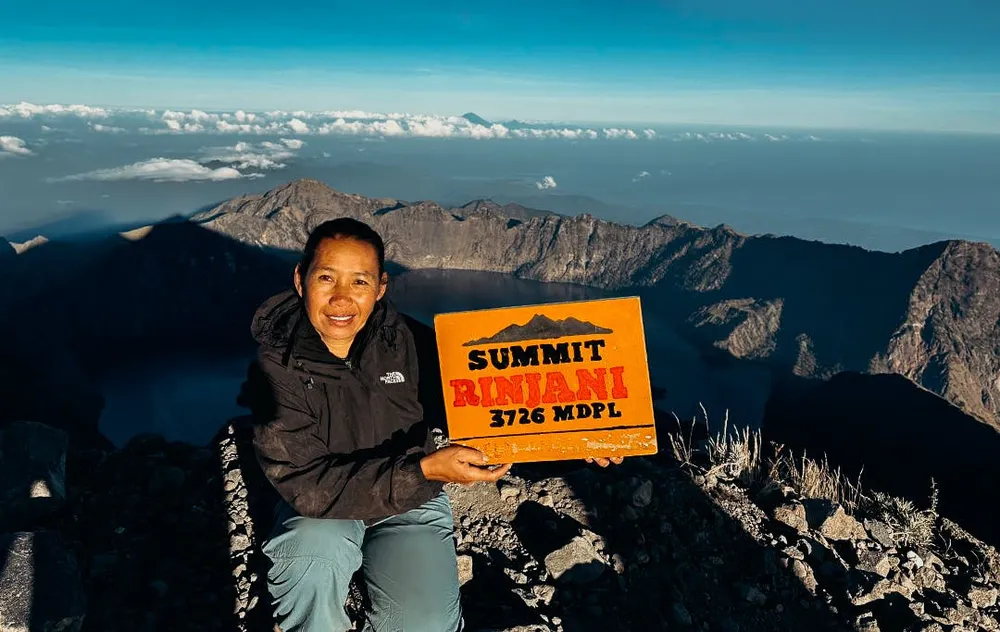
People sometimes assume the hard part of being the "first" is the moment itself. The summit. But for Katni, the harder fight was every single day after her summit. The village turned on her.
Katni remembers:
"People started asking my parents why I was allowed to be a 'naughty woman. I was scared of what they might do to me."
In a place where kidnap marriages still happen, what she had done wasn't just bold — it was the kind of thing that could have serious consequences for a young woman.
She kept climbing anyway. Each climb made her stronger. More sure. And the more she climbed, the more she wanted what the men around her had: to guide travellers up Rinjani, earn from it, build a life from it.
So she did. She started taking guiding work. There was no template, no senior woman guide to ask, no one in Lombok who had done this before. She figured it out one trip at a time.
"I wasn't trying to fight men. I wanted to help families."
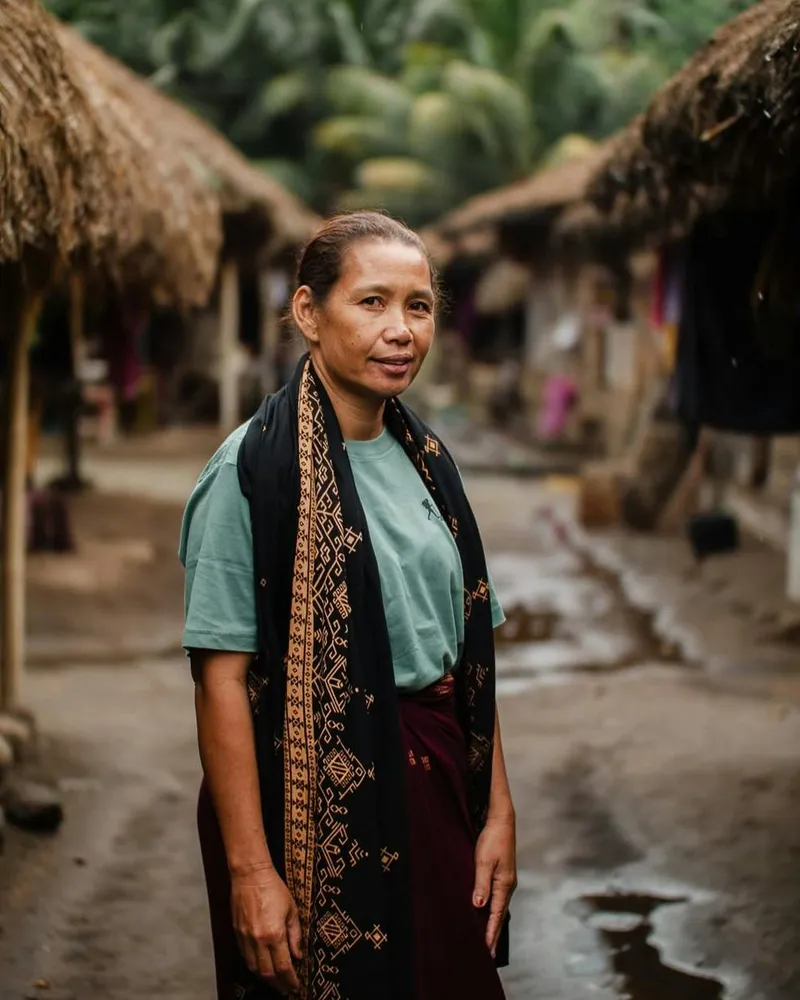
The pushback got louder. Men in her own community questioned her directly.
"Why are you encouraging women to be independent? You want to fight the men?" they asked.
Katni had a clear answer.
"But I wasn't trying to fight men. I wanted to help families. If something happens to the man and the woman can't work to earn money, what will happen?"
From the first to leading 70 women
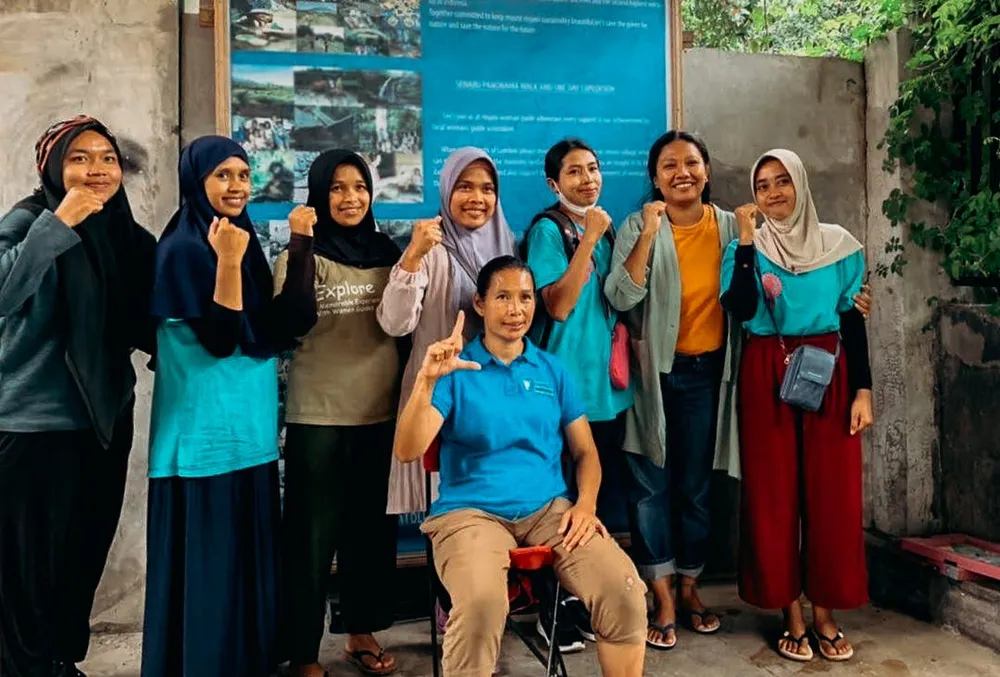
Being the first wasn't enough. If it was only Katni who managed to break barriers, it would still leave every other girl in her village with no path.
So Katni founded Rinjani Women Adventure — the only female-owned trekking company on the mountain — and started training women from her community to guide.
One became ten. Ten became 60. Today, Katni has created jobs for over 70 women.
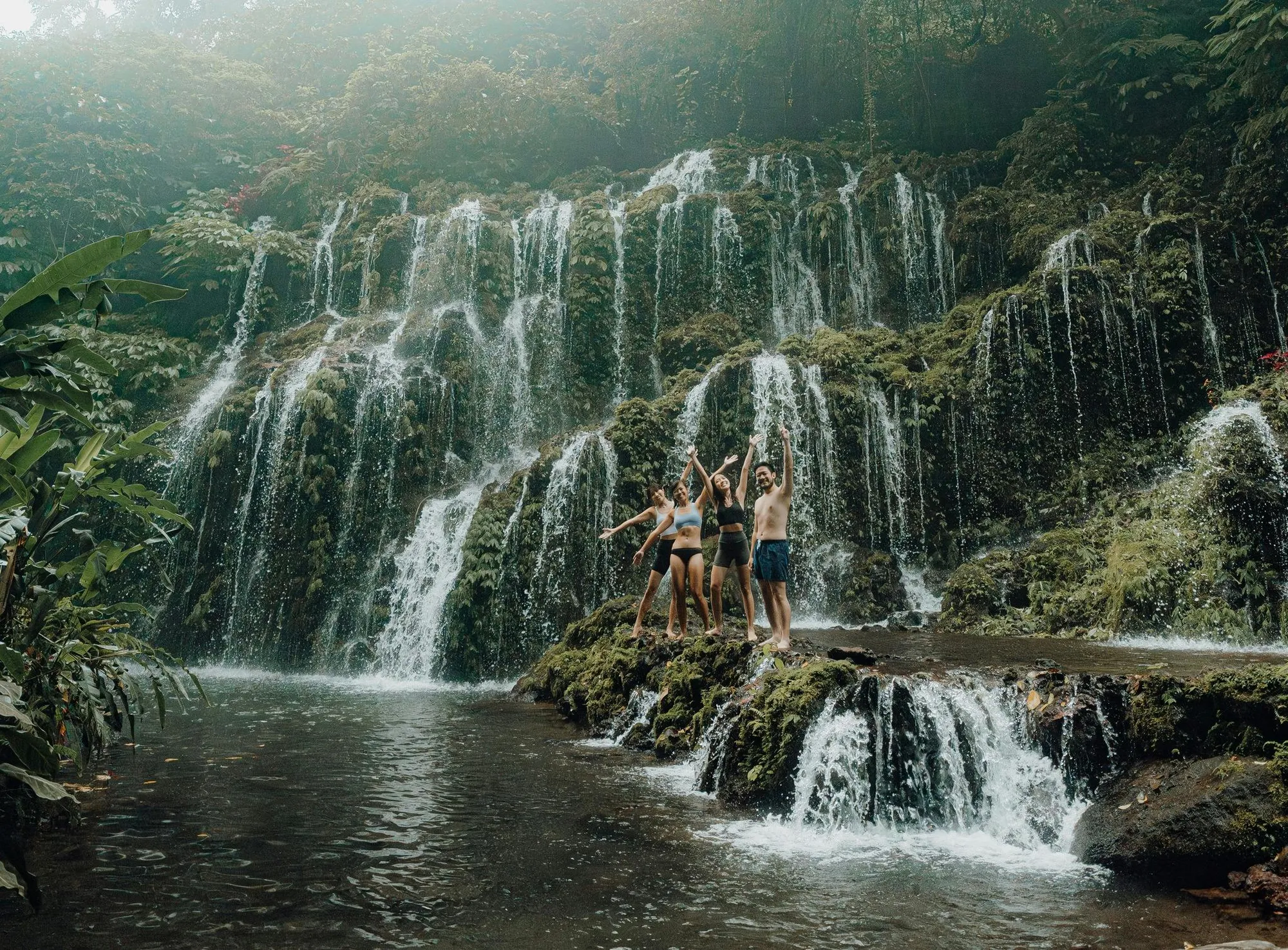
When our team trekked with them, we loved them. They were patient, knowledgeable, never rushed. Our guide Umi took a lot of initiative to introduce everything. A second guide on the same trek was a woman in training - the next one in line.
What changed in the village
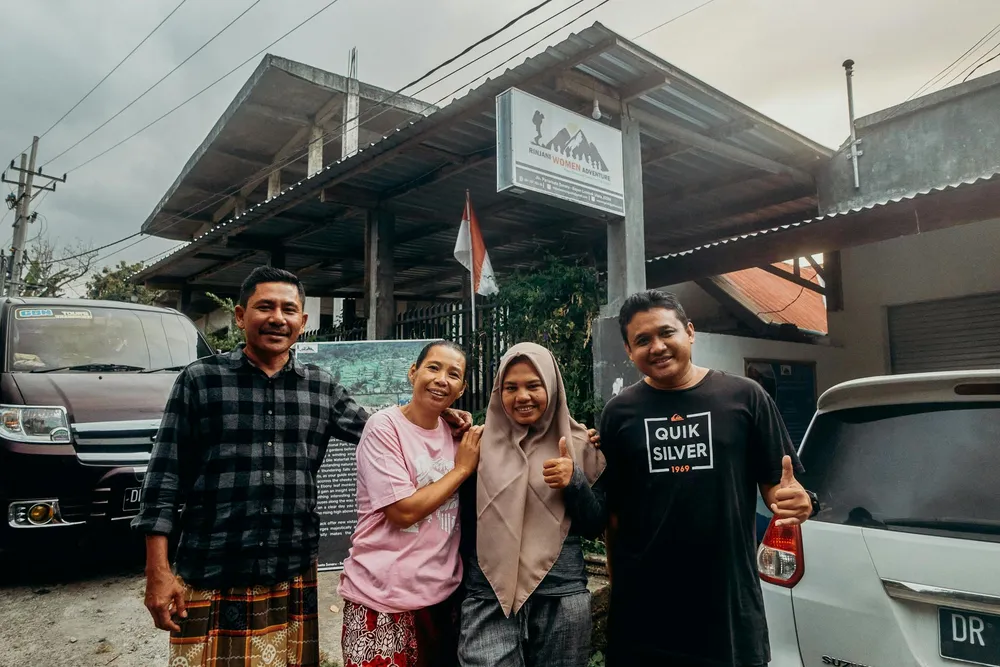
As women started bringing home money, something slowly shifted in the village. The men stopped staring. Those who once said women had no business being guides started cheering them on. Some of them now actively help — connecting their daughters and nieces to her training, telling other men in surrounding villages that the women on the mountain are doing real work and doing it well.
Girls who would have been pushed into early marriages now have a different option. They can train with Katni. They can earn. They can wait.
And mothers who once had no choice but to leave Lombok to find work abroad — leaving their families behind for years at a time — can now become guides and stay home with their kids.
"We're making changes slowly, because we want to respect our culture. It's not easy, but we're starting to live as free women."
As a women-led team at Seek Sophie, Katni's story is especially powerful for us. When we're kids (and even as grown-ups), we're told no over and over again. We're told to forget our dreams. But if we trust our inner voice, if we trust our dreams - what magic could happen? When we believe that a single person has the power to make a difference, maybe that becomes true.
Hike with Katni
When you trek the Rinjani foothills with Katni's team, you're hiking with women who weren't supposed to be there at all. Every step of your trip goes directly behind a movement that's changing what's possible for the girls in this village.
Ready to hike with Rinjani's amazing women guides? Book your Seek Sophie Rinjani Women Adventure here!

![Mout Rinjani: Everything You Need to Know + Packing List [2026]](https://d18sx48tl6nre5.cloudfront.net/webp_xl_5e4155689975f1d141f9b7e57dde5ad5.webp)
Mount Rinjani Experiences FAQs
What is Mount Rinjani?
Mount Rinjani the second highest volcano in Indonesia and one of the most beautiful mountain climbs in Southeast Asia! It is very challenging so you should definitely train up for the hike.
Mount Rinjani is an active volcano located on the island of Lombok, in Indonesia. With an elevation of 3,726 meters (12,224 feet), it is the second-highest volcano in Indonesia and a popular destination for trekking and hiking. The mountain is known for its stunning views, including the crater lake of Segara Anak, and its unique flora and fauna.
How can I climb Mount Rinjani?
Climbing Mount Rinjani requires a certain level of fitness and experience, but it is possible to do so with the help of a guide. The most popular route is the Senaru route, which takes approximately two to three days to complete. Along the way, climbers will encounter a variety of terrain, including steep inclines, rocky paths, and dense forests. It is recommended to hire a local guide or join a tour group, as the trail can be challenging to navigate and the weather can change quickly. Mount Rinjani may also be closed off for climbers at certain times of the year - for e.g. if certain trails need to be repaired, so you should definitely plan in advance to go and check with us on the route beforehand!
What can I expect to see on Mount Rinjani?
We've done most of the mountains in Southeast Asia and we think that Mount Rinjani is still one of the most beautiful treks there is. Besides being famous for how difficult it is, Rinjani has one of the most beautiful views to offer in Indonesia. Even if you just make it up to the crater rim and not the summit, the views there alone are so worth it.
The peak of Mount Rinjani offers stunning views of the surrounding landscape, including the Segara Anak crater lake, which is located at an altitude of 2,000 meters (6,562 feet). The lake is known for its turquoise-blue color and is believed to be sacred by the local Sasak people.
But even if you don't make it to the summit, there are actually several crater lakes across the mountain which makes it a really picturesque climb the entire way, not only just at the summit.
The mountain is also home to a unique ecosystem, with a variety of plant and animal species, including monkeys, deer, and birds.
Do I need to train to climb Mount Rinjani?
As the second highest volcano in Indonesia, Mt Rinjani is considered a tough trek even for experienced hikers. Don't make the same mistake we did, we hiked 3726m to the summit without any training at all, and our legs almost gave way. We couldn't walk properly for a week... 😂
The summit climb is the most brutal bit, because it's super steep and slippery. Oh and you'll be doing it in the dark, before sunrise. It's basically two steps forward, and one step back - in complete darkness! On the way down when your calves are aching, you get to run and slide down from the summit though!
If you're reasonably fit (2 hours of cardio regularly once a week), you may still be able to do the trek without training. But it's a lot more fun if you train for it and you're able to enjoy it rather than just focus on survival! So if you're up for training, we would recommend starting 3-6 weeks in advance -with cardio twice a week and strength training 2-3 times a week.
What are the different hiking routes at Mount Rinjani?
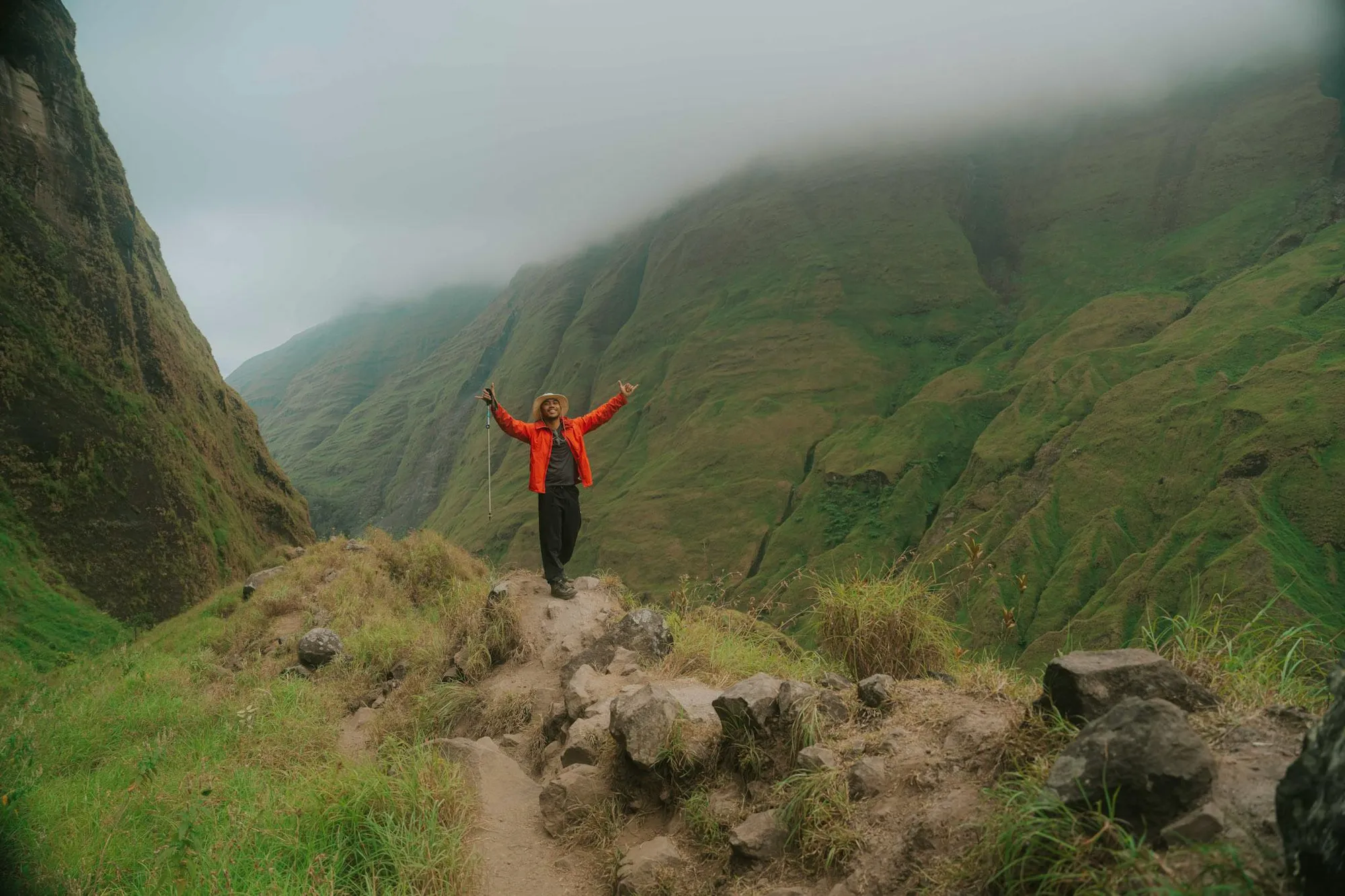
There are two main trekking routes - one that takes you up the summit (Sembalun route), and the other that is easier and only takes you to the crater rim (Senaru route). Both take two days, but the Senaru crater rim route is suitable for beginner hikers whereas the Sembalun summit route is more suitable for intermediate hikers. We've done both and even if you just make it up to the crater rim and not the summit, the views there are still very worthwhile!
Route 1: Senaru trek (crater rim - easiest but no summit) - 2D2N
The Senaru trek is an easier trek that doesn't go to the summit, but instead goes to the beautiful crater rim. The trek starts from Senaru village and takes visitors through lush forests and traditional Sasak villages. The highlight of the trek is an overnight stay at Sembalun Crater Rim, where visitors can enjoy stunning panoramic views of the surrounding landscape. On the second day of the Senaru trek, visitors can enjoy a beautiful sunrise over Segara Anak Lake before trekking back down to Senaru Village.
Route 2: Sembalun trek (summit climb) - either 3D2N or 2D1N.
The Sembalun trek is the more challenging trek that takes you to the summit. The reason why the summit climb is challenging is because of the slippery volcanic ash sand - which means that during your summit climb in the dark, you'll be sliding back for every step forward that you take. The Sembalun route takes you to the Sembalun Crater Rim for the night before heading up for the challenging summit climb in the morning of day 2. Once at the summit you would head all the way back down to Sembalun to end the trek.
If you're a very fit hiker and want to see all the best that Mount Rinjani has to offer, you can also extend your summit climb with an additional trip to the lake. This will take 3 days (instead of the usual 2 days), and you'll head to the gorgeous lake for an overnight stay after you summit Mount Rinjani.
Route 3: Torean Route (hidden Jurassic park summit route) - either 3D2N or 4D3N
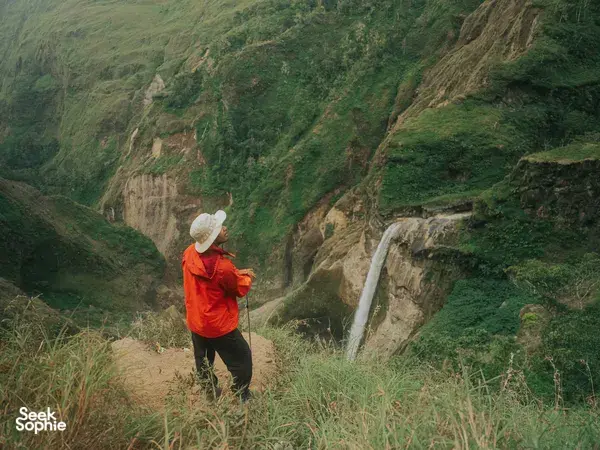
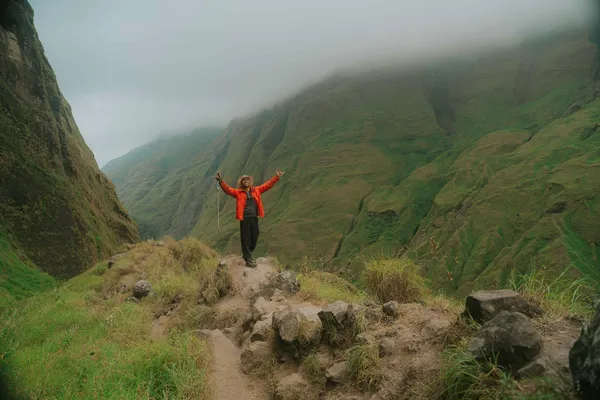
This route was created after the recent earthquake and is the least known route at Mount Rinjani, as well as the most beautiful. You will get far fewer crowds on this route, and it is by far the most beautiful route at Rinjani with views that look like they're right out of Jurassic park. It's as challenging as the Sembalun trek though, and we'd recommend 4D3N if you have time to give yourself more time to enjoy the views, and it's also less difficult if you spread it out in 4 days instead of 3 days.
![Mout Rinjani: Everything You Need to Know + Packing List [2026]](https://d18sx48tl6nre5.cloudfront.net/webp_md_39aca53b7018e9ac331cf4169636c761.webp)