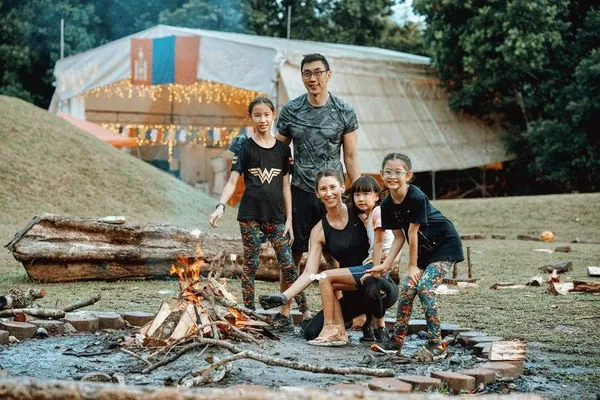
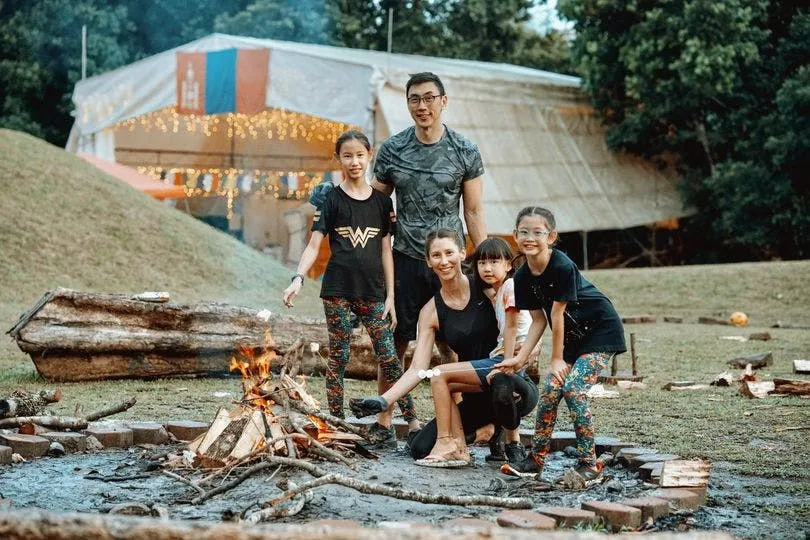
Der IT-Ingenieur, der das Baguette für Singapur geknackt hat
Französische Rezepte klappten in Singapur einfach nicht, also tat Eric, was Ingenieure eben tun: Er hat sie systematisch auseinandergenommen.

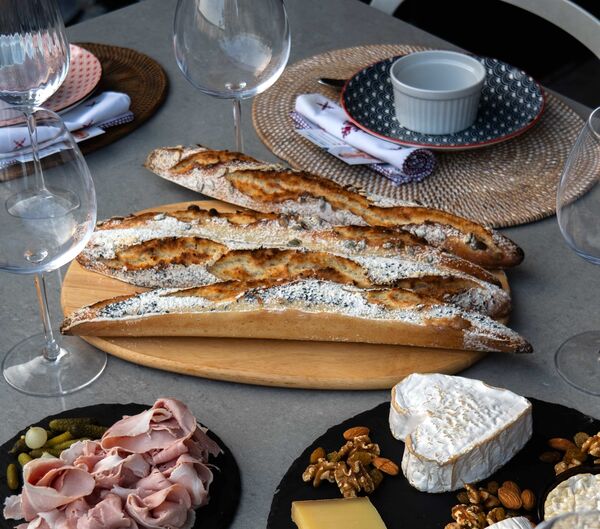
When Eric first tried making a proper French baguette in Singapore, he used the recipe that French bakers used back home. But it failed.
Singapore's heat and humidity changed how the dough behaved, the flour was different, and even ingredients as basic as butter weren't quite the same. So Eric approached the problem the way he'd approached problems for most of his professional life: like an engineer.
He changed the amount of water. Adjusted the yeast. Took notes. Tried again. Then again. It took him roughly six months to get the baguette where he wanted it!
That's because before Eric started teaching people to bake French bread, croissants and macarons, he spent most of his career as an engineer. So he approached bread making like a software problem that just needed to be debugged.
He was baking crêpes long before he wrote code

Eric grew up near Paris in a family where cooking from scratch was normal. His mother cooked and baked at home, and when Eric was around seven or eight, he started doing it himself.
Wednesday afternoons were free from school in France, so he'd spend some of them making simple things he could manage on his own. His favourite was crêpes: easy, sweet and hard for a child to resist.
But cooking didn't become his career. Eric studied computer science and went into telecommunications, eventually working in France, Morocco, Canada and Réunion Island.
He chose many of those moves himself. Eric and his wife liked putting themselves somewhere unfamiliar, even when that meant quitting jobs and figuring things out when they arrived.
When he moved back to Canada at one point, for example, he had residency but no job. He simply went and found one two months later.
Food travelled with him. At university in Canada, friends from different countries would cook dishes from home for one another. In Morocco, Eric and his wife preferred eating in tiny local restaurants with Moroccan colleagues. At home, his own family now moves easily between French food and the Chinese-Cambodian cooking from his wife's side.
For Eric, eating became one of the ways he understood a new place.
He started baking again because he couldn't find the food he wanted
Eric didn't actually spend his twenties obsessively perfecting croissants. For years, cooking sat more quietly in the background while he built his IT career.
It only came roaring back when he was living on Réunion Island and struggled to find the bread and pastries he wanted to eat. So he decided to make it himself.
"The bread is not so good. Okay, I will try to make my bread."
What began out of necessity gradually became a serious hobby. Eric took baking lessons, learnt formal French techniques and kept experimenting at home.

Then his family moved to Singapore in 2019.
They'd loved Réunion, especially when their children were young, but Eric wanted them to grow up somewhere more international, where they'd speak English and have easier access to the rest of Asia. His wife found work here first, so Eric quit his job and followed.
The first year wasn't particularly easy. His English made him nervous about interviewing locally, and eventually he took an IT project management role at the French school before later joining a software company.
Meanwhile, he kept baking.
Singapore's weather broke his French recipes
This is where Eric's two worlds finally collided.
He'd learnt traditional French baking methods, but Singapore didn't behave like France. Humidity affected the flour. Heat made croissants especially difficult. Tart shells softened. Ingredients that were easy to find in France weren't necessarily practical or affordable here. Even the baguette recipe he'd learnt from professional bakers didn't produce the bread he wanted.
So instead of treating the recipe as sacred, Eric treated it as a process that could be debugged.
“For me a recipe is a process. You have to understand the process.”

He experimented with water, yeast, timings and ingredients, documenting what changed each time. Once he'd solved one problem, he'd look for another step he could simplify.
That engineer's brain is still visible in almost everything he teaches today.
Then he suddenly lost his job
For a while, Eric had both lives running alongside each other.
A friend who'd eaten his food kept telling him he should teach cooking, but Eric was sceptical. Teaching didn't feel like something he'd naturally do, so he continued working in software while slowly developing the idea in the background.
Then his Employment Pass came up for renewal. His employer initially told him they could meet the salary requirements needed for the renewal. A few days after the pass was renewed, the company told him they couldn't.
Eric suddenly had two weeks. Most people who heard what happened felt sorry for him. Eric didn't. “I lost my job, but because I kind of anticipated this cooking school, I was working on it just in case something bad happened,” he says.
He decided he didn't want another corporate role. For the previous two years, much of his work had meant sitting at his computer with very little human interaction, and losing the job forced him to confront something he'd already been feeling.
He wanted to spend his days with people.
“It was the opportunity of my life.”

He still uses tech - just to help people make macarons
Eric didn't actually leave his old career behind as completely as it might seem.
He built a mobile app for his classes, turning recipes into step-by-step instructions. More importantly, he still thinks like a developer whenever something in a recipe seems unnecessarily difficult. If a child can't do a particular step, he asks whether the step can be redesigned.
One of his favourite tests is macarons, which have a reputation for being notoriously fiddly. Eric decided to see whether he could teach children to make them by breaking the recipe down differently. They could.
He now jokes with nervous adults that if the kids can do it, they can too.

It's the same with baguettes and lemon meringue tarts. Eric isn't particularly interested in making French baking look intimidating or preserving complicated techniques just because that's how they've always been done. He wants someone to leave thinking: I could actually make this again.
And often they do. Parents send him photos months later of children recreating one of his recipes at home, including cakes they've made for their fathers' birthdays.
Those messages mean a lot to Eric because they remind him of where his own cooking began: learning from his mother, then making things by himself on Wednesday afternoons. Now he's the one passing that knowledge on.
Bake French bread with Eric

If you’ve ever looked at a French baguette or macaron and thought, there’s absolutely no way I could make that myself — try Eric’s baguette workshop or croissant workshop on Seek Sophie. He somehow makes both feel much more doable than they look.
What we like most isn't simply that Eric knows how to make good French food. It's that he has spent years figuring out why classic recipes fail in Singapore and how to make them much more achievable here.
You'll learn from someone who brings an engineer's brain to baking, but who left engineering because he wanted his work to involve more than sitting behind a computer.
These days, the best result isn't perfect code. It's watching someone taste the bread they've just made and realise it's actually good.


FAQ zu Singapore
What are the best experiences that aren’t touristy?
To skip the crowds and experience Singapore differently, try this!
✅ Instead of Marina Bay Sands SkyPark → Secret Rooftop at Funan Mall (Free, stunning skyline views without the price tag)
Most people head to Marina Bay Sands for panoramic views, but did you know you can get an amazing skyline view for free? Funan Mall’s hidden rooftop garden offers an incredible perspective of Marina Bay Sands, the Supreme Court, and the Singapore Flyer—without the crowds. Take the lift at Lobby B, and you’ll find a peaceful space perfect for photos, a quiet break, or even a picnic.
✅ Instead of touristy Sentosa → enter Sentosa’s Hidden Rainforest (Spot rare wildlife with a naturalist guide)
Sentosa is beautiful but artificial. If you want to see something real, head into Sentosa’s hidden rainforest. Most visitors don’t realise that Sentosa has patches of untouched jungle, home to rare wildlife like colugos (flying lemurs), pangolins, and exotic birds. A guided walk will take you deep into the forest, where you’ll experience the wild side of Singapore that most people miss.
✅ Instead of Chinatown → Explore Joo Chiat & Katong (Colourful shophouses, rich Peranakan heritage, and amazing local food)
Chinatown is always buzzing with tourists, but for a deeper dive into Singapore’s heritage, Joo Chiat and Katong are the places to go. These neighbourhoods are filled with beautifully preserved Peranakan shophouses, quirky boutique stores, and some of the best local eats in Singapore. Try traditional Nonya kueh, pop into a century-old coffee shop, or just wander through the colourful streets soaking in the old-meets-new charm.
✅ Instead of a River Cruise → Kayak in Mangroves (A quiet, immersive way to explore Singapore’s waters)
Singapore’s river cruises show you the city skyline, but if you want a more intimate experience on the water, go mangrove kayaking. Paddle through hidden waterways in Pulau Ubin or Khatib Bongsu, where you’ll be surrounded by lush mangroves, spot otters, and maybe even an eagle flying overhead. It’s peaceful, adventurous, and shows a completely different side of Singapore—without the boat engine noise.
✅ Instead of Clarke Quay Bars → Go on a Speakeasy Bar Hunt (Uncover hidden cocktail gems with secret entrances)
Clarke Quay is fun but predictable. If you want a more unique night out, hunt down Singapore’s hidden speakeasies. These bars are tucked away behind unmarked doors, disguised as tailor shops, or even hidden inside old Chinese medicine halls. Whether it’s a cocktail bar with a 1920s Shanghai vibe or a jazz lounge behind a fridge door, discovering these secret spots is half the fun.
✅ Instead of the Singapore Zoo → Sungei Buloh Wetland Reserve (See wildlife in their natural habitat, not in enclosures)
The Singapore Zoo is world-famous, but if you want to see animals in the wild, head to Sungei Buloh Wetland Reserve. This sprawling mangrove forest is home to wild crocodiles, giant monitor lizards, otters, and migratory birds. Walk along raised boardwalks and keep an eye out for a massive estuarine crocodile sunbathing in the mud—it’s Singapore’s own version of a wildlife safari, and our favourite spot!
What’s worth doing in Singapore if I’ve already been before?
If you’ve visited Singapore before and feel like you’ve ticked off all the major sights, there’s still a lot more to uncover. Beyond the futuristic skyline and famous attractions, Singapore has an incredible amount of heart—driven by passionate locals who are dedicated to preserving its nature, wildlife, and disappearing traditions.
Whether it’s learning from artisans keeping old trades alive, exploring untamed pockets of wilderness, or stepping into forgotten history, these experiences will show you a side of Singapore that most visitors never get to see!
Visit a Rooftop Bee Farm and Taste Fresh Honey – A hidden green oasis in the city
Most people don’t think of Singapore as a place for beekeeping, but high above the city, a rooftop bee sanctuary is home to rescued bees that would otherwise have been exterminated. Learn about the crucial role bees play in our ecosystem, taste different varieties of raw honey, and see how urban farming is thriving in unexpected places. It’s a peaceful, eye-opening experience in the middle of the city.
Explore Pulau Ubin – Singapore’s Last Wild Island
Pulau Ubin feels like stepping into another world. There are no skyscrapers, no highways—just dirt paths, mangrove forests, and a slow village pace that’s rare in modern Singapore. Rent a bike and cycle past wooden kampong houses, kayak through tunnels of mangrove trees, and visit the Chek Jawa wetlands, where you can see horseshoe crabs and other rare marine life. If you think you know Singapore, Pulau Ubin will make you rethink everything.
Hike to a Secret WW2 Bunker – A Forgotten Chapter of History
Singapore’s World War II history is well-documented, but some of its most fascinating remnants are hidden deep in the jungle. Scattered across the island are abandoned underground bunkers that once stored ammunition and housed soldiers. Unlike Fort Canning, these bunkers are completely off-the-grid, requiring off-trail hiking, ducking through narrow tunnels, and crawling into underground rooms. If you’re looking for an adventure with real historical significance, this is one of the most intriguing places to explore.
Sightseeing Through Puzzles – Explore Singapore Like a Detective
If you’ve walked through Chinatown, Little India, or Marina Bay Sands before, you probably think you’ve seen everything these areas have to offer. But instead of just strolling through the streets, try exploring them through an interactive puzzle hunt. These games challenge you to solve mysteries while uncovering hidden details about Singapore’s history and culture. Whether you’re cracking a code at a temple, following a trail of clues through back alleys, or discovering a forgotten legend, this turns sightseeing into an adventure.
Learn a Disappearing Trade from a Traditional Baker
As Singapore modernises, many traditional trades are vanishing. One of them is the art of making old-school pastries by hand, using techniques passed down for generations. At this workshop, you’ll not only learn how to make traditional pastries, but you’ll also hear stories about how these treats were once an essential part of weddings, festivals, and daily life. It’s a rare opportunity to experience a piece of Singapore’s past before it disappears entirely.
Cycle Through Little-Known Neighbourhoods
Most visitors explore Singapore by MRT or taxi, but one of the best ways to see the city is on two wheels. Join a cycling tour through lesser-known neighbourhoods like Little India, Kampong Glam, and Jalan Besar, where you’ll find colourful street art, hidden alleys, and family-run eateries that have been around for generations. A guide will point out details you’d never notice on your own, from secret WWII bomb shelters to the backstories of old shophouses.
Even if you’ve been to Singapore before, these experiences will give you a completely new appreciation for the city’s hidden side.
Are there any off-the-beaten-path places to explore?
Yes! Despite Singapore’s reputation for being ultra-modern, there are still hidden pockets of history, nature, and forgotten places that most locals don’t even know about.
Singapore’s Last Kampong (Village) – A Window into the Past
- Most people think Singapore is all skyscrapers, but in a tiny corner of the island, Kampong Lorong Buangkok still exists. This is Singapore’s last remaining traditional village, where you’ll find wooden houses, chickens roaming freely, and a glimpse of life before the city became a global financial hub.
- Unlike heritage museums, this is a living piece of history—but it may not be around much longer as the government has plans to redevelop the land.
Marsiling WW2 Bunkers – Secret Underground Tunnels
- Deep in a forest near the Malaysian border lie abandoned World War II bunkers built by the British. These vast underground tunnels stored ammunition during the war but have since been forgotten, swallowed by the jungle.
- Exploring these bunkers feels like stepping into a real-life Indiana Jones adventure, complete with secret passageways and dark, moss-covered walls.
Disappearing Kelongs – Floating Fishing Villages That Time Forgot
- Kelongs are traditional stilted fishing villages built over water, once common across Southeast Asia.
- While they were once a vital part of Singapore’s economy, only a handful remain today as the city modernizes. Visiting a kelong lets you see how old and new Singapore exist side by side, with traditional fish farms floating next to high-tech aquaculture facilities.
Sentosa’s Hidden Fort – A Forgotten Military Site
- Sentosa is known for its resorts, but hidden in the jungle lies Fort Serapong, an abandoned British military fortress from the 1880s. It’s like Singapore’s Angkor Wat!
- Unlike Fort Siloso (which is well-preserved for tourists), this one is completely overgrown, giving it an eerie, post-apocalyptic feel. You’ll need a guide to find it—part of the adventure!
Where Can I Go Hiking in Singapore?
Although Singapore is a city-state, it has surprisingly lush and diverse hiking trails, from hidden jungles to old railway tracks.
1. Rail Corridor & Clementi Forest – A Hike Through Singapore’s Abandoned Railway
🚶 Why it's special: This trail follows an abandoned railway line that once connected Singapore to Malaysia. Since the tracks were removed in 2011, nature has taken over, creating a rare urban wilderness.
- Start from Bukit Timah Railway Station, where you’ll see an old station platform and railway bridge.
- Walk through the Clementi Forest section, a misty, overgrown jungle that feels nothing like modern Singapore.
- End at the famous green railway tunnel, one of the most photogenic spots in Singapore.
2. MacRitchie Reservoir & TreeTop Walk – Singapore’s Most Famous Jungle Hike
🌳 Why it's special: This is the oldest nature reserve in Singapore, featuring a 250m-long suspension bridge that puts you above the rainforest canopy.
- Spot long-tailed macaques, monitor lizards, and flying lemurs along the way.
- Walk around the serene boardwalk along the reservoir, where you might see turtles and fish.
- The full hike is about 10km but can be shortened with alternative routes.
3. Bukit Timah Nature Reserve – Singapore’s Highest Peak
🏔 Why it's special: Bukit Timah Hill is the highest natural point in Singapore (163m), surrounded by one of the world’s most diverse rainforests.
- The trail is steep and challenging, making it a great workout.
- You’ll pass by huge dipterocarp trees that are hundreds of years old.
- Spot rare wildlife like pangolins, colugos (flying lemurs), and Malayan blue coral snakes.
4. Sungei Buloh Wetland Reserve – The Wildest Side of Singapore
🦅 Why it's special: This mangrove forest and wetland reserve is a birdwatcher’s paradise and home to wild crocodiles.
- Walk along wooden boardwalks through the mangroves, where you’ll see giant monitor lizards and otters.
- If you’re lucky, you’ll spot a wild estuarine crocodile resting in the mud.
- Best visited at sunrise or sunset when the wildlife is most active.
What are the most unique things to do in Singapore?
If you think Singapore is just skyscrapers and shopping malls, these experiences will completely change your mind.
1. Visit Singapore’s Last Kampong – A Time Capsule of Old Singapore
Instead of just visiting the National Museum to learn about Singapore’s history, actually step into it!
Singapore went from a fishing village to a global financial hub in just one generation. But Kampong Lorong Buangkok is the last remaining traditional village, where families still live in wooden houses with tin roofs. Walking through the kampong is like stepping into the past—kids play in open fields, chickens roam freely, and neighbours chat outside their homes. It’s a glimpse of a Singapore that once was. Since it’s privately owned, it’s best visited with a guide who can introduce you to the residents.
2. Explore Disappearing Kelongs – Floating Fishing Villages from the Past
Instead of just eating seafood at a fancy restaurant, visit a traditional kelong and see how it’s caught!
Before modern fish farms, Singapore’s fishermen lived in kelongs—traditional wooden houses built on stilts over the sea. These floating villages are disappearing, but you can still visit one on a boat trip. See how fishermen use age-old techniques to catch fish, and contrast it with Singapore’s modern fish farms. It’s a rare chance to see Singapore’s past and future side by side.
3. Walk with Ex-Offenders – A Gritty Look at Singapore’s Hidden Past
Instead of hearing a polished version of history, experience the real, raw stories.
Singapore is known for being safe and orderly, but in the past, gangs controlled entire neighbourhoods. On this tour, a former gang member shares real-life stories of secret societies, crime, and how he turned his life around. It’s raw, eye-opening, and gives you a deeper understanding of how Singapore became the country it is today.
4. Haw Par Villa – A Quirky, Creepy Theme Park from the 1930s
Instead of Universal Studios, visit a theme park built around ancient Chinese superstitions.!
Haw Par Villa is a one-of-a-kind cultural relic—a bizarre outdoor theme park that depicts traditional Chinese values in terrifyingly graphic ways. The “10 Courts of Hell” diorama shows what happens to people who misbehave (spoiler: it’s not pretty). It’s a weird, fun, and totally unexpected way to learn about traditional Chinese folklore.
5. Uncover Singapore’s Supernatural Side on a Ghost Tour
Instead of just walking through heritage districts, hear the spooky stories lurking behind them!
Singapore has a deep-rooted belief in spirits, and this ghost tour takes you to some of the most haunted spots in the city. You’ll hear eerie stories about restless spirits, urban legends, and the supernatural beliefs that still shape Singapore’s culture today.