Why Is Yunnan Coffee Suddenly Everywhere? We Spoke to One Family Behind It.
The incredible story of how Yunnan coffee has gone from virtually unheard of to one of the world's most exciting emerging specialty coffee regions.
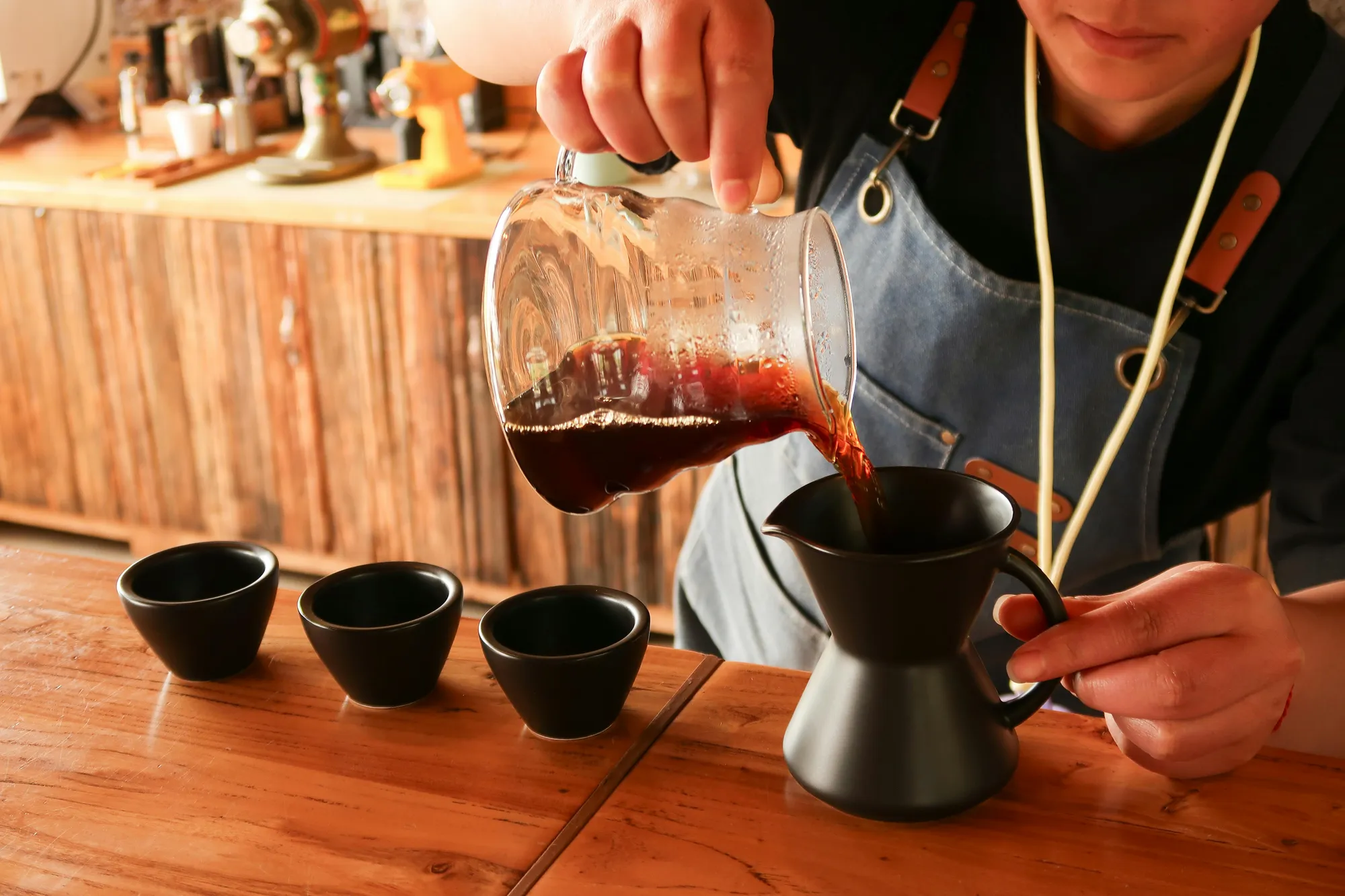
When people think of great coffee, they usually think of Ethiopia, Colombia or Brazil — not China.
Yet Yunnan, a mountainous province in southwest China, produces around 90% of the country's coffee. Over the last decade, it has quietly become one of the world's most exciting emerging specialty coffee regions.
While exploring Lijiang, we stumbled upon Phoebe's family roastery on the outskirts of town. Over a coffee omakase and roasting workshop, we learnt that her family is one of the pioneers of Yunnan's transformation from commodity to specialty coffee.
We spent the rest of the afternoon chatting with Phoebe about how Yunnan became China's coffee capital, why the region is finally gaining recognition from specialty coffee lovers around the world. It completely changed the way we think about Chinese coffee.
Why is Yunnan so good for growing coffee?
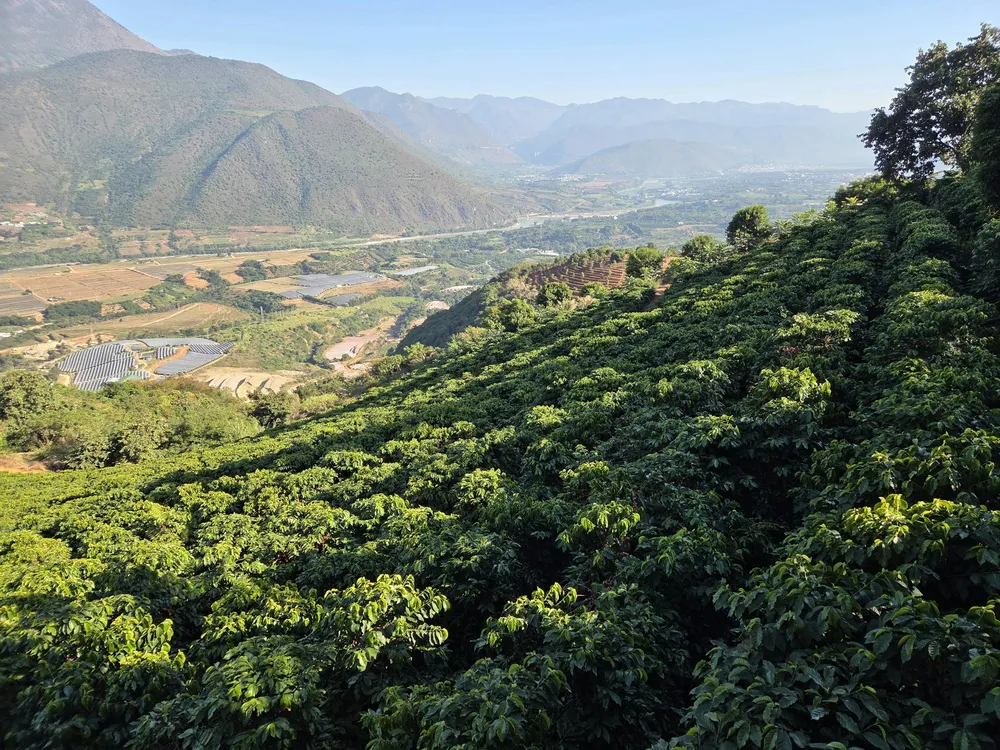
Phoebe: Yunnan has some of the best natural conditions in Asia for growing arabica coffee — it's a combination of altitude, climate and soil. Most of our coffee grows high in the mountains, where cooler temperatures slow down the ripening of the cherries. That gives the beans more time to develop sweetness and complexity. The soil is also fertile and we have distinct wet and dry seasons.
Yunnan is huge, and the conditions shift a lot from region to region, which is why the beans can taste so different depending on where they're from. The most special example is Pu'er, where the coffee grows alongside tea plantations. The beans actually pick up some of that surrounding tea-like character.
Your family has been in coffee for over 30 years. How did it all begin?
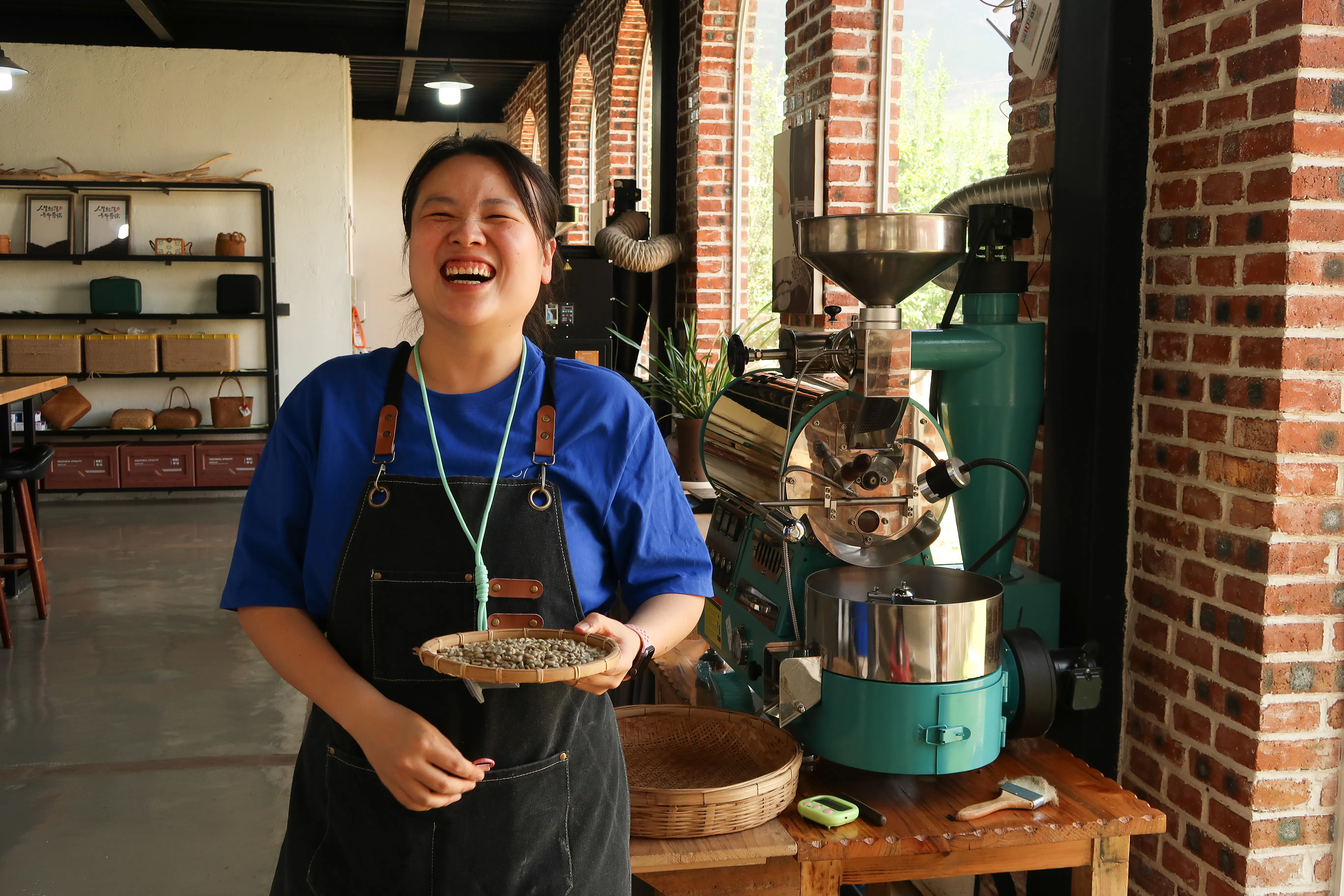
Phoebe: My parents started working in the coffee industry in the early 1990s — around 1993. They're local Naxi minority, but they went to a province close to Hong Kong to start a coffee factory. We used Vietnamese specialty and commercial coffee beans to make coffee products for brands like Nestlé.
But when my parents retired, they decided to come back to their hometown. Instead of producing commercial coffee, they wanted to make coffee they were genuinely proud to drink. Now we only do specialty coffee — introducing it to coffee lovers around China and around the world. We established this farm in 2023.
Why did they make the switch from commercial to specialty coffee?
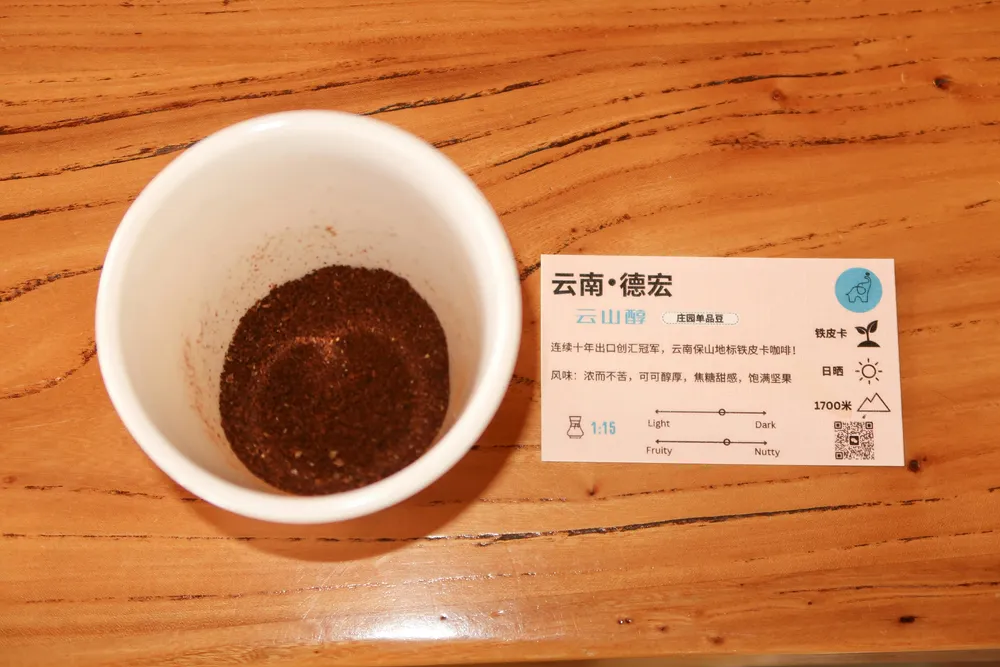
Phoebe: When you're in the industry for a long time, you start to learn what good quality coffee really is — and what you actually enjoy. My parents reached a point where even they didn't want to drink their own product. If you don't like what you're making, that's a problem. That's when you think, "maybe I should make a change."
Also, the market shifted. Ten years ago, a lot of Chinese people drank coffee purely for function — to stay awake, to get caffeine, like a Starbucks or instant coffee. But over the last 10 to 15 years, more and more Chinese people started learning about specialty coffee and how to enjoy it. My parents saw the market opening up. Twenty years ago, even if you wanted to do specialty, no one would have appreciated it. But the timing finally felt right.
Did you always know that you wanted to help your parents in their coffee business?
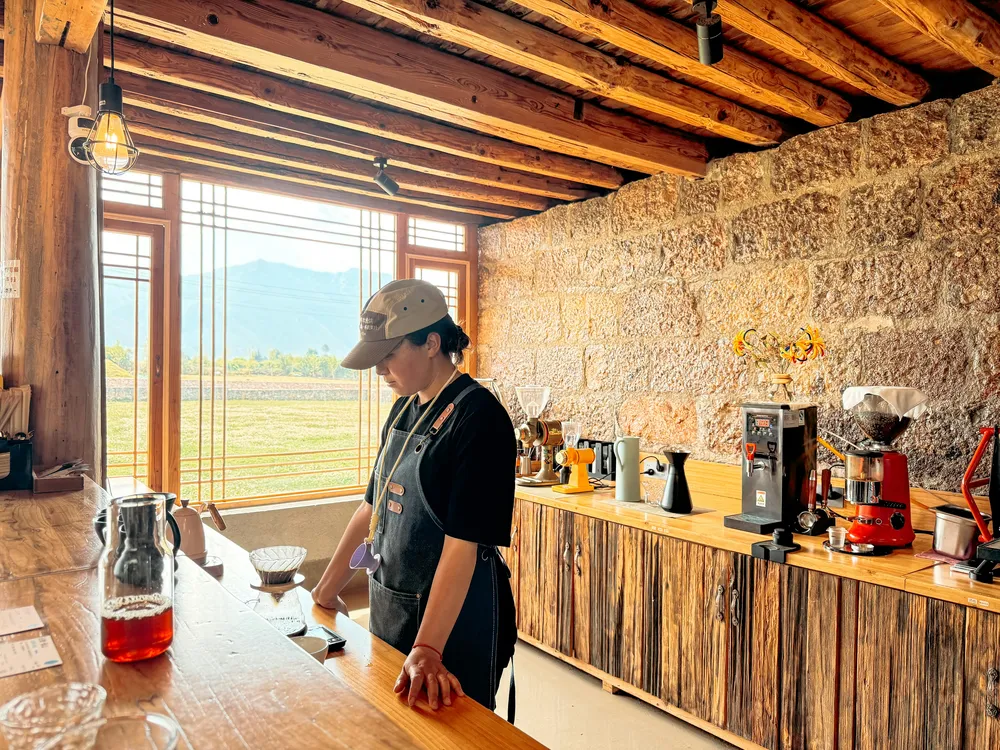
Phoebe: Not at all. I studied business, physics and accounting before doing a master's in software engineering in Seattle, where I lived for almost ten years. I chose that major mainly because I wanted to get a job, not because I liked coding. But I always worked as a barista part-time to earn my tuition and pay my rent. After I graduated from my master's, I did a two-month internship at Meta, and I quickly figured out that wasn't the life I wanted. I just loved coffee.
A part-time cafe owner I knew asked me to take over the whole store as general manager. So I basically ran three cafes in Seattle. Then in 2023 — because of the pandemic and everything — my parents said, "We really want you to come home. We can still do coffee together, and that's your passion." So I came back.
Yunnan coffee used to be seen very differently. What changed?
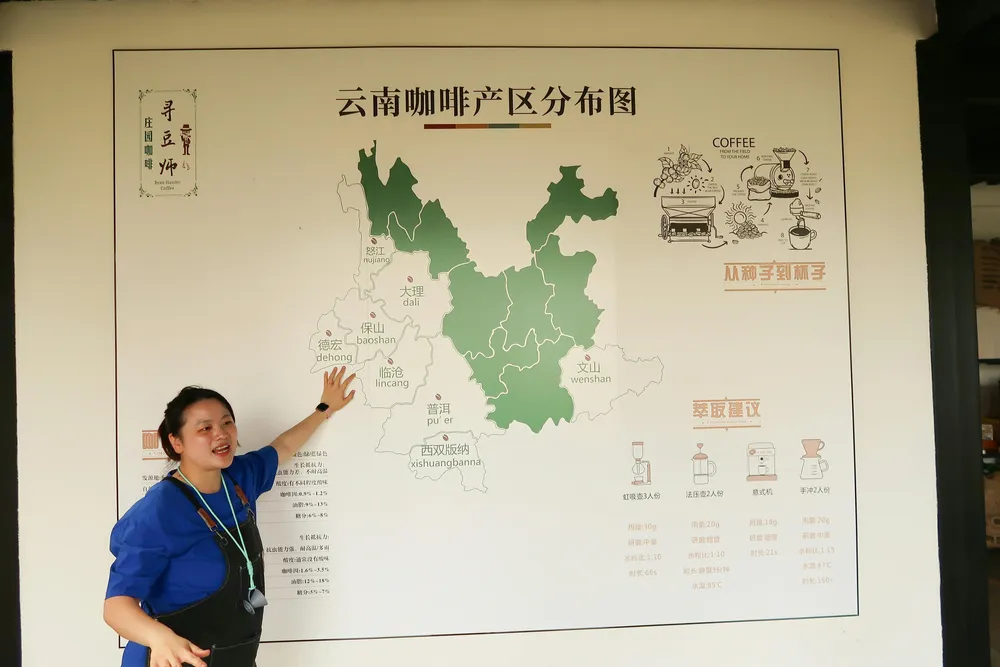
Phoebe: For a long time, Yunnan coffee was seen as a commodity crop. Most people buying coffee weren't looking specifically for Yunnan — they were looking for flavour profiles they already recognised, like Brazilian or Colombian coffees. Yunnan coffee was sold as a stand-in — producers would pitch the beans as able to mimic "Brazilian style" and it mostly ended up as instant blends. If you were drinking Yunnan coffee back then, you probably had no idea.
Over the last decade, that's started to change. Farmers started to realise they could grow higher-quality varieties, and experimented with processing methods and producing coffees with their own distinctive character. Instead of trying to compete with established origins, more producers are now proud to sell their coffee simply as Yunnan coffee.
Now, about 90% of China's coffee beans come from Yunnan, because of the great weather conditions and high altitude — perfect for growing good quality specialty nano coffee.
How would you compare Yunnan coffee to, say, Ethiopian coffee?
Phoebe: Honestly, it can't really be compared. Yunnan grows 90% of China's coffee, but on a global scale, that's only about 2% of the world's coffee supply. We're not even at the table when you put us next to Brazil, Colombia, Panama, and Ethiopia. Those countries have a massive scale and long history.
That said, some small plantations here are doing really good work — they keep their farms small, unique, and focused on quality. Overall though, if you're a roaster looking for stable bulk supply, Brazil, Colombia, and Ethiopia are still your first choice.
But if you're a small roaster wanting to offer something different — a new region, a new story — Yunnan is a great option. More and more specialty roasters in Australia and California are starting to introduce Vietnamese and Yunnan coffee to their customers. Right now it's more about novelty, and if you find the right producer, the quality can be really impressive.
You mentioned your deep collaboration farm is in Dehong. Do you only work with one farm?
Phoebe: We have one deep collaboration farm, but we purchase from various local plantations across Yunnan. For the main collaboration, they only grow the varieties we want — mainly Typica, one of our best-selling beans. We do all the agricultural work together and purchase everything they produce. We also set the price together before harvest, so they're protected. No matter how much they grow, we buy all of it.
So they only supply to us. And that protection matters because the biggest fear for any farmer is that their harvest won't sell — the cherries just go to waste. We sign a contract: whatever you grow, we purchase. It's a deep collaboration, built on trust. We only have that kind of relationship with a couple of plantations — the ones we genuinely trust, that have a real friendship with my parents.
Tell me about your dad's role. He's the roaster, right?
Phoebe: Yes, my dad handles all the roasting, and he's very old-fashioned about it. He doesn't believe in fancy machine roasting with all the graphs and settings. He was an apprentice, learning to roast the traditional way from a Taiwanese mentor.
My dad's whole philosophy is that you can buy beans from the exact same supplier as everyone else — but what actually matters is how you roast them. And people can tell. His regulars can taste the difference between beans he roasted and beans someone else did, even if they are from the same batch. He oversees all our processing. He's really the backbone of the quality here.
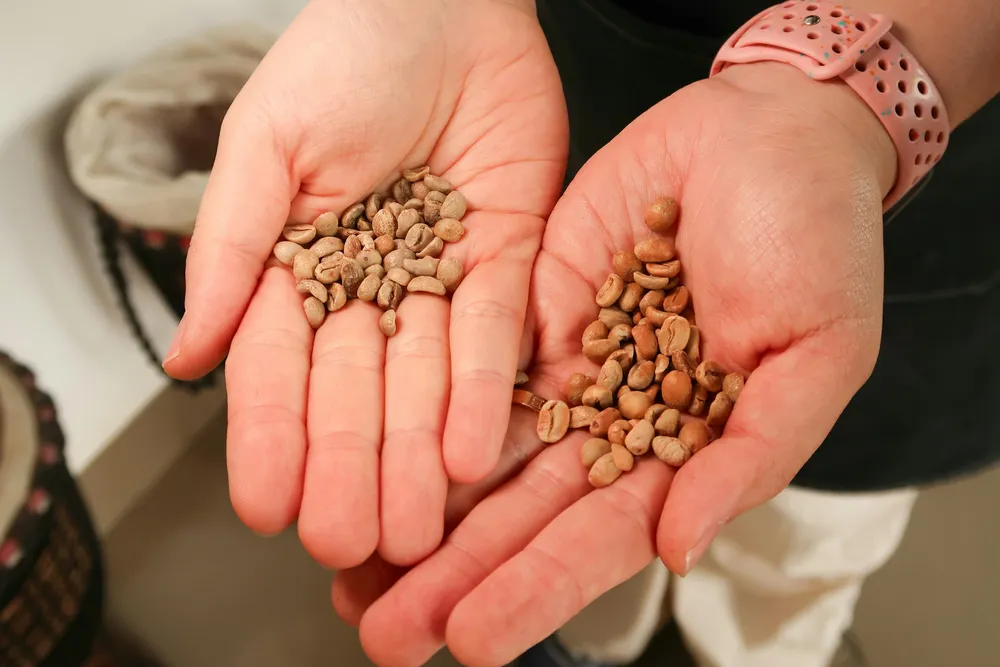
And when customers do our workshop and hand-roast beans over the coil heater — that's a taste of what we teach in our actual barista course.
And your mum trains baristas? How did that happen?
Phoebe: We’ve been doing barista training since our time in Guangdong. But when my parents retired and came back to Lijiang, they weren't planning to start training again. Then the pandemic hit Lijiang really hard. Lijiang's economy is entirely based on tourism — there's no manufacturing, no other industry. When travel stopped, the economy here completely collapsed.
My mom's high school classmate reached out and asked if she could do barista training again, specifically to help local people and the Naxi tour guides who had lost their jobs find a different career path. My mom said, "Why not?"
Coffee training is still quite old-fashioned — it's a mentorship system. The Specialty Coffee Association certification is the most prestigious worldwide. But the thing is, even two baristas with the exact same diploma can have completely different skill levels. It depends entirely on who taught them. So a lot of people specifically want to study under my mom — not just for coffee skills, but also for the business side of running a cafe.
We're now at over 530 students. We don't have any social media advertising — people just keep coming through word of mouth. At least 40% of our students even go on to open their own small coffee shops.
What's one thing you wish people understood about Yunnan coffee?
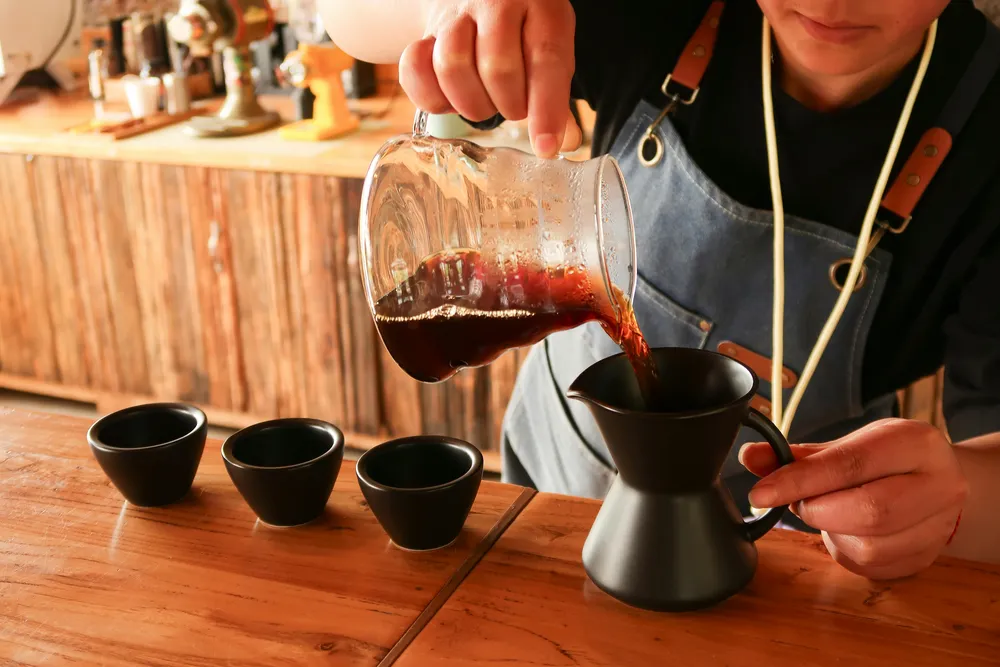
Phoebe: One thing I really care about: I want people to have a genuinely good cup of Yunnan coffee. But the reality is, there are thousands of cafes you can find on the map here, and a lot of them — are what we call "ticket cafes."
Because Yunnan has such beautiful scenery and snow mountains, everyone wants to take photos for social media. But in China, you need a special licence to charge an entry fee for a scenic location. So many of these places are essentially photo booths that sell coffee as a way to charge you for standing in their beautiful backdrop.
So the coffee is not really the point in those places. Sometimes they're using a cheap home espresso machine to serve customers. My advice is: try a few different cafes. Don't judge Yunnan coffee by the first cup.
What are your plans for the future?
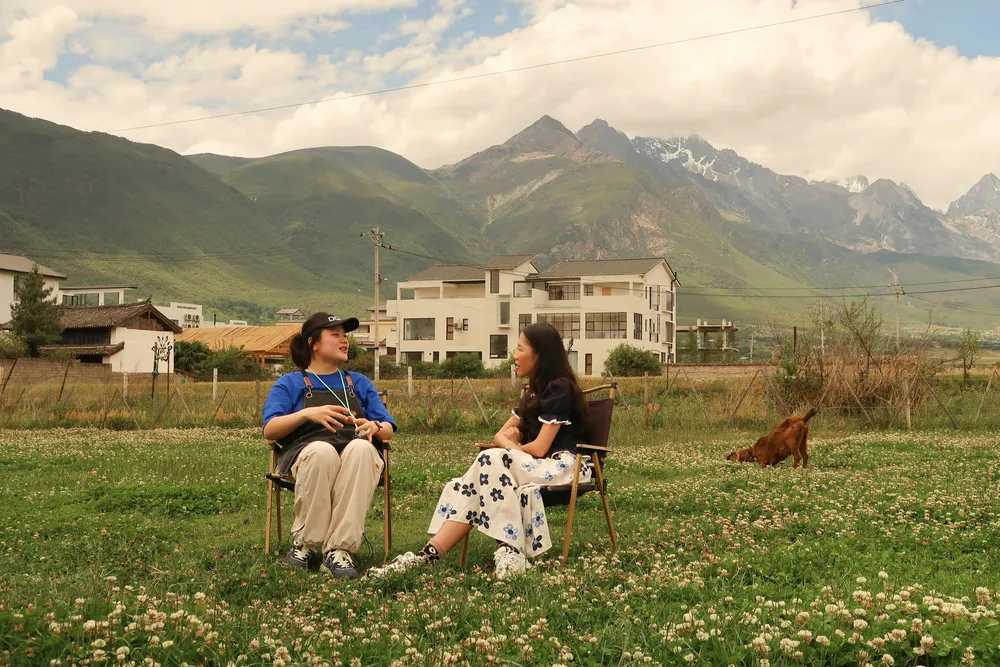
Phoebe: Honestly, we're really happy with what we're doing.
We want to keep supplying beans to cafés, training the next generation of baristas, and introducing people to Yunnan coffee through our workshops. We meet people from different places every day, and when someone tells me, "I've never really noticed coffee before—this is the first time I've tasted something like this," it makes me genuinely happy.
Do a coffee omakase hand-roasting with Phoebe
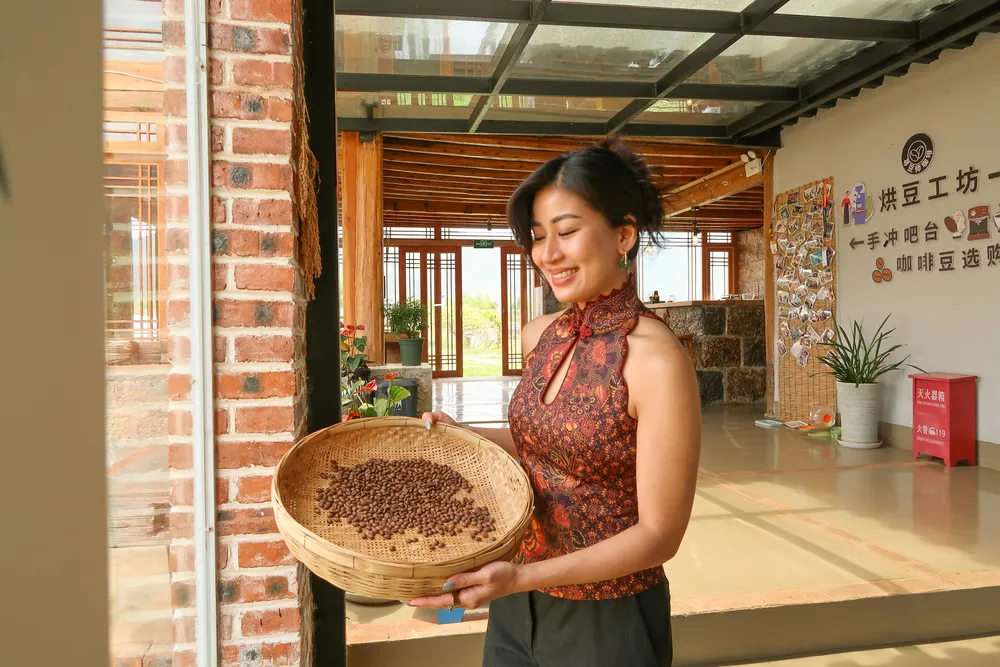
Come spend a slow morning or afternoon with Phoebe. This coffee experience takes place in Phoebe’s beautiful family-run café and roastery surrounded by an outdoor garden that feels worlds away from the crowds of the old town. It was one of our favourite experiences in Yunnan, and easily one of the best coffee experiences we've had anywhere!

![Tiger Leaping Gorge: Ultimate Guide + The Best Way To Hike It [2026]](https://d18sx48tl6nre5.cloudfront.net/webp_xl_40e2c873700173db7b055ba98e3a8c4d.webp)
![Yunnan: Ultimate Guide + How to Avoid The Crowds [2026]](https://d18sx48tl6nre5.cloudfront.net/webp_xl_c7362bf821fc70cd0eb6785e928c41f2.webp)
![Shangri-La: Ultimate Guide + Best Things To Do + How to Avoid Altitude Sickness [2026]](https://d18sx48tl6nre5.cloudfront.net/webp_xl_bfa709a62cf731cf54e2e107429bd8c2.webp)
![Tiger Leaping Gorge: Ultimate Guide + The Best Way To Hike It [2026]](https://d18sx48tl6nre5.cloudfront.net/webp_md_fc96b78587ecef1bda9a628c0e84d203.webp)
![Yunnan: Ultimate Guide + How to Avoid The Crowds [2026]](https://d18sx48tl6nre5.cloudfront.net/webp_md_aed08740f9dc77785e3fabc193c76699.webp)
![Shangri-La: Ultimate Guide + Best Things To Do + How to Avoid Altitude Sickness [2026]](https://d18sx48tl6nre5.cloudfront.net/webp_md_dca09d03cc12fff5bb5e87ebf0ae9656.webp)
![Lijiang: Essential Guide + Best Things To Do Beyond The Old Town [2026]](https://d18sx48tl6nre5.cloudfront.net/webp_md_e7788fa1caaf3a7f3a692fb4e3510754.webp)
![Lijiang: Essential Guide + Best Things To Do Beyond The Old Town [2026]](https://d18sx48tl6nre5.cloudfront.net/webp_xl_b1f0fea9a1ca27ff7ef6f7715afbfa63.webp)