The Balinese guide carrying on her grandmother's Melukat
Putu's priestess grandmother showed her what it means to live with purpose
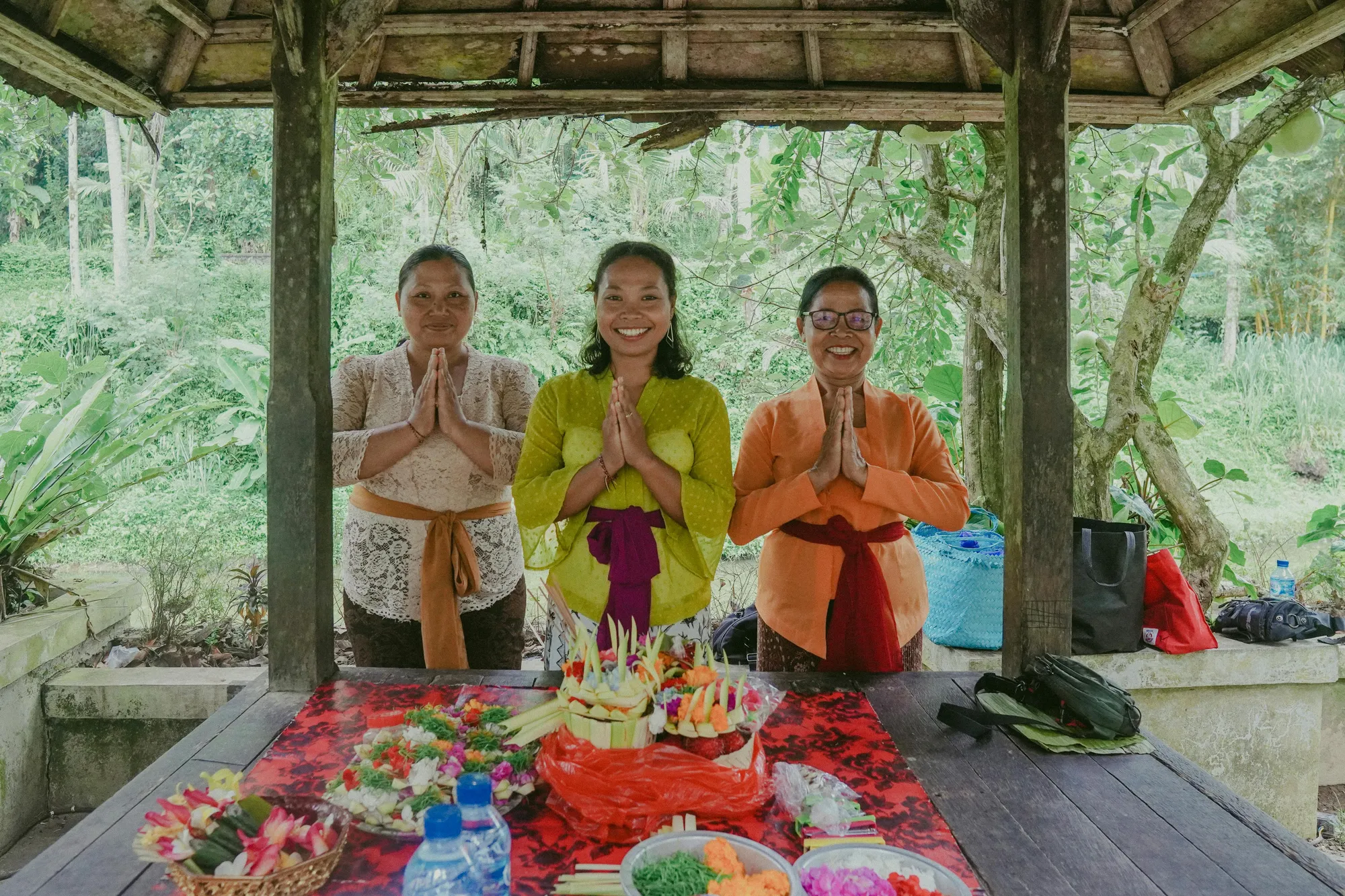
As a child, Seek Sophie host, Putu spent full-moon and new-moon days following her grandmother, a Balinese priestess, to their village temple. She swept the courtyard, carried offerings and helped prepare holy water while her grandmother led prayers for the community.
Putu never imagined this would become her own work. She thought a good life looked much more conventional: get a steady job, earn a salary and be secure. So she went into Bali's hotel industry, where she would spend the next five years checking tourists in and out while quietly wondering why she felt so unfulfilled.
It took her years to realise that the person who seemed to understand how to live was the grandmother she'd been watching since childhood.
Melukat, the water purification ritual Putu now shares with travellers, wasn't something she discovered through tourism. It's part of Balinese spiritual life, used to cleanse and rebalance oneself, and Putu had grown up experiencing it with her family. She still does Melukat herself when she feels spiritually “heavy”, often once or twice a month.
Her grandmother had a hard life. She was still full of joy.
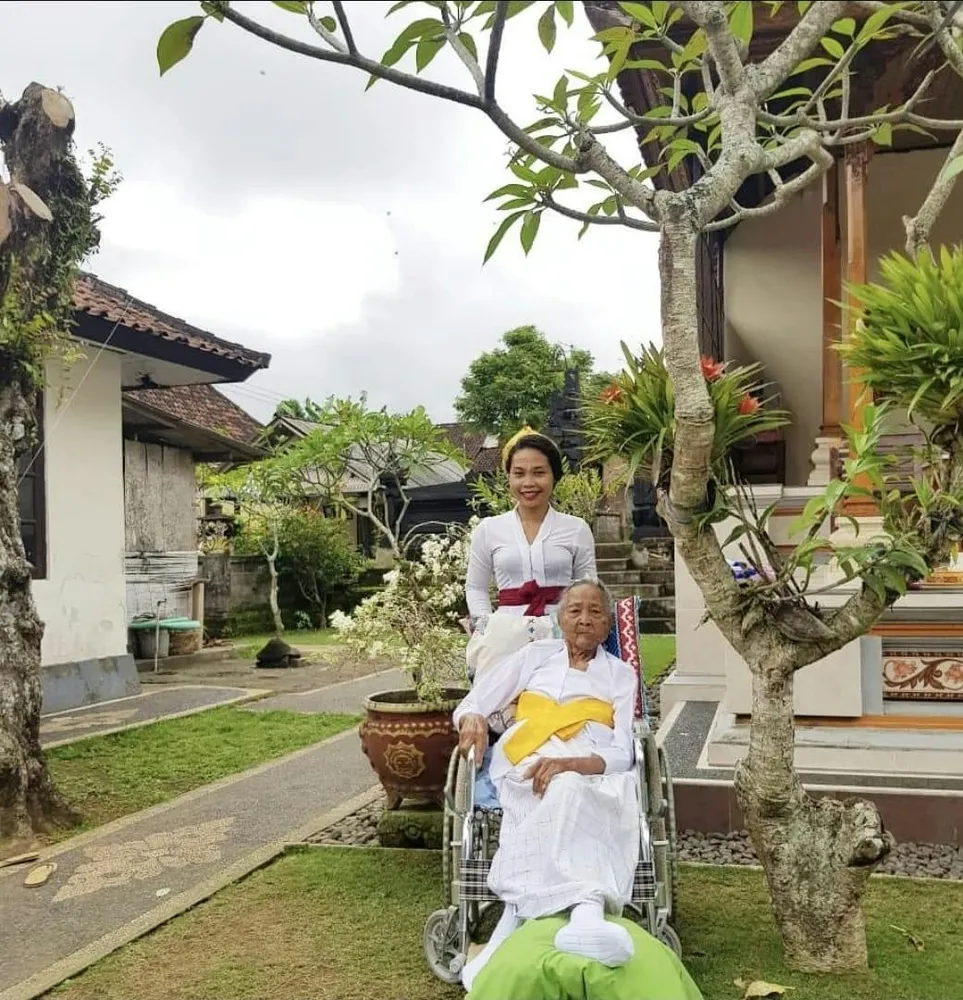
Putu grew up in Siangan, a small village in Bali's Gianyar regency. Her father died when she was very young, leaving her mother to support four children. Work sometimes took her mother away from the village for weeks, so Putu spent much of her childhood with her grandmother, who became almost a second mother to her.
Her grandmother wasn't someone who said very much. Putu remembers her as quiet and graceful, but with a presence that could fill a room.
“She survived all of the difficulties throughout her life,” Putu says. “And she was still full of compassion, still full of humanity.”
As a priestess, her grandmother helped lead ceremonies at the community temple. On sacred days, Putu would walk there with her, spend hours cleaning and preparing the temple, arrange offerings and help get the holy water ready before families arrived to pray.
To Putu, that was normal and part of growing up. She didn't realise there was anything special about her upbringing.
Putu kept changing jobs, but she was still stuck
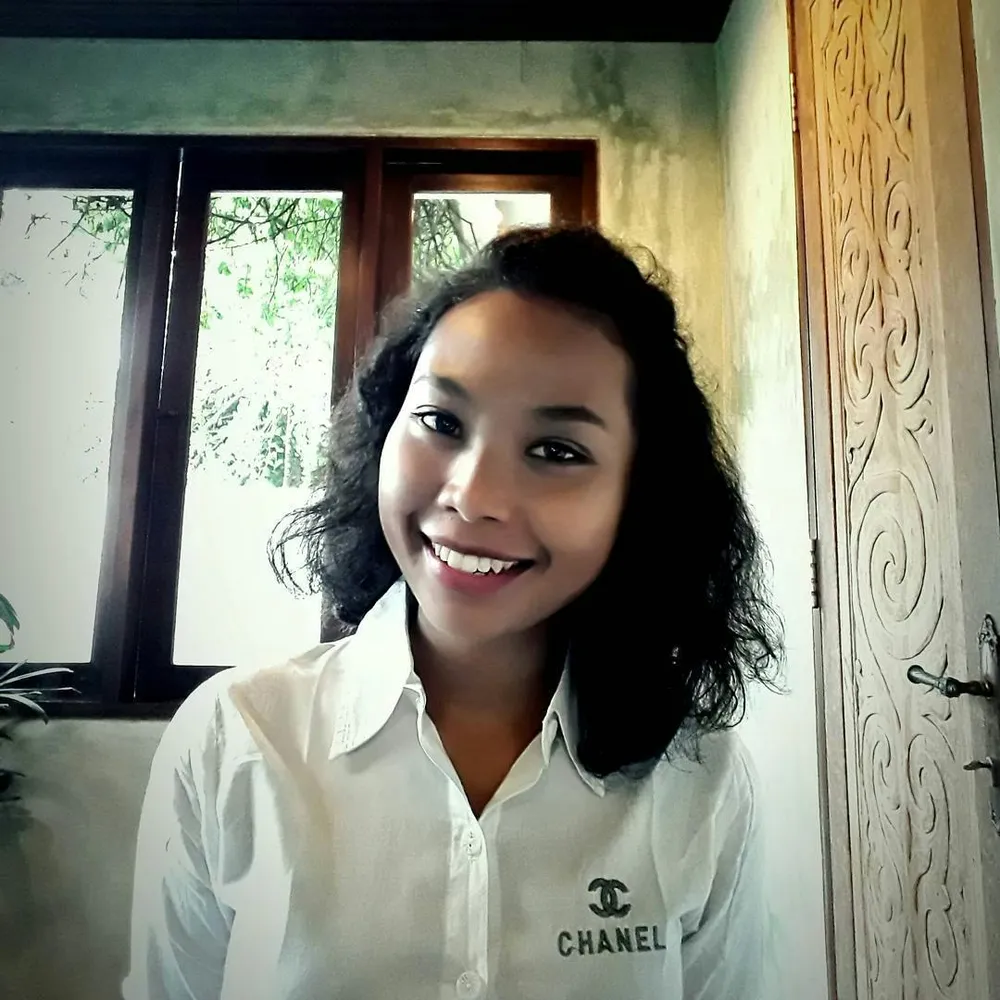
When she grew up, Putu worked mostly as a receptionist, moving between hotels around Bali. She wasn't chasing a glamorous career; what she wanted was security. A job meant a salary every month, and to Putu, that meant she was doing what she was supposed to do. But she kept feeling that something was missing.
“I wanted to know for sure what's going to happen next once I make these decisions,” she says. “That's why I waited for too long.”
So instead of leaving hospitality, she changed hotels. Then changed again. She spent roughly five years doing this because quitting without knowing what came next frightened her.
“I didn't have the courage,” she says.
Whenever Putu felt disconnected, she would return to Melukat - the Balinese purification ritual she had experienced with her grandmother since she was young. “It felt like I could let go of all the heaviness I was carrying. It always brought me back to myself.”
One day, while watching her grandmother lead a ceremony, she noticed her grandmother's face. It was radiating joy. Her grandmother had the face of someone who seemed deeply content. And this made her pause.
Her grandmother hadn't had an easy life. She had lived through hardship and loss, yet the life she had built around helping other people seemed to give her a peace that Putu couldn't find in the security she'd spent years chasing.
Putu started wondering whether she could do something similar.
She finally quit. Then Covid arrived.

Towards the end of 2019, Putu finally left hotel work. For several months she was unemployed and living with her grandmother again, still unsure exactly what she was going to do.
Eventually she told her grandmother about an idea she'd been thinking about: what if she guided travellers through Melukat, not simply as another Bali activity, but in the way she understood it from growing up around the ritual?
“Grandma, I would like to do this for the tourists,” she told her. “What would you say?” Her grandmother gave her blessing.
Putu began offering Melukat towards the end of 2019. Travellers started coming.
Then Covid shut Bali tourism down. The work went quiet for almost two years.
But Putu eventually started again, and this time the work began to grow around her family. Today she often guides alongside cousins she grew up with in the same family compound. Her mother has also been involved in the ceremonies.
For Putu, that made it about more than finally finding work she enjoyed. The ritual her grandmother had once brought her into as a little girl was now being carried by another generation of women in the family.
No matter where we're from, we all carry the same things
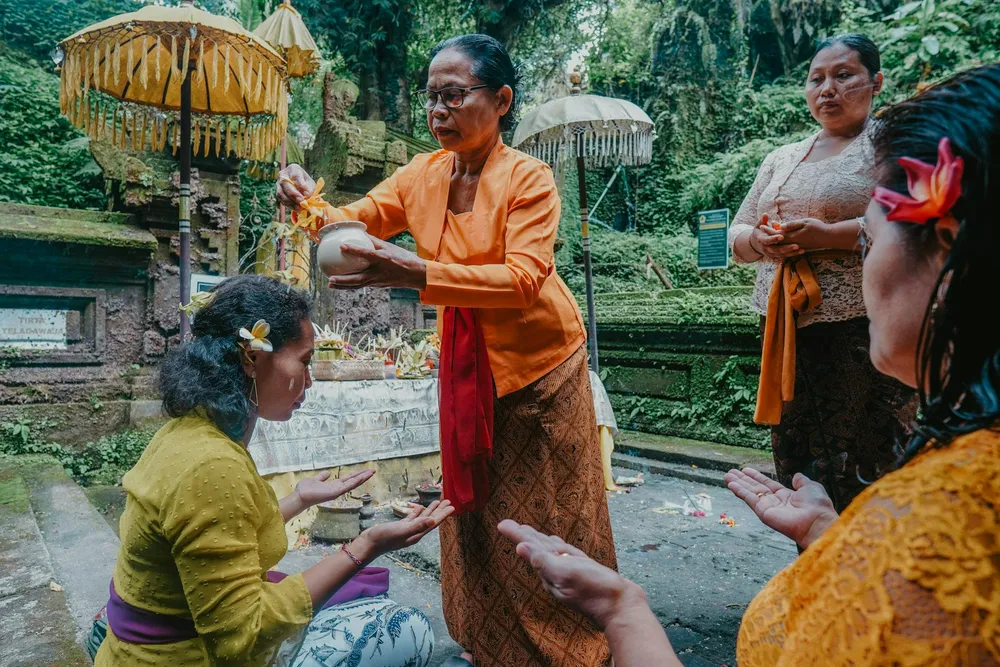
Putu doesn't promise that Melukat will transform someone's life.
What she does see, again and again, is people arriving with things they've been carrying for a long time: grief, strained relationships, regret, or simply the sense that something feels stuck.
One traveller contacted Putu before booking because she'd seen purification rituals online and wanted to know if she would be expected to scream in the water.
Putu told her no. For Putu, release isn't something that has to look dramatic. It might come as tears, prayer, quiet breathing or simply a few minutes of being still.
One of the moments she remembers most involved a mother and son who had been physically separated for years. They travelled to Bali together and came for Melukat. In one of the purification pools, the mother began to cry.
Putu doesn't try to turn the moment into a neat story about what the water did. What stayed with her was seeing an emotion between two people that neither seemed able to put into words.
“It's something that you cannot verbally express,” she says.
Years of guiding people through those moments have also changed how Putu sees strangers. People come from different countries, religions and cultures, but she keeps seeing the same things underneath: wanting to forgive someone, wanting to be loved, struggling to let go, trying to feel like themselves again.
I don't feel like I'm going to work. It feels like I'm fulfilling my purpose.
Now Putu has come full circle, and gone back to school
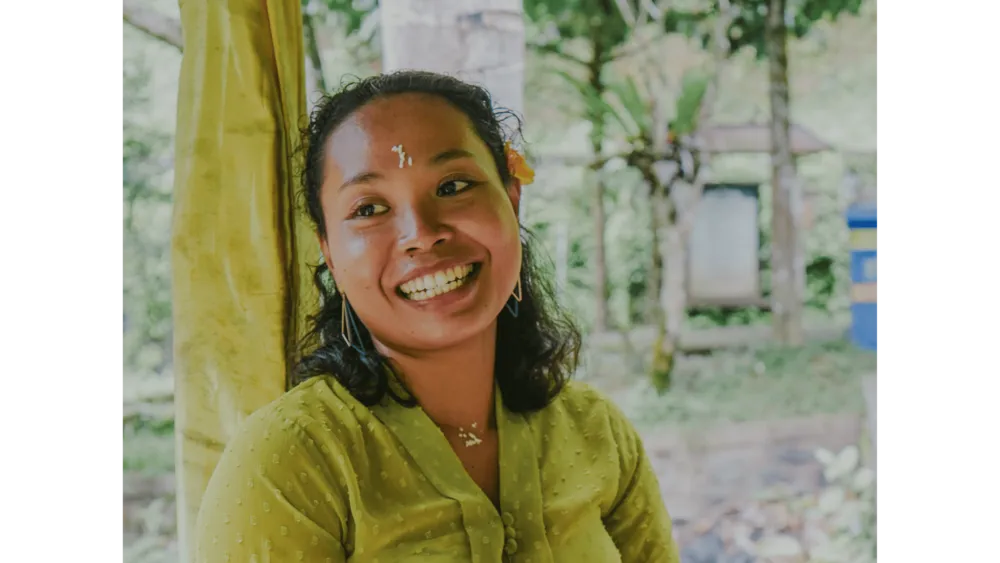
There is another part of Putu's life that doesn't fit neatly into the image of a Balinese spiritual guide: she's studying law.
Higher education was something she had wanted for years. In the family she grew up in, university wasn't a common path, and Putu started working relatively young. Now that her life is more stable, she has finally gone back.
“I truly feel like I've been giving enough to other people and I rarely give enough to myself,” she says. Education is something, she adds, that “nobody can take away from me.”
Her interest in law comes from the same impulse that drew her towards her grandmother's work. Putu wants to understand how she might do more for the people, animals and environment around her.
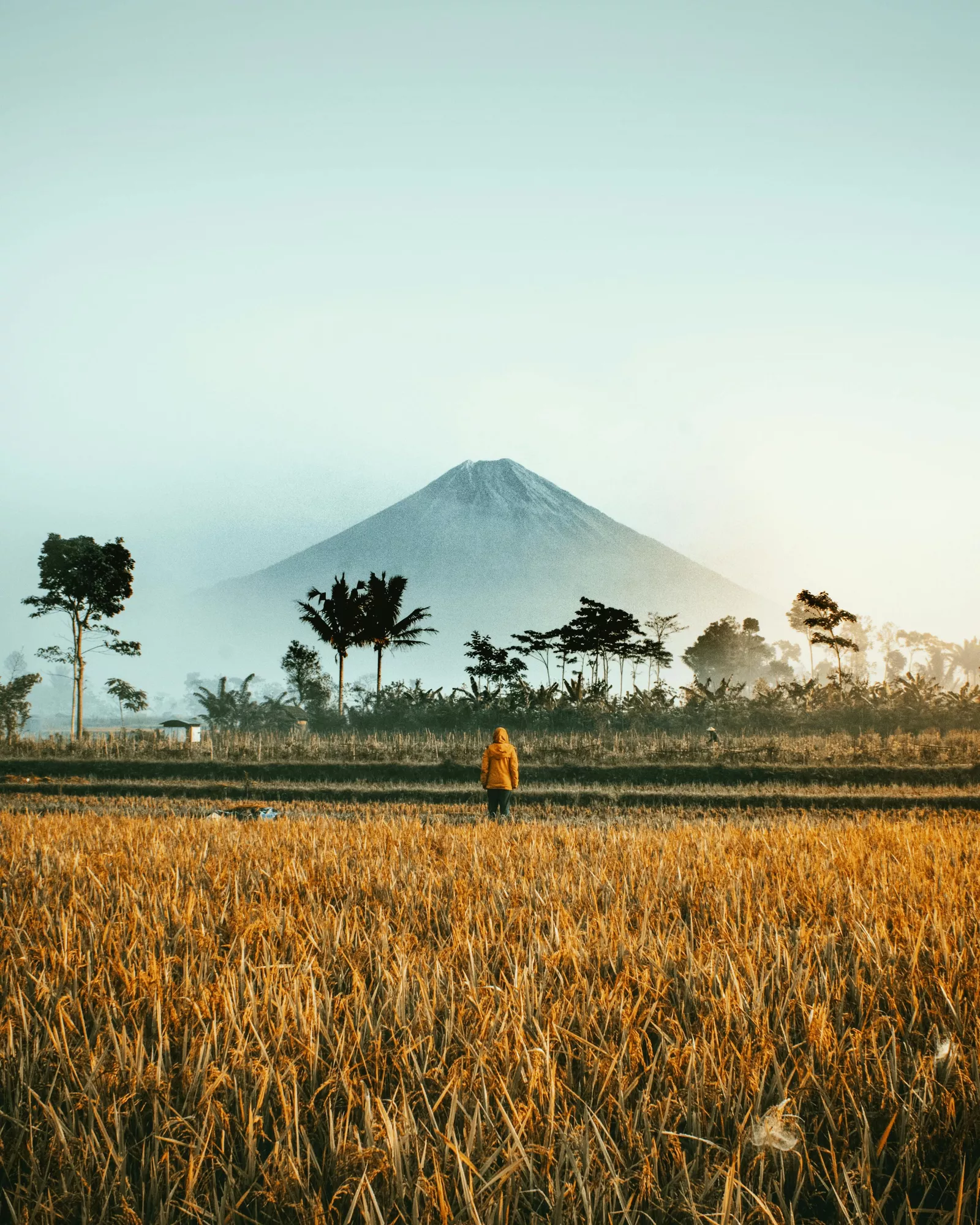
She lives among rice fields and often walks through them in the afternoon with her dog, Lala. She remembers Bali being much greener 25 or 30 years ago; now she notices more land being developed and plastic ending up in the fields.
She doesn't yet know what she'll ultimately do with her law degree.
That uncertainty would probably have terrified the Putu who spent five years refusing to quit until she knew exactly what was coming next.
Now she's comfortable taking the first step without having the rest of the path mapped out.
Experience Melukat with Putu
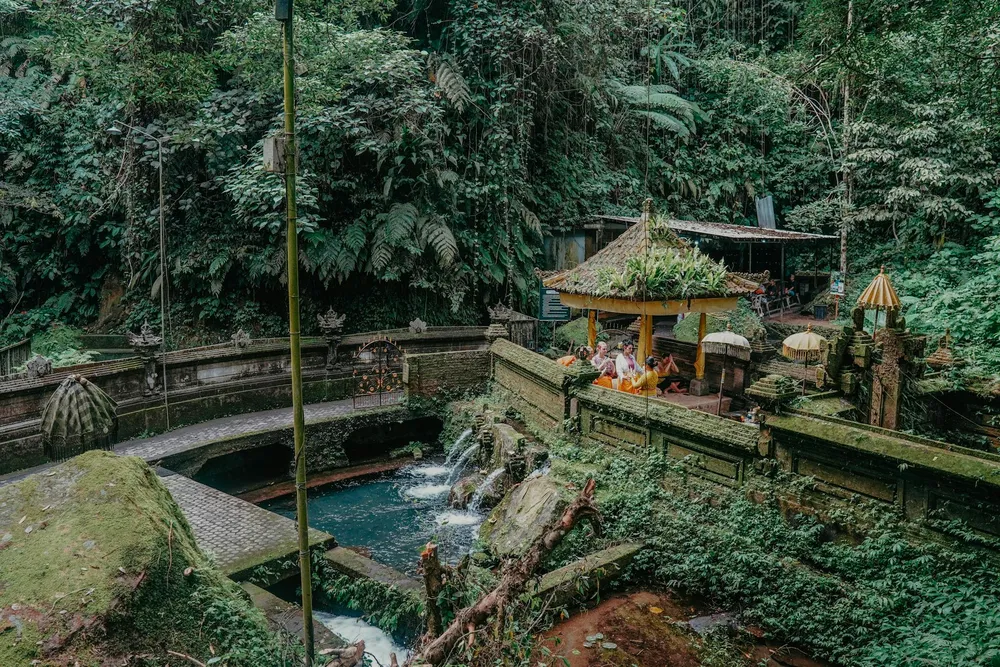
If you want to understand Melukat rather than simply visit a purification temple, we'd choose this Seek Sophie Melukat experience with Putu and her family.
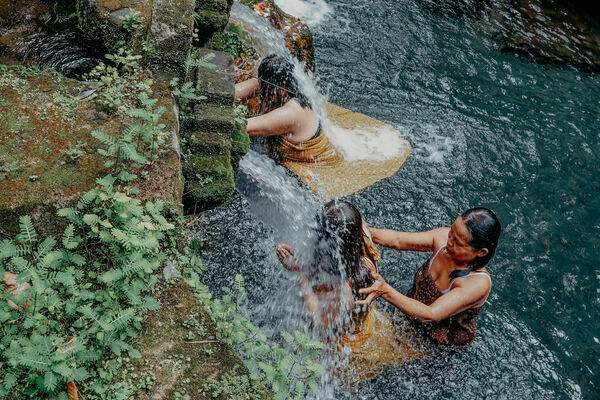
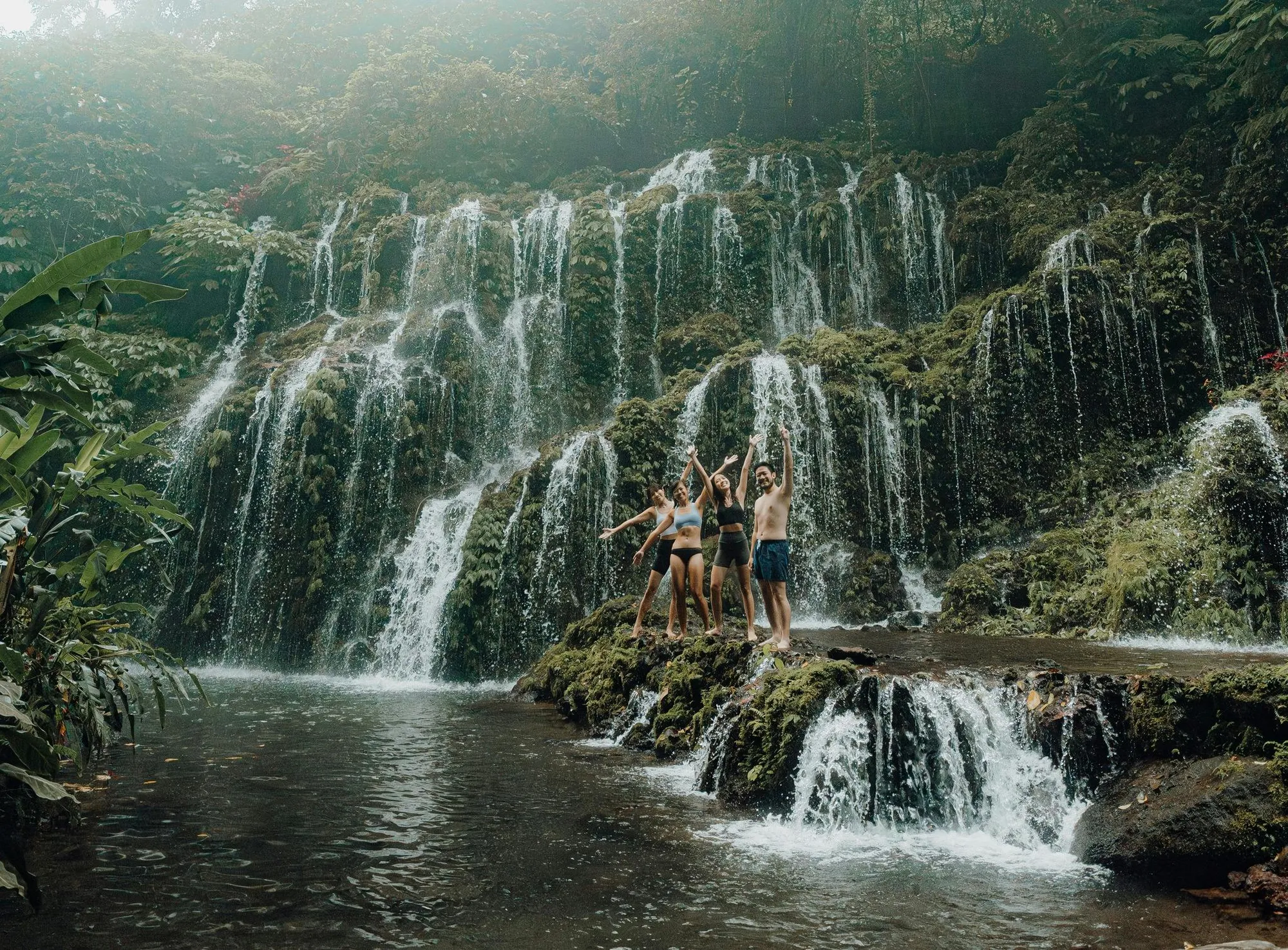
It's also very different from going independently to one of Bali's busiest purification sites. When we went with Putu, there were only a handful of other people at the pools. Before entering the water, she talked through the purpose of the ritual, guided a short meditation and showed us how to make a canang sari offering, including what the different coloured flowers represent.
There are lovely little details throughout. You walk down towards the water carrying what you need with you, sit with the sound of the waterfall before beginning, then move through the fountains one by one. When we visited, Putu's mother helped conduct the ritual in the water while Putu guided alongside her. Her mother speaks little English, but that didn't seem to matter much once the ceremony began.
One of us had been to Bali many times and said afterwards that this was the first time she'd felt so immersed in Balinese culture.
She didn't come out claiming some enormous spiritual transformation. She just felt refreshed and relieved, and wished she'd done it on one of her earlier trips. That's probably the best way to come.
You don't need to arrive expecting Melukat to change your life. Come to understand a tradition Putu has lived with since she was a child, and meet the family whose way of living eventually helped her decide what she wanted from her own.

![Mount Batur: Your Essential Guide & Beat the Crowds [2026]](https://d18sx48tl6nre5.cloudfront.net/webp_xl_6b128d171653526bce960e5411c24dda.webp)
![Komodo Islands: Everything You Need to Know & How to Avoid the Crowds [2026]](https://d18sx48tl6nre5.cloudfront.net/webp_xl_d9b99943af4ed7cc753b66ce9ba57eda.webp)
Bali FAQs
Is Bali expensive to visit?
Bali can be as budget-friendly or as luxurious as you want it to be. You can easily enjoy the island on a budget of around $30–$50 per day by staying in guesthouses, eating at warungs (local eateries), and using scooters for transport.
On the other end of the spectrum, Bali has stunning luxury resorts and private villas where you can spend upwards of $500 per night.
If you’re looking for a mid-range experience, expect to spend about $100–$150 per day.
Is $1,000 enough for a week in Bali?
Yes, $1,000 is more than enough for a week in Bali! Here’s a rough budget breakdown:
- Accommodation: $20–$100 per night per person
- Meals: $5–$20 per meal
- Transport: $5–$15 per day
- Activities: $10–$50 per person/day
If you avoid high-end resorts, you can easily stay within budget while still enjoying amazing experiences.
How many days do I need in Bali?
We’d recommend at least 8 days to really experience Bali, especially if you're a first time visitor.
If you have 8 days, you can spend 3 days in the South at Nusa Penida and chilling at beaches, and then spend 5 days in Ubud and up north where you can explore the tourist areas in Ubud, take in a cooking/art class, hike Mount Batur/Agung and do an adventurous day trip to Munduk.
If you have longer (e.g. 2 weeks), you can explore beyond Bali to hike Ijen volcano (blue flames!), or take a boat to nearby Lombok and Gili Islands. If you're heading to Lombok, you'll need at least another week.
What is the best time to visit Bali?
The best time to visit Bali is during the dry season, from April to October, when the weather is sunny and ideal for outdoor activities.
The wet season (November–March) is still a good time to visit if you prefer fewer crowds and don’t mind occasional heavy rain.
If you’re into surfing, July and August offer the best waves on Bali’s west coast.
What is so famous about Bali?
It’s no secret that Bali is one of the most popular places on the planet. When people think about Bali, they usually think of yoga retreats, Eat, Pray, Love, or glam beach bars, gorgeous villas and surfing. And Bali can be all of that of course. It’s super easy to travel, most people speak English, and there’s something for everyone—whether you want adventure, hiking, and nature or just chilling at a beach bar that could be anywhere in the world.
But there’s a lot more to Bali than its Instagram-famous treehouses and touristy swings. Bali has so much heart. There are artisans practicing crafts that have been passed down for generations, a deep respect for nature, and conservationists working hard to protect its land and oceans. And despite how much tourism has shaped the island, the spiritual side of Bali is still very real. That’s the Bali we love—and the one we hope travellers will get to experience.


![Mount Batur: Your Essential Guide & Beat the Crowds [2026]](https://d18sx48tl6nre5.cloudfront.net/webp_md_419759df50222c532107ed80aed4fd60.webp)
![Komodo Islands: Everything You Need to Know & How to Avoid the Crowds [2026]](https://d18sx48tl6nre5.cloudfront.net/webp_md_03b20b0ee11bb155c80ce9e618c3cbe5.webp)
![Best Things to Do in Labuan Bajo [2026]](https://d18sx48tl6nre5.cloudfront.net/webp_md_fbeccdf94f72d3ced7a242b51a7ec1af.webp)
![Best Things to Do in Labuan Bajo [2026]](https://d18sx48tl6nre5.cloudfront.net/webp_xl_6a7b2411dddfb5a78d68026829099637.webp)