Best Time to Visit Komodo (and the Months We'd Avoid)
After 25+ trips to Komodo, here's when we'd go for great weather, wildlife and fewer crowds.

The best time to visit Komodo is generally April to early December. You'll usually get good weather for boat trips, hiking and snorkelling. If you want to avoid the crowds, skip July and August, which are the busiest months.
But if you're coming for wildlife, it's a different story! July and August are mating season for Komodo dragons, so big dragons can be harder to spot, especially on Komodo Island. And if you want to see manta rays, September to March can actually be better because they love the cooler, plankton-rich water.
We've been to Komodo more than 25 times. Here's when we'd go, depending on what you want to see.
Read Everything You Need to Know about Planning Your Komodo Trip
TLDR: When Should You Visit Komodo?
- Best overall: April–May or September–early December. Good weather and fewer crowds.
- Best weather: April–November, with early December often still good.
- Best for Komodo dragons: April–June or September–November. Avoid July–August if seeing big dragons is your priority.
- Best for manta rays: September–March, especially December–March.
- Best for diving: April–May or September–October. Good conditions across different dive sites.
- Best for northern diving: June–August for clearer water.
- Best to avoid crowds: April–May or September–early December.
- Months to avoid for overnight boats: January–March, when rough seas can cause cancellations.
Our pick: We'd go in April-May, September-November for the best weather and fewer crowds!
1. Best Time for Good Weather: April to November
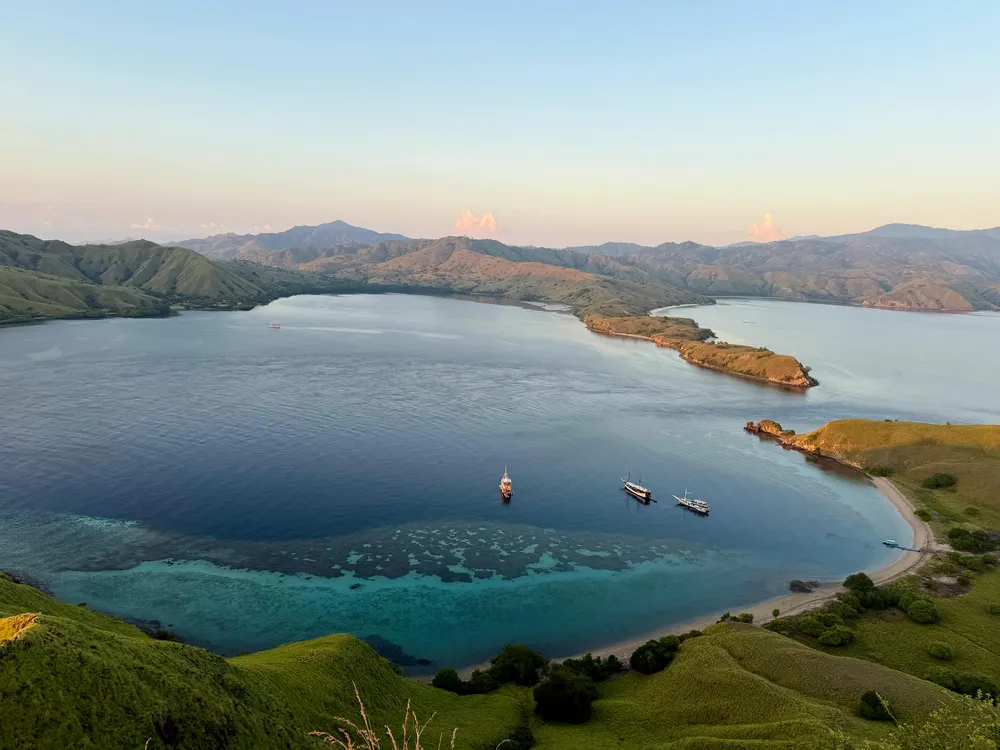
If you want good weather for a Komodo boat trip, we'd recommend April to early December. Although the traditional dry season usually ends around October, we've found that November and early December can still have lovely weather.
These are generally the better months for a 3D2N or 4D3N liveaboard, with more reliable sailing conditions than the wetter months of January to March.
Our favourite months are April–May and September–November. You'll usually get good weather without the worst crowds of July and August.
Is July to August a good time to visit?
July and August are generally dry and sunny, so they're great for hiking Padar, visiting Pink Beach and snorkelling.
The downside is that they're also the busiest months. Popular spots like Padar can get incredibly crowded, especially during school holidays.
If you're visiting then, we'd recommend a Seek Sophie boat that avoids the usual tourist timings. Some visit Padar at sunset instead of sunrise, while others go to quieter places like Gili Lawa, which we actually think is nicer than Padar!
Can you visit Komodo during rainy season?
Yes, but we'd avoid January to March if you're planning an overnight boat trip. The seas can be rough, and many of the nicer 3D2N boats don't sail during this period.
If you're visiting during rainy season, we'd recommend a 1-day Seek Sophie speedboat instead, as these are more likely to operate. But even speedboats can be cancelled if the weather is unsafe, so regardless of which boat you book, do leave a couple of extra days of buffer time in case you need to reschedule.
2. Best Time to See Komodo Dragons: Avoid July–August
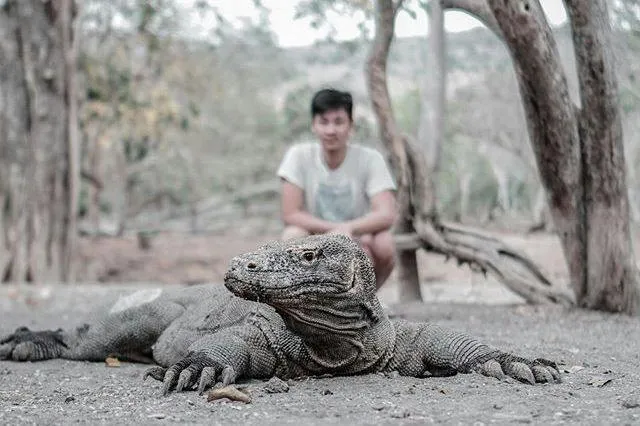
If seeing huge Komodo dragons is your main reason for visiting, we'd avoid July and August.
This is mating season, when larger dragons often move into the forest to find mates. They're harder to spot around the usual visitor areas, especially on Komodo Island. You may still see smaller dragons, but sightings of large adults can be less reliable.
We'd recommend April–June or September–November instead. Of course, these are wild animals, so sightings are never guaranteed!
Rinca or Komodo Island: Which is better for dragons?
If seeing dragons is your priority, we'd choose Rinca Island. It's smaller and dragons are often seen near the ranger station and visitor trails, even during mating season. Rinca Island feels like Disneyland though - it's a lot more developed and there are boardwalks where the dragons tend to congregate.
Komodo Island feels wilder. Here, the dragons have much more space to roam, so sightings are less predictable. We prefer Komodo Island for the overall experience because we think wildlife sightings should be in a wild place! But if you want a better chance of seeing the dragons in mating season, pick Rinca Island.
3. Best Time to See Manta Rays: September to March
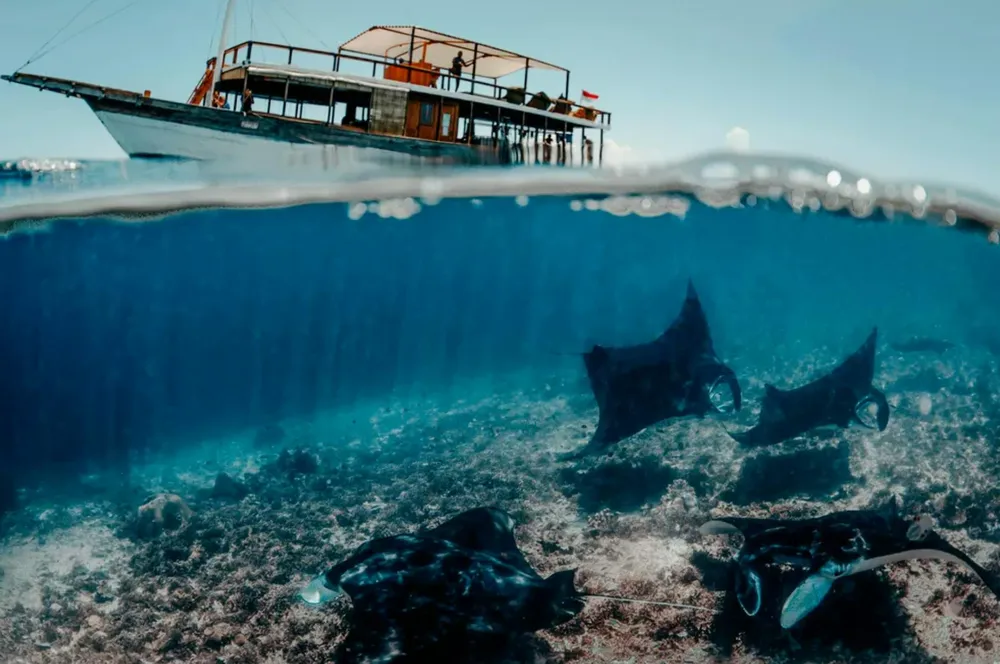
If you want to snorkel with manta rays, we'd recommend September to March, especially December to March.
Manta rays love cooler, plankton-rich water because that's where they find their food. During these months, you may even see several mantas feeding together at Manta Point!
Can you see manta rays all year?
Yes! You can see mantas in Komodo throughout most of the year. But August is one of the harder months to spot them, especially if you're snorkelling.
When the surface water gets too warm, mantas may stay in deeper, cooler water. So even though they're still around, you might not see them at Manta Point when snorkelling.
Our tip: If seeing mantas is important to you, we'd avoid August and choose a Seek Sophie boat that visits more than one manta spot.
If you book a private Seek Sophie boat, you can also adjust your itinerary based on recent sightings. For example, if mantas haven't been spotted at Manta Point, you could ask your captain to visit Siaba Bay to snorkel with turtles instead. We love Siaba Bay just as much!
And remember, mantas are wild animals, so sightings are never guaranteed. Please don't chase or touch them!
4. Best Time to Dive in Komodo: April–May and September–October
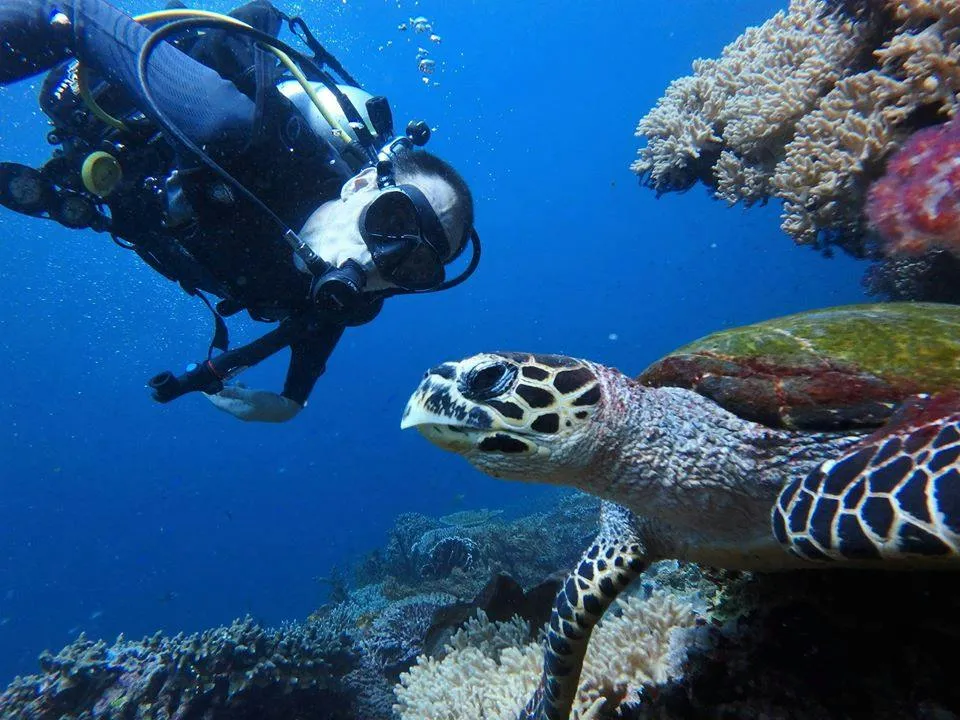
For most divers, we'd recommend April–May or September–October. You'll get a good mix of visibility, marine life and access to different parts of the park, without the worst peak-season crowds.
But if you're coming for specific dive sites or marine life, other months may be better.
November–March: Best for Mantas and Southern Diving
This is a great time for manta rays because the water is rich in plankton. You might also encounter whale sharks or other large marine animals, although these are much less predictable.
Southern dive sites can be good during these months, while northern sites are often harder to reach because of rough seas. Some sites will also have lower visibility due to the plankton.
We'd choose this period if: Seeing mantas is your top priority, and you don't mind more unpredictable weather.
April–May and September–October: Best for Most Divers
These are our favourite all-round diving months. Sea conditions are generally good, and you can explore more of Komodo's northern, central and southern dive sites.
Visibility is often around 15–30 metres, depending on the site. You'll also avoid some of the crowds that come during peak season.
We'd choose this period if: It's your first time diving in Komodo, or you want a mix of diving and sightseeing.
June–August: Best for Northern Dive Sites
If you want to dive famous northern sites like Castle Rock and Crystal Rock, we'd recommend June to August.
The water is generally clearer during these months, with visibility sometimes reaching 30 metres or more. It's a great time for reef sharks, schooling fish and healthy coral reefs.
The downside is that it's peak tourist season, and some of the famous dive sites get busy. Komodo's currents can also be very strong, so make sure you choose dives suited to your experience level.
We'd choose this period if: You're an experienced diver who wants clear water and access to the famous northern sites.
Is the water cold in Komodo?
It can be! Komodo's water temperatures vary a lot between dive sites.
Northern and central sites are often around 26–29°C, while southern sites can drop to 21–23°C because of cold-water currents.
If you're diving, we'd recommend bringing a proper wetsuit. If you're snorkelling and get cold easily, bring a rashguard too.
5. Best Time to Avoid Crowds: Skip July and August
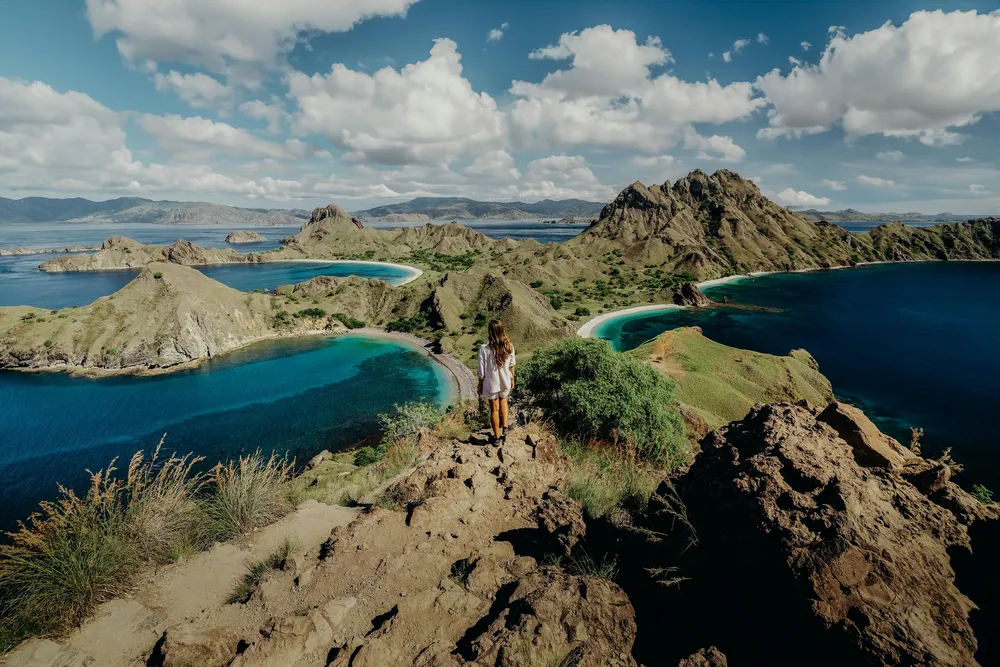
If you want fewer crowds, skip July and August, as well as major Indonesian and Chinese holidays (especially Chinese New Year and Golden Week). More Chinese travellers have been visiting Komodo in recent years, so popular spots like Padar can get very crowded during these periods.
We'd recommend April–May or September–early December, outside the holidays, for good weather and fewer crowds.
But the boat you choose matters just as much as when you go! We've seen people visit Komodo on the same dates, but have completely different experiences. One gets the islands almost to themselves, while the other is stuck in overtourism hell 🙈
That's why we work with local Seek Sophie boat partners to offer quieter routes, like Padar at sunset, alternative Pink Beaches and Gili Lawa. You get fewer crowds, and it helps reduce pressure on Komodo's busiest spots.
6. Best Time to Visit Komodo: Month by Month
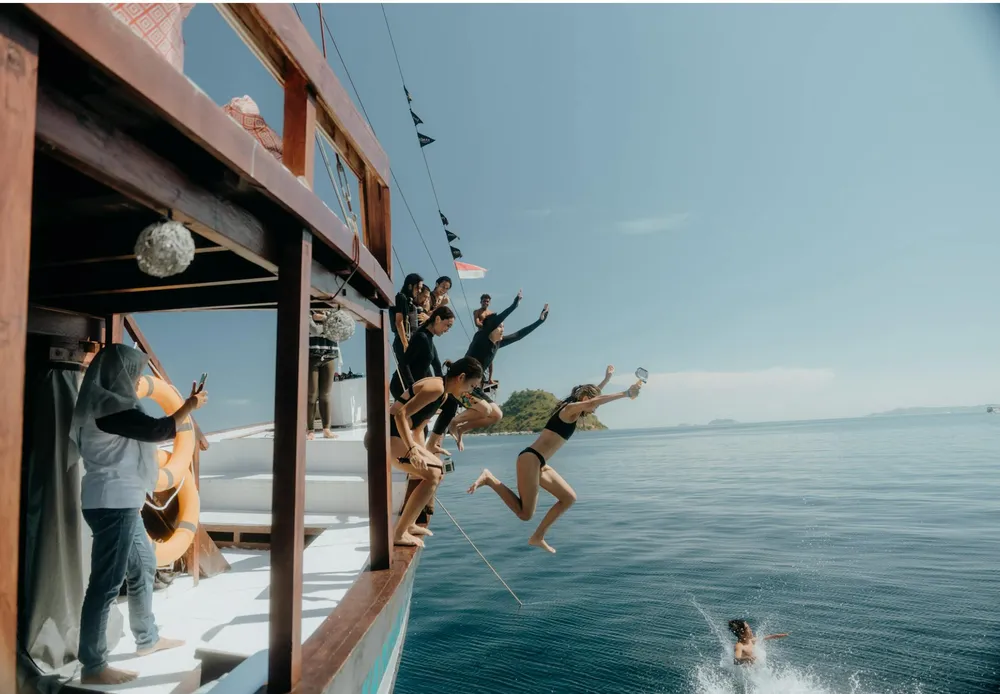
January–March: Rainy Season, But Great for Mantas
These are the wettest months, with rougher seas and more boat cancellations. Many 3D2N Phinisis don't operate, so you'll have fewer boats to choose from. Even the 3D2N Phinisi that operate often cancel their trips in the event of bad weather. The safest boats to pick in Jan-Mar would be the 1 day speedboats that are more stable, and more likely to go out.
But it's a great time for mantas! The nutrient-rich water, and cooler weather can attract larger groups of them.
Our advice: Choose a 1-day Seek Sophie speedboat if you're here in Jan-Mar, and leave extra days in case of cancellations.
April–May: One of Our Favourite Times!
The rain is easing, the weather is improving and the peak-season crowds haven't arrived yet. It's a great time for island-hopping, Komodo dragons and diving.
Our advice: If it's your first trip to Komodo, April or May is a great choice!
June–August: Great Weather, But Crowded
This is peak season, with dry weather and great conditions for hiking and snorkelling. It's also one of the best periods for diving in northern Komodo.
But popular spots can be crowded, and July–August is mating season for Komodo dragons, making big adults harder to spot.
Our advice: Choose a Seek Sophie boat that times their visits to the popular spots to avoid the usual crowds. If dragons are your priority, visit outside July–August.
September–November: Our Favourite All-Round Months
These are some of our favourite months! The weather is generally still good, the crowds are easing and manta sightings can be excellent.
It's also a great time for diving and spotting Komodo dragons outside the main mating season.
Our advice: If we could choose any time to go, September to November would be near the top of our list.
December: Early December Can Still Be Great
Early December can still have lovely weather, with fewer tourists than peak season. It's also a good time for manta rays as the water becomes richer in plankton.
Weather tends to become less predictable later in December, so we'd be more careful about booking overnight boat trips towards the end of the month.
Our advice: Increasingly rainy season has started in mid-late January instead of in December. But if you're going in December you should leave a couple of days buffer time in case the weather turns and your boat trip gets cancelled.
So, When Should You Actually Visit Komodo?
After 25+ trips, here's what we'd recommend:
- First time in Komodo? Go in April–May or September–early December.
- Want to see big Komodo dragons? Avoid July–August, especially if you're visiting Komodo Island.
- Want to swim with manta rays? September–March is a good time, especially December–March.
- Want to dive? April–May and September–October are best overall. June–August is great for northern dive sites.
- Want fewer crowds? Skip July–August, and choose a boat that visits quieter places.
Our pick would be April-May, September-November, but we'd happily go in early December too!
And whichever month you go, don't forget to choose your boat carefully. After years of exploring Komodo, we've seen how much difference a good captain, crew and itinerary can make.
At Seek Sophie, we handpick our Komodo boats and work with local hosts who know the islands inside out. We want you to see Komodo at its best, without the crowds, while supporting the people helping to protect it.
Explore Seek Sophie's handpicked Komodo boat trips to find the best one for your dates.

![Komodo Islands: Everything You Need to Know & How to Avoid the Crowds [2026]](https://d18sx48tl6nre5.cloudfront.net/webp_xl_d9b99943af4ed7cc753b66ce9ba57eda.webp)
![Best Things to Do in Labuan Bajo [2026]](https://d18sx48tl6nre5.cloudfront.net/webp_xl_6a7b2411dddfb5a78d68026829099637.webp)

Komodo National Park Experiences FAQs
How much are the Komodo park fees?
Park fees are separate from your boat tour and change frequently, so always check before your trip.
- As of January 2026, Komodo park fees for Foreigners/Kitas holders are IDR 250,000 per person for the 1 day trip and IDR 650,000 per person for the 3D2N trip.
- The park fees for locals are IDR 150,000 for the 1 day trip and IDR 350,000 per person for the 3D2N trip.
- Please note this can change at any time without notice. Best to check with your boat company host a day or two before if there have been any recent changes.
💡 Important to know:
- Fees vary depending on the island and activities (e.g., diving costs more).
- Weekends are more expensive than weekdays.
- Cash only – No credit cards accepted. Bring enough IDR before heading out!
- Many of our boats now include park fees in the price - please check in the inclusions to see if park fees are now included.
Do I need to pay extra park fees based on my itinerary?
Yes, but you don’t need to pay separately for each island or activity. Your boat crew will collect the full Komodo Park fee in advance, which is why the price is given as a range. The total amount depends on the specific islands and activities included in your itinerary.
If you plan to bring a drone, there is an additional fee, and you’ll need to apply for a permit at least 3 days in advance (see details below).
What is this mysterious Komodo park fee?
This is the mandatory entrance fee for Komodo National Park, and it’s usually not included in your boat price. As of 2026, foreigners typically pay about IDR 250,000 for a 1-day trip and around IDR 650,000 for a 3D2N trip. The exact amount can vary depending on the islands visited and whether you're there on a weekend or weekday. Your boat operator will confirm the final amount before your trip.
Do I need to pay park fees in cash?
Park fees will be paid in cash only. Note that there are no ATMs on Komodo Islands so you need to bring enough IDR before heading to the islands (i.e. before your boat trip starts). Note that many of our boats now include park fees in the price - please check in the inclusions to see if park fees are now included.
How do I get from Labuan Bajo to Komodo National Park?
By boat! It takes 1–2 hours depending on whether you are taking a slow boat or a speedboat. You can choose between:
- Speedboat (1-day trip) – Fast, covers more places in a day. You can cover 6 islands in Komodo National Park in 1 day on a speedboat trip.
- Slow boat / Phinisi (overnight trip) – Slower traditional boats - you can cover 3 islands in Komodo National Park in 1 day on a traditional boat.

![Komodo Islands: Everything You Need to Know & How to Avoid the Crowds [2026]](https://d18sx48tl6nre5.cloudfront.net/webp_md_4b03f3324bc1312da4fb5e7ea97b89e4.webp)
![Best Things to Do in Labuan Bajo [2026]](https://d18sx48tl6nre5.cloudfront.net/webp_md_fbeccdf94f72d3ced7a242b51a7ec1af.webp)