Komodo Dragons: 10 Things You Need to Know + How to See Them
Meet the world’s largest, deadliest, and most mysterious lizard.
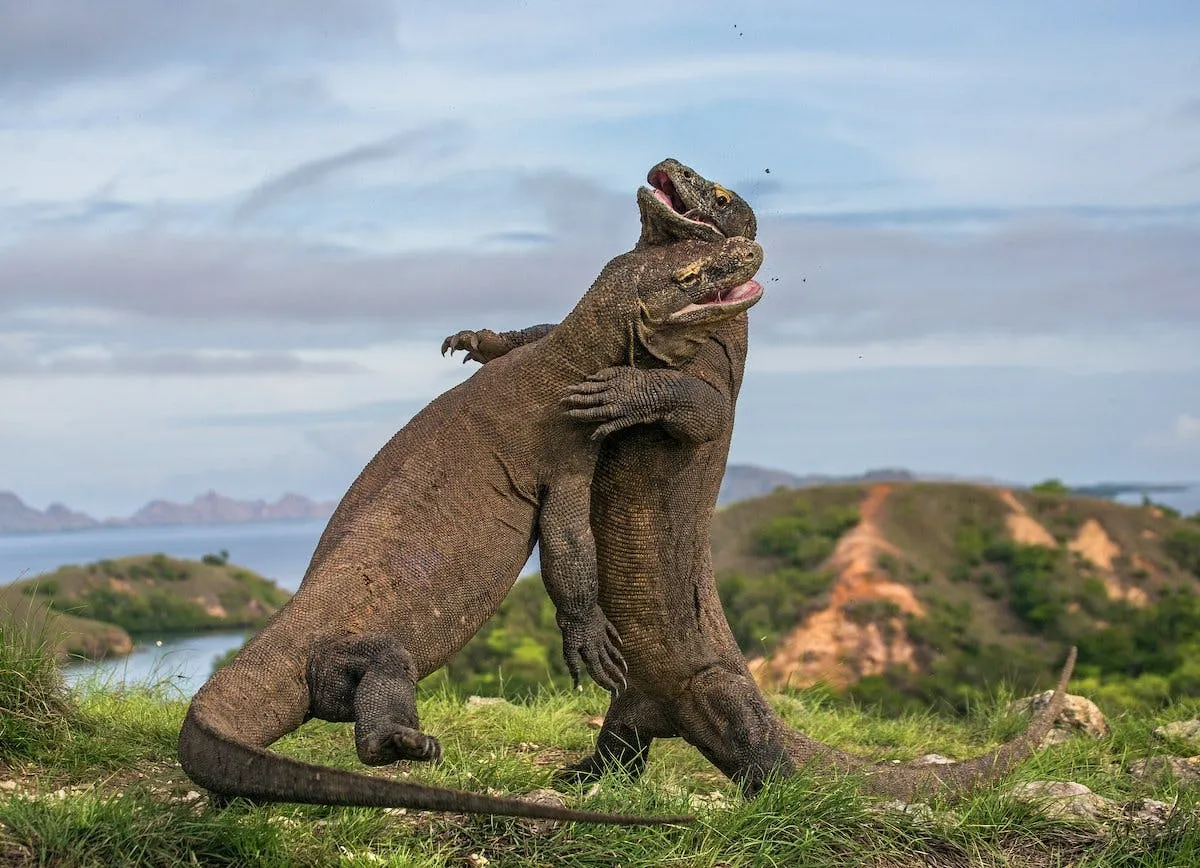
Komodo dragons are living dinosaurs — powerful, venomous, and found nowhere else in the world. But despite their fearsome reputation (did you know they eat their own young?!), they're not as scary as they seem and you can definitely see them safely.
Here’s everything you need to know about the world’s largest lizard and how to see them in the wild on a Seek Sophie Komodo boat trip!
Komodo Dragons are considered the “twin siblings” of humans
According to an ancient legend, two brothers named Tupat and Sumba were helped by a giant lizard while on a journey to find food and water. The villagers believed the lizard shared a special bond with humans, acting as a protector.
To this day, Komodo dragons are seen not just as fierce predators, but also as guardians and distant relatives, especially by the indigenous Ata Modo tribe on Komodo Island, and remain greatly respected in Indonesian culture.

Komodo Dragons eat their own babies
One of the most surprising Komodo dragon fact is that adult Komodo dragons are known to prey on their own young, which is why hatchlings spend their first two years living in trees for safety. To avoid being eaten, they even cover themselves in faeces to mask their scent!

Yes, they eat other animals too
Komodo dragons are carnivores and apex predators that prey on Timor deer, carrion, wild boar, water buffalo, and even juvenile Komodo dragons. Their stomach expands easily, allowing them to consume up to 80% of their body weight in one meal — that’s the equivalent of a human eating over 250 burgers!

Female Komodo Dragons can reproduce without males!
Who needs men? When there are no males around, female Komodo dragons can reproduce through parthenogenesis, a process where they fertilise their own eggs. However, this method only produces male offspring.

Their bite can kill you
For years, scientists believed Komodo dragon bites were so deadly because of their bacteria-filled mouths. But in 2009, it was discovered that they actually have venom glands that release toxins, preventing clotting and lowering blood pressure.
This means their prey bleeds out slowly from blood loss, and dies from shock as they bite down with their serrated teeth and swing it from side-to-side.
You can still see them even if you’re on your period
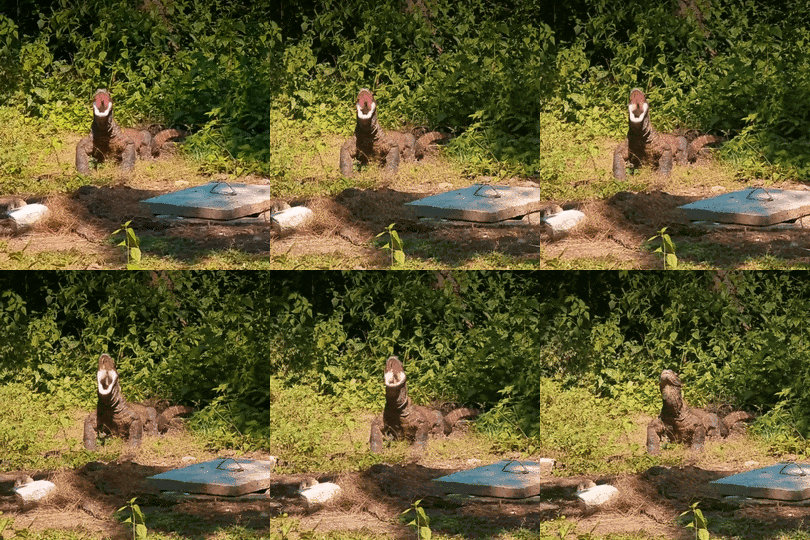
Although Komodo dragons have an excellent sense of smell, aided by their Jacobson's organ (also known as the vomeronasal organ), visiting Komodo or Rinca Island during your menstrual period is safe, as long as you listen to your guide and maintain a safe distance.

Komodo Dragons are the world’s largest living lizard
Komodo dragons can grow up to three meters long (about the size of a small car) in their lifespan of 30 years and weigh up to 70 kg on average. The heaviest recorded Komodo dragon weighed 166 kg — about the same as a panda! They can also run up to 19 km/h and swim between islands for hours (thanks to their muscular tail) in search of food.

Komodo Dragons can only be found in Indonesia
Specifically, on five Indonesian islands — Komodo, Rinca, Gili Motang, Gili Dasami (all part of Komodo National Park), and Flores. These islands offer a mix of tropical forest and savanna landscapes, creating the perfect environment for these large dragons.
The only way to see them is on a guided trek on Komodo or Rinca Island, accessible via a Seek Sophie Komodo boat trip from Labuan Bajo. Here’s everything you need to know on how to get to Komodo National Park.
These Seek Sophie boat trips range from a day trip speedboat to a 3D2N liveaboard. Both cover all the usual highlights like trekking with Komodo Dragons, seeing a Pink Beach, hiking to the viewpoint at Padar island and some snorkelling.
Komodo Island is larger and more wild, and is the only inhabited island in the park, home to the indigenous Ata Modo people.
Rinca Island has higher density of dragons and is also more manicured, with boardwalks for visitors.
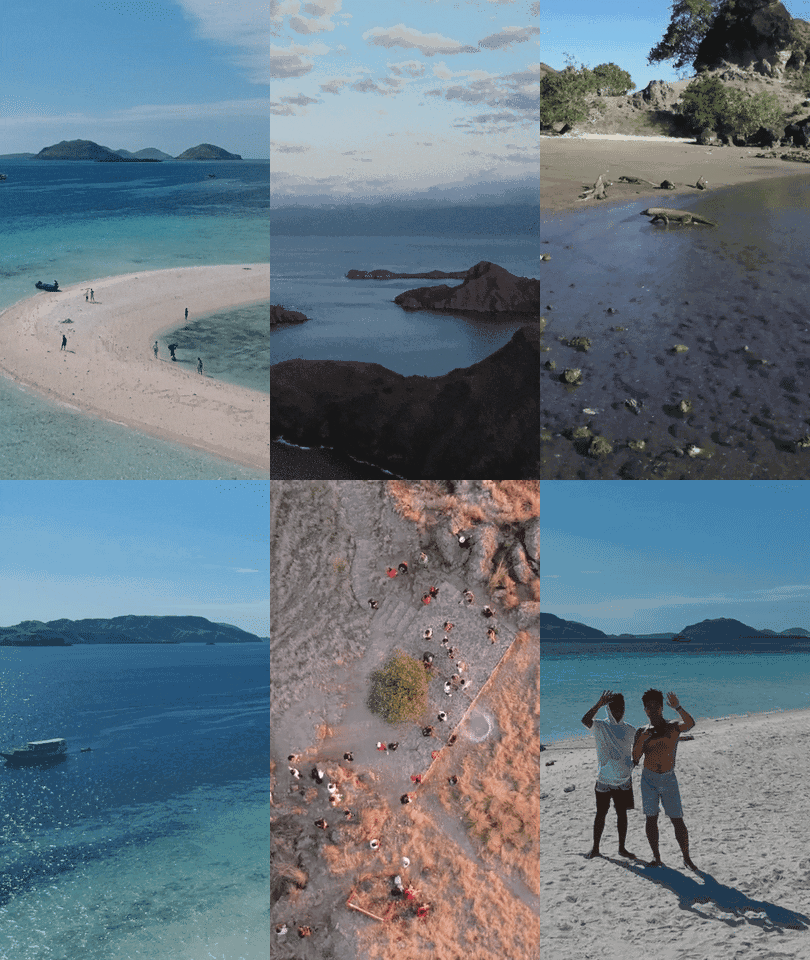
Komodo Dragons may have originated in Australia
The Komodo dragon is part of an ancient lineage that has existed for millions of years. Fossils found in Australia, dating back 300,000 to 4 million years ago, are identical to present-day Komodo dragons!

Komodo Dragons are endangered
In 2021, the IUCN Red List reclassified Komodo dragons (Varanus komodoensis) as an Endangered species due to habitat destruction and climate change like rising sea levels.
Only around 1,400 mature Komodo dragons remain in the wild. To protect them, Komodo National Park, now a UNESCO World Heritage Site, has strict conservation efforts, including anti-poaching patrols and community education programs.

Want to See Komodo Dragons in the Wild?
Check out the best Seek Sophie Komodo boat trips here!

![Komodo Islands: Everything You Need to Know & How to Avoid the Crowds [2026]](https://d18sx48tl6nre5.cloudfront.net/webp_xl_d9b99943af4ed7cc753b66ce9ba57eda.webp)
![Best Things to Do in Labuan Bajo [2026]](https://d18sx48tl6nre5.cloudfront.net/webp_xl_6a7b2411dddfb5a78d68026829099637.webp)

Komodo National Park Experiences FAQs
How much are the Komodo park fees?
Park fees are separate from your boat tour and change frequently, so always check before your trip.
- As of January 2026, Komodo park fees for Foreigners/Kitas holders are IDR 250,000 per person for the 1 day trip and IDR 650,000 per person for the 3D2N trip.
- The park fees for locals are IDR 150,000 for the 1 day trip and IDR 350,000 per person for the 3D2N trip.
- Please note this can change at any time without notice. Best to check with your boat company host a day or two before if there have been any recent changes.
💡 Important to know:
- Fees vary depending on the island and activities (e.g., diving costs more).
- Weekends are more expensive than weekdays.
- Cash only – No credit cards accepted. Bring enough IDR before heading out!
- Many of our boats now include park fees in the price - please check in the inclusions to see if park fees are now included.
Do I need to pay extra park fees based on my itinerary?
Yes, but you don’t need to pay separately for each island or activity. Your boat crew will collect the full Komodo Park fee in advance, which is why the price is given as a range. The total amount depends on the specific islands and activities included in your itinerary.
If you plan to bring a drone, there is an additional fee, and you’ll need to apply for a permit at least 3 days in advance (see details below).
What is this mysterious Komodo park fee?
This is the mandatory entrance fee for Komodo National Park, and it’s usually not included in your boat price. As of 2026, foreigners typically pay about IDR 250,000 for a 1-day trip and around IDR 650,000 for a 3D2N trip. The exact amount can vary depending on the islands visited and whether you're there on a weekend or weekday. Your boat operator will confirm the final amount before your trip.
Do I need to pay park fees in cash?
Park fees will be paid in cash only. Note that there are no ATMs on Komodo Islands so you need to bring enough IDR before heading to the islands (i.e. before your boat trip starts). Note that many of our boats now include park fees in the price - please check in the inclusions to see if park fees are now included.
How do I get from Labuan Bajo to Komodo National Park?
By boat! It takes 1–2 hours depending on whether you are taking a slow boat or a speedboat. You can choose between:
- Speedboat (1-day trip) – Fast, covers more places in a day. You can cover 6 islands in Komodo National Park in 1 day on a speedboat trip.
- Slow boat / Phinisi (overnight trip) – Slower traditional boats - you can cover 3 islands in Komodo National Park in 1 day on a traditional boat.

![Komodo Islands: Everything You Need to Know & How to Avoid the Crowds [2026]](https://d18sx48tl6nre5.cloudfront.net/webp_md_4b03f3324bc1312da4fb5e7ea97b89e4.webp)
![Best Things to Do in Labuan Bajo [2026]](https://d18sx48tl6nre5.cloudfront.net/webp_md_fbeccdf94f72d3ced7a242b51a7ec1af.webp)