Komodo National Park


Top Komodo Boat Trips


All Komodo National Park Experiences




All Experiences


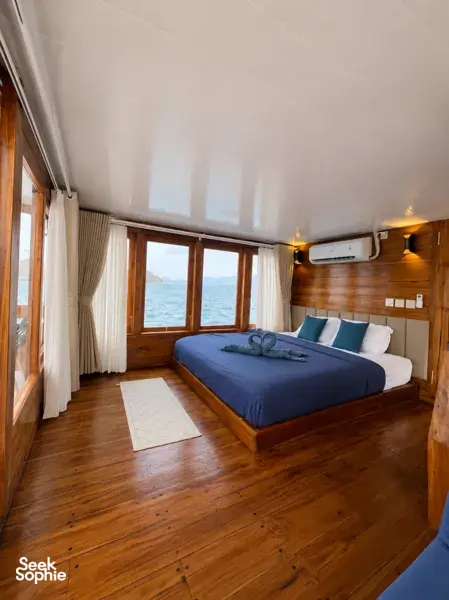
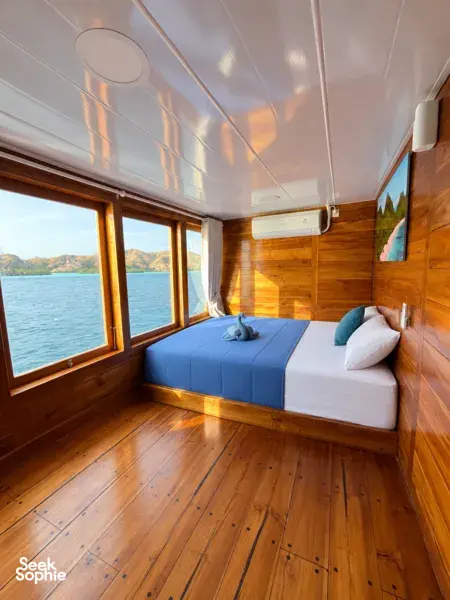
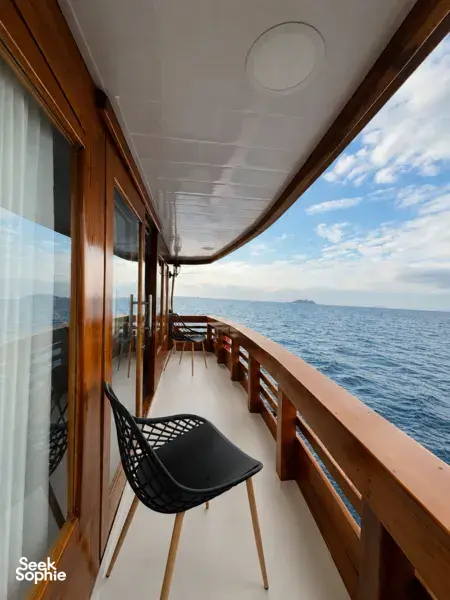
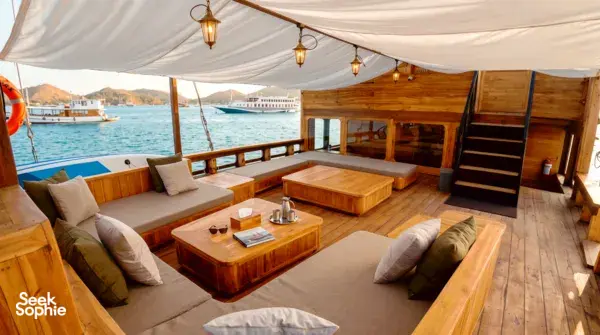
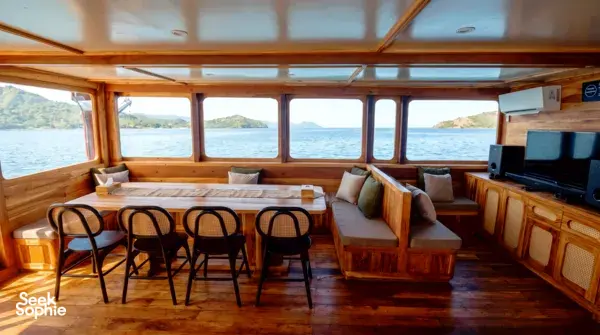
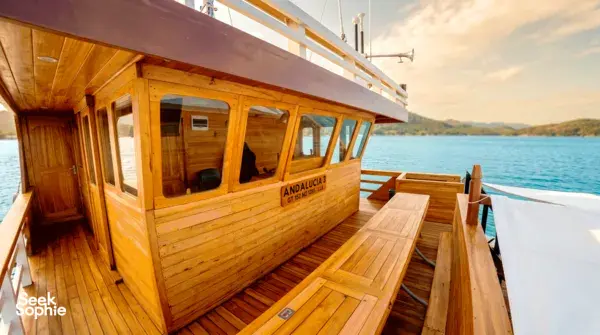
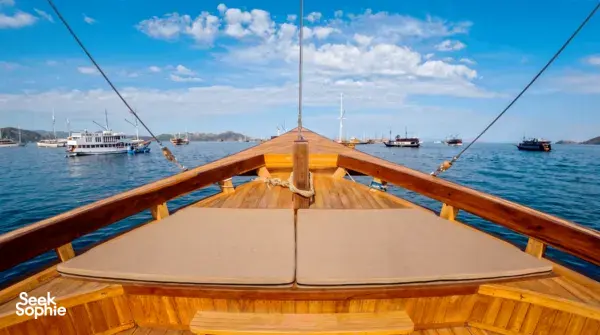









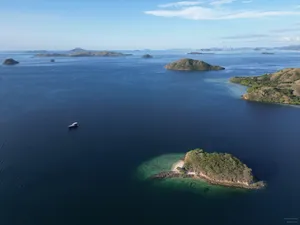
Visiting Komodo National Park

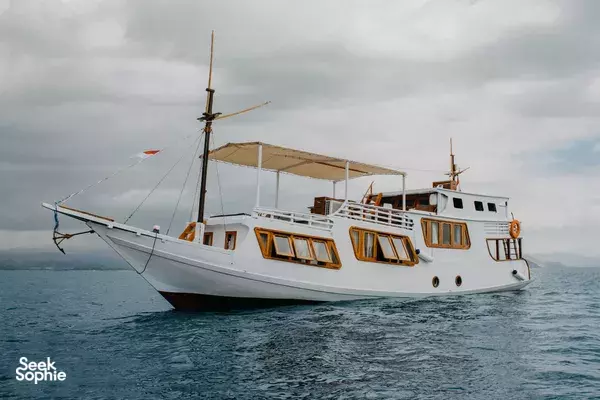
Why These Komodo Boats Made Our List
We’ve been to Komodo 20+ times. So we know the messy realities here - queues at Padar Island in peak season, many boats that aren't safe, and crews that often pick up guests an hour late. That’s why we’re very picky about the boats we list on Seek Sophie.
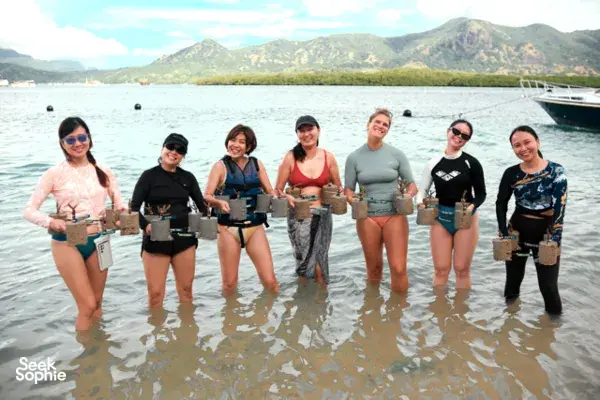
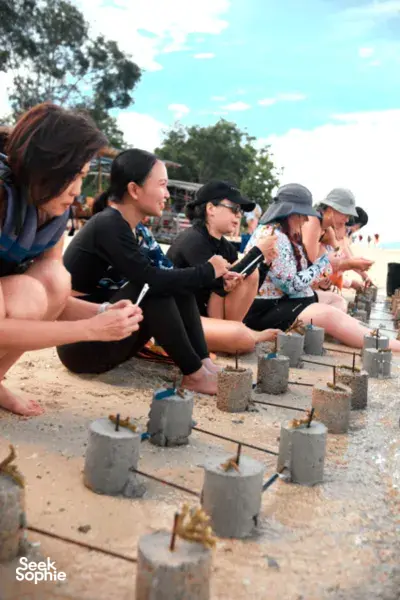
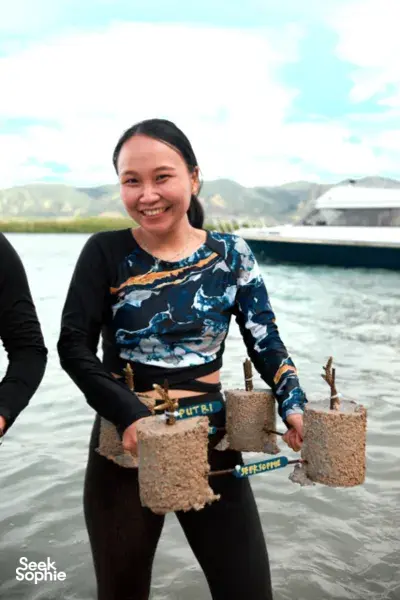
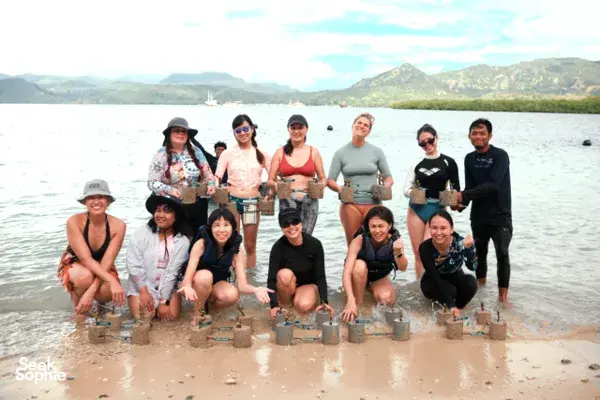
We choose ones with strong safety standards, professional crews, and thoughtful itineraries that try to visit popular spots at quieter times. Many also give back to the park through coral restoration, beach clean-ups & community efforts.
How to Choose a Komodo Boat
The key thing to look out for in Komodo is safety because many of the boats are still unsafe and several sink each year. The ones on Seek Sophie have all been vetted by our team, and are the best in Labuan Bajo.
To choose a boat here, we'd recommend a longer trip if you have the time (3-4 days), so you'd be able to really enjoy the park. And if you have a larger group (eg 4 or more), a private trip can help you avoid the worst of the crowds as you can tailor your itinerary/timings.
Best Time to Go
The best time to visit Komodo National Park is April–May and September–November, when the weather is calmer, wildlife is active and crowds are smaller.
If you're visiting in other months:
- If you visit January–March, expect rain and possible boat cancellations (build in buffer days).
- June–August and public holidays are peak season, so boats book out early and popular spots get crowded.
- In July–August large dragon sightings can be fewer as many go into the forest for mating season.
How Many Days to Plan for
You’ll need to arrive in Labuan Bajo at least one day before your boat trip.
- If you’re doing a 1-day speedboat, it ends in the evening - so you’ll fly out the next day. For a 1 day Komodo trip, you need 3 days total (arrival + trip + departure).
- If you’re doing a liveaboard, it usually ends around noon - so you can fly out the same day. For a 3D2N trip, plan 4–5 days total.
Most people fly in and out just for Komodo, but it’s worth adding a day for tribal dining or 2 days for Wae Rebo!
How to Skip the Crowds
We’ve been to Komodo over 15 times, and it’s changed a lot! Here’s how to dodge the crowds:
1. Skip peak season: Avoid June to August and steer clear of Indonesian public holidays, especially Raya.
2. Go midweek: Weekdays are quieter than weekends. Most 3D2N boats leave on Fridays, but there are weekday options too.
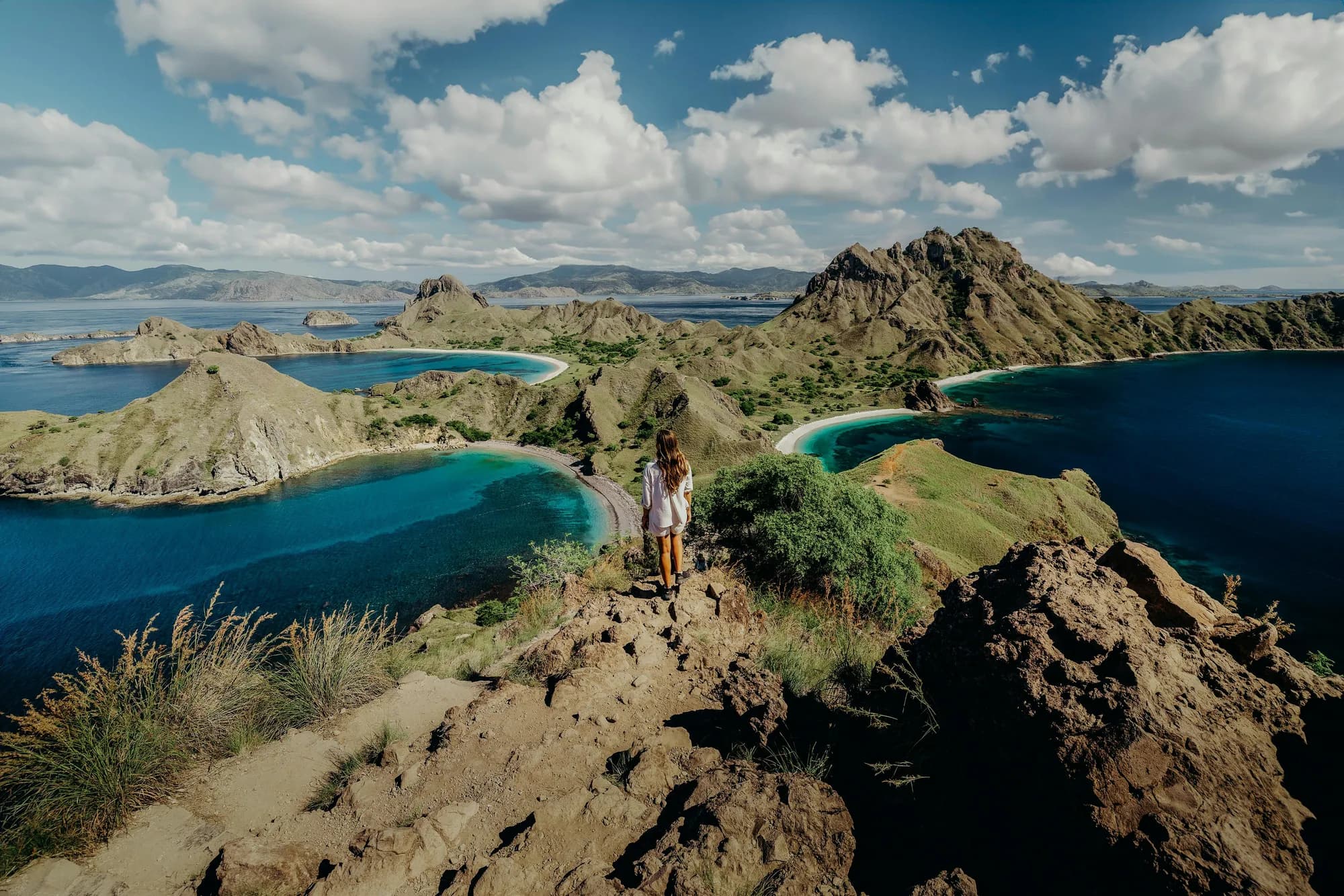
3. Pick the right boat: Choose one that avoids the usual crowd-heavy spots. For instance, head to Padar at sunset instead of sunrise—it’s a game-changer.
Top things to see & do

Helpful Questions
Do I need to pay park fees in cash?
Park fees will be paid in cash only. Note that there are no ATMs on Komodo Islands so you need to bring enough IDR before heading to the islands (i.e. before your boat trip starts). Note that many of our boats now include park fees in the price - please check in the inclusions to see if park fees are now included.
How much are the Komodo park fees?
Park fees are separate from your boat tour and change frequently, so always check before your trip.
- As of January 2026, Komodo park fees for Foreigners/Kitas holders are IDR 250,000 per person for the 1 day trip and IDR 650,000 per person for the 3D2N trip.
- The park fees for locals are IDR 150,000 for the 1 day trip and IDR 350,000 per person for the 3D2N trip.
- Please note this can change at any time without notice. Best to check with your boat company host a day or two before if there have been any recent changes.
💡 Important to know:
- Fees vary depending on the island and activities (e.g., diving costs more).
- Weekends are more expensive than weekdays.
- Cash only – No credit cards accepted. Bring enough IDR before heading out!
- Many of our boats now include park fees in the price - please check in the inclusions to see if park fees are now included.
Do I need to pay extra park fees based on my itinerary?
Yes, but you don’t need to pay separately for each island or activity. Your boat crew will collect the full Komodo Park fee in advance, which is why the price is given as a range. The total amount depends on the specific islands and activities included in your itinerary.
If you plan to bring a drone, there is an additional fee, and you’ll need to apply for a permit at least 3 days in advance (see details below).
What is this mysterious Komodo park fee?
This is the mandatory entrance fee for Komodo National Park, and it’s usually not included in your boat price. As of 2026, foreigners typically pay about IDR 250,000 for a 1-day trip and around IDR 650,000 for a 3D2N trip. The exact amount can vary depending on the islands visited and whether you're there on a weekend or weekday. Your boat operator will confirm the final amount before your trip.
How do I get from Labuan Bajo to Komodo National Park?
By boat! It takes 1–2 hours depending on whether you are taking a slow boat or a speedboat. You can choose between:
- Speedboat (1-day trip) – Fast, covers more places in a day. You can cover 6 islands in Komodo National Park in 1 day on a speedboat trip.
- Slow boat / Phinisi (overnight trip) – Slower traditional boats - you can cover 3 islands in Komodo National Park in 1 day on a traditional boat.
Where is Komodo National Park?
Komodo National Park is in Indonesia, between Sumbawa and Flores. The closest town is Labuan Bajo (LBJ) on Flores Island. That’s where you’ll start your trip.
What are the best airports to fly into?
Labuan Bajo Airport (LBJ). It’s the only airport near Komodo National Park. All the boat trips will leave from Labuan Bajo town.
Do I need to book a boat in advance?
Yes you should book your Komodo boat in advance, especially if you care about safety! In peak season (June–August), the well-maintained boats sell out quickly. What’s left last-minute are usually basic boats with lower safety standards. Boat accidents do happen in Komodo, and this isn’t somewhere you want to cut corners.
If you want a safe phinisi, a good guide, or a private charter, book early. Only leave it till arrival if you’re very flexible and okay with basic options.
Are there direct flights to Labuan Bajo?
Yes! You can fly direct to Labuan Bajo from:
- Bali (DPS) – 1.5-hour flight, multiple flights per day.
- Jakarta (CGK) – 2.5-hour flight
- Singapore (SIN) - 3+ hours flight
- Kuala Lumpur (KUL) - 3.5 hours flight.
Can I take a boat to Komodo from Bali or Lombok?
- Bali to Komodo: No. There’s no ferry. You must fly. There are multiple flights a day so it’s very easy.
- Lombok to Komodo: There are a couple of 4 day boat trips between Lombok and Komodo, departing a couple of times a week. But they have poor safety records and the boat operators all sail to Saleh Bay where unsustainable whale shark feeding takes place. We do not recommend the Lombok-Komodo trips for ethical and safety reasons (see more here).
Can I fly out on the same day my boat trip ends?
We wouldn’t recommend this unless you can leave a lot of buffer. Boats return late (4–6pm) and it depends on the currents on the day when the boat will arrive at the harbour. We would recommend you fly out the following day if possible.
What’s the best time to go?
The best time to visit Komodo National Park is April to May and September to November when the weather is good, crowds are smaller, and marine life is active.
- To avoid boat cancellations, avoid the rainy season (Jan–March): Most boat trips don’t run during this time, except for 1-day speedboats. Even those can be cancelled last-minute due to bad weather. If you visit during this period, plan extra buffer days in case your trip gets postponed.
- To avoid crowds, avoid high season (June–August) and local holidays (eg Raya): This is the busiest time, with large crowds at popular spots like Padar Island and Manta Point. Boats get booked up fast, and you’ll need to queue for hikes and snorkelling spots.
- To see dragons, avoid mating season (July–August) if you want to see dragons: Large Komodo dragons disappear into the forest to mate, so sightings are rare. You’ll likely only see smaller ones.
Are the boats in Komodo safe?
Not all boats in Komodo are safe. Every year, boats sink. There are accidents, and sometimes people die. It makes the news regularly. This isn’t Bali - safety standards vary a lot.
Most sinking cases involve smaller, basic non-phinisi boats with poor maintenance. But even some boats that look “nice” aren’t always well maintained behind the scenes.
If you book on the high street in Labuan Bajo, you’re usually choosing whatever is available that day, without knowing the safety record. That’s risky. The well-run boats book out early - which is why we strongly advise booking in advance.
How does Seek Sophie ensure boat safety?
We assume there is risk, because there is. So we don’t just take a boat operator’s word for it. We check the boats we work with regularly. We have been to Komodo over 20 times for this reason, and when we go, we check the quality of the wood of the boat, we check the engine rooms and we ask lots of questions!
We also don't list every Komodo boat on Seek Sophie - only the ones that we have verified.
Before working with any Komodo partner, we look at:
- How often the boat is dry docked (full annual inspection is mandatory)
- Whether engines are checked before every trip
- What their ongoing maintenance schedule looks like (monthly, mid-season, post-trip checks)
- What safety equipment is onboard — and whether it’s inspected regularly
- Whether crew hold proper maritime certifications
- How often they run emergency drills (fire, evacuation, man overboard, first aid)
We also care a lot about decision-making culture.
- If weather conditions are borderline, we expect captains to reroute or cancel.
- No night sailing.
- No pushing through rough seas just to stick to itinerary.
How are Seek Sophie Komodo boats different?
Seek Sophie boats are different because we don’t just list whatever is available - we personally vet them.
We’ve been to Komodo over 20 times and we’re obsessive about safety and quality. We check boats in person, speak to crews, review maintenance practices and investigate every serious review or incident. If something feels off, we don’t list it.
The boats we work with are typically better-built phinisis with stronger stability margins, regular maintenance beyond minimum requirements, trained crews who run drills, and captains empowered to make conservative weather decisions. Many of our partners also operate multiple vessels, so there’s operational backup if needed.
Most importantly, we’ve worked with many of them for years. We know how they handle rough seas and unexpected issues - not just how the boat looks in photos.
Will I get the exact boat I booked?
99% of the time, yes. The only time boats switch is in low season (Jan–March for 3D2N join-in trips). If that happens, you’ll be moved to a boat of the same standard (e.g., if you booked a Phinisi, you’ll get another Phinisi).
Can I charge my phone on the boat?
Yes you can. The overnight liveaboards will have charging stations for you to charge your phone. The one day boats won't have charging stations.
Can I combine a Komodo dragon tour with snorkelling or diving?
Yes! Most island hopping boat tours will include both dragons and snorkelling.
If you want to dive, book a dedicated diving tour (regular sightseeing boats only offer snorkelling). The dedicated diving tours will normally only have diving, and 1 stop at either Komodo or Rinca Island. They typically won’t visit other land-based spots in Komodo National Park
What are the best snorkelling spots?
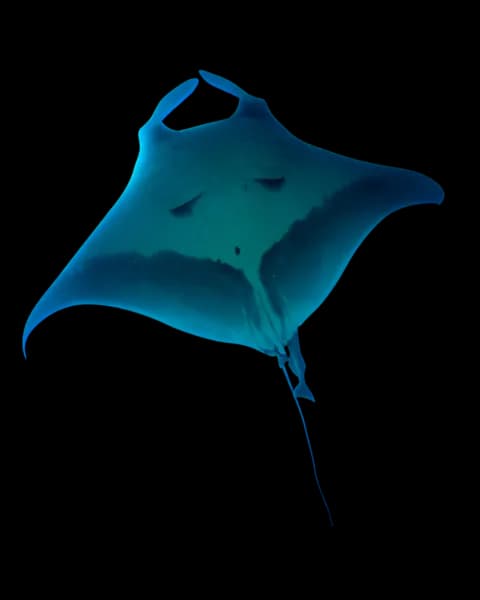
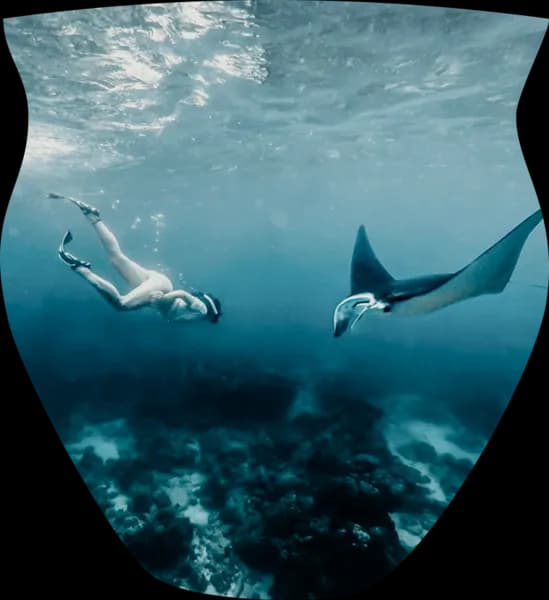
- Manta Point – Swim with giant manta rays! Note that Manta Rays like cold water, so during the hotter seasons in summer, you may not spot many/any of them.
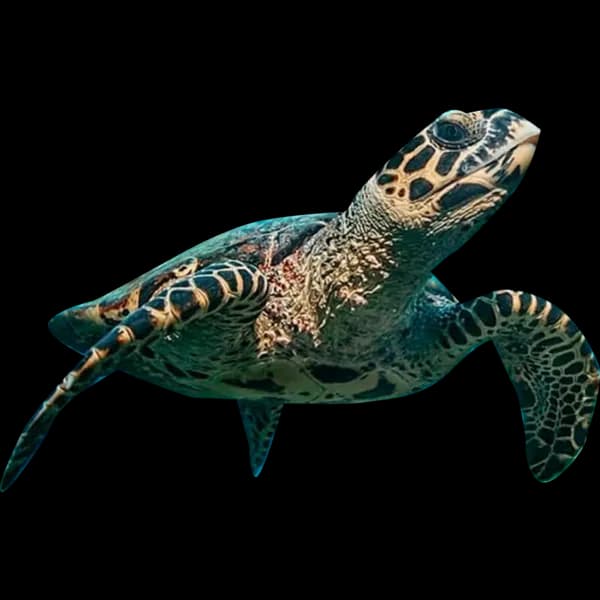
- Siaba Bay (Turtle Bay) – Amazing coral reefs and sea turtles.
Are there strong currents in the water? Is it safe for beginners to snorkel?
For most of the year, the currents at popular snorkelling spots (Kanawa, Siaba, Manta Point) are mild to moderate, making them safe for beginners.
- Dry season (April–December) – Generally calm waters, with mild to moderate currents.
- Rainy season (January–March) – Stronger currents, so snorkelling can be more challenging.
If you’re not a strong swimmer, stay close to your guide and let them know in advance. They will guide you to calmer areas and keep an eye on you in the water. Wearing a life vest is always an option!
What if I don’t want to snorkel or hike?
If you do a join-in trip and decide you prefer not to snorkel or hike (i.e. drop off at some of the locations), you can stay on the boat! Or you can take a private boat and you can then decide on the itinerary you would like and the places you’d want to skip.
Can I hike in Komodo National Park?
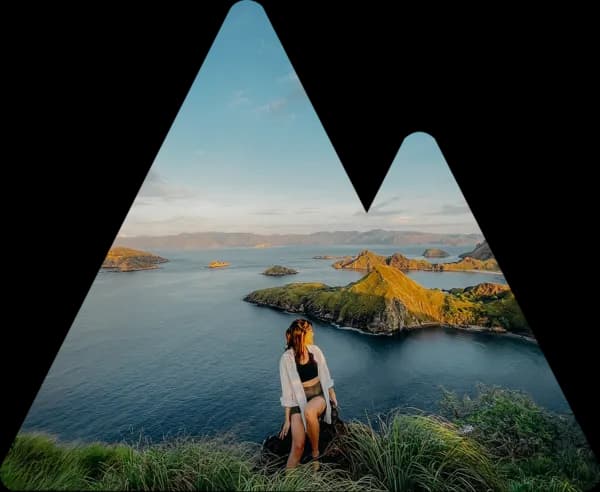
Yes! The hikes are mainly quite short. You will do a short 30-40 minute hike at Komodo island or Rinca island to see the dragons (mainly flat). The most famous hike to see the iconic viewpoint over the islands is Padar Island – 45 minutes up slightly rocky terrain. You can also hike at Kelor Island and Gili Lawa. All the hikes are short and fairly manageable even for a beginner, unless you have mobility issues.
Where should I stay when visiting Komodo National Park?
All join-in boat trips and liveaboard depart from Labuan Bajo (closest town to Komodo National Park). Most people stay in Labuan Bajo before and after their boat trip.
Can I stay overnight on a boat?
Yes! This is called a liveaboard, and it’s the best way to see the park.
How much luggage can I bring on a liveaboard?
Boat cabins are small, so we recommend bringing only one small to medium suitcase per person. If you are in a dorm room, consider bringing a large backpack or a cabin carry-on sized suitcase.
If you have extra bags, most hotels in Labuan Bajo will allow you to store them for free while you're on the boat. It's best to check with your hotel in advance.
What should I pack for a liveaboard?
- Swimwear & rash guard – For snorkelling.
- Hiking sandals or sneakers – For Padar Island.
- Sunscreen & hat – The sun is brutal.
- Seasickness pills – If you get motion sick, bring non-drowsy ones.
- Cash – For park fees (cards aren’t accepted).
What kind of food is available on Komodo tours?
Indonesian food—grilled fish, rice, noodles, veggies. Meals are included on overnight boats. Bring snacks if you’re a big eater as some travellers have reported that the food served on the boats isn’t enough for them.
Are there vegetarian or vegan food options?
Yes, but options vary depending on the boat.
- Luxury Phinisi boats tend to offer better vegetarian and vegan meals with a good variety of dishes.
- Basic boats and lower-end Phinisi boats are hit or miss. Some travellers report that vegetarian options are very limited, sometimes just rice and vegetables.
If you're vegetarian or vegan, inform your tour operator in advance so they can accommodate your needs. If food variety is important to you, it's best to choose a higher-end boat where meals are better planned.
Can I bring my drone?
Guests who bring their own drone for usage within the Komodo National Park are required to purchase a drone ticket at the National Park Office at Labuan Bajo 3 days prior to the trip. The cost of the ticket is 1 million rupiahs so please do prepare enough cash.
Are there any health risks, like malaria or dengue fever?
There’s a low risk of malaria and dengue. Use mosquito repellent, especially in Labuan Bajo.
Do I need any vaccinations before visiting?
None are required.
What are the environmental issues facing Komodo National Park?
The real issue (to us, anyway!) is who benefits from tourism. Local communities have lived alongside Komodo’s wildlife and nature for generations, relying on the land and sea in a way that is naturally sustainable. They know how to protect it because their way of life depends on it. But now, much of the tourism industry is being taken over by large companies from outside. These companies don’t have the same connection to the environment, and their focus is often on profit rather than conservation.
For Komodo to be truly protected, tourism needs to support the people who have always cared for it—not push them aside. Local communities already know how to live in harmony with nature, but they need to be given the opportunity to lead the way in sustainable tourism. That’s why we believe in supporting businesses that are run by locals, that train and hire within the community, and that actively work to preserve the environment—because when tourism benefits the right people, conservation happens naturally.
Here are some of the main environmental issues at Komodo National Park:
Too Many Tourists, Not Enough Control
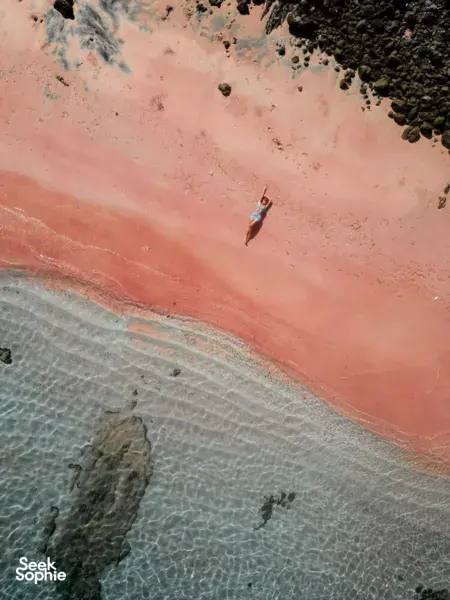
Komodo National Park has become a major tourist hotspot, but there aren’t enough rules in place to manage visitor numbers. Popular spots like Padar Island and Pink Beach see large crowds every day, leading to erosion, habitat destruction, and stress on wildlife. Komodo dragons, in particular, are being disturbed by tourists and guides who try to get too close for photos, sometimes provoking them for a reaction. There are no strict visitor limits, and some boat operators overload their tours, making the impact even worse. Without better management, tourism could permanently damage the very places people come to see.
Pollution & Coral Damage
The park’s waters are famous for their clear blue seas and thriving coral reefs, but pollution is becoming a growing problem. Waste from boats, plastic litter, and sewage disposal are polluting the ocean, especially around popular dive sites. Some boats drop their anchors directly onto coral reefs, breaking and killing them. Careless snorkelling and diving also cause damage, with tourists stepping on coral, touching marine life, or using harmful sunscreens that contribute to reef degradation. If this continues, Komodo’s once-pristine waters may no longer be a paradise for marine life.
Illegal & Destructive Fishing
Fishing inside Komodo National Park is regulated, but illegal fishing still happens, especially in remote areas where patrols are weaker. Some fishermen use destructive methods like blast fishing and cyanide poisoning, which not only kill fish but also destroy entire sections of coral reef. Overfishing is also a concern, as it reduces fish populations and disrupts the delicate marine ecosystem. This threatens species like manta rays and turtles, which rely on healthy reef environments to survive.
Climate Change & Rising Ocean Temperatures
Like many marine ecosystems, Komodo National Park is feeling the effects of climate change. Rising sea temperatures are causing coral bleaching, where corals lose their colour and die, affecting the entire marine food chain. More unpredictable weather patterns are leading to stronger storms, which can damage coral reefs and disrupt marine life. In the long term, rising sea levels could submerge small islands within the park, changing the natural habitat for both land and sea creatures.
Habitat Destruction & Overdevelopment
Labuan Bajo’s rapid tourism growth has led to a surge in hotels, resorts, and infrastructure projects, but not all of these developments are well-managed. Some new hotels and resorts are encroaching on natural habitats, putting pressure on wildlife. Land clearing and deforestation to make way for tourism developments are also altering the landscape and threatening biodiversity. There are also concerns about local communities being pushed out or displaced due to tourism-driven land development.
Weak Conservation Enforcement
Even though Komodo National Park is a protected area, enforcing conservation laws is a major challenge. The park covers a vast area, but there aren’t enough rangers or resources to properly monitor illegal activities like overfishing or habitat destruction. Conservation policies have also been inconsistent, with some government proposals to limit tourism being reversed due to economic concerns. While park entry fees contribute to conservation, the funds are often not enough to cover the costs of protecting such a large and ecologically sensitive area.
What Can Travellers Do to Help?
The best way to protect Komodo National Park is by supporting local, community-led conservation efforts. That’s why we’ve chosen to work with organisations that hire and train locals so they benefit directly from tourism. These groups also run beach clean-ups and teach guides how to interact with wildlife responsibly. When travellers choose these businesses, they’re helping build a more sustainable future for Komodo.
It’s also important to understand that Komodo and Labuan Bajo are not like Bali—the tourism infrastructure is still developing. There’s no drinkable tap water, boats don’t have built-in water filters, and many guides haven’t had access to proper wildlife training.
This isn’t because they don’t care—it’s simply because those resources haven’t been widely available yet.
Instead of expecting everything to run perfectly, travellers can make a real difference by being patient, understanding, and supporting businesses that are actively improving things from the ground up. Small choices—like bringing a reusable water bottle, booking with ethical tour operators, and respecting local wildlife—go a long way in making tourism in Komodo more sustainable.
What types of boats are available for tours?
There are three main types of boats:
- speedboats (faster, safer, no overnight stay)
- slow basic boats (cheaper, but lower safety standards)
- slow phinisi boats (Deluxe traditional boats with better crew, food and safety standards).
What’s the difference between the 1-day, 2-day, and 3-day boats?
Basically, 1-day boats are for quick sightseeing, 2-day boats are budget backpacker options, and 3-day boats offer budget to luxury stays. The most popular way to see Komodo National Park is by a 3D2N boat, followed by a 1 day boat, and lastly the 2-day boats.
1-Day Boats
There are 2 types of 1 day boats.
- Speedboats – The fastest way to see Komodo. Covers up to 6 locations in one day.
- Basic slow boats – Cheaper, but only visit 3 locations and take much longer.
- These will usually sail every day, so you can have more flexibility in your schedule.
2-Day, 1-Night (2D1N) Boats
Only the basic slow boats will sail the 2D1N route as this is the least popular itinerary.
- Basic slow boats – These are very basic, hostel-style boats. They move slowly and only visit 3 spots per day. Safety standards are not great.
- These will usually sail every day, so you can have more flexibility in your schedule.
3-Day, 2-Night (3D2N) Boats
For 3D2N, which is the most popular itinerary, you have a choice of a basic boat or a Phinisi boat:
- Basic slow boats – Like a floating hostel. No private rooms, poor safety standards, and some boats sink every year.
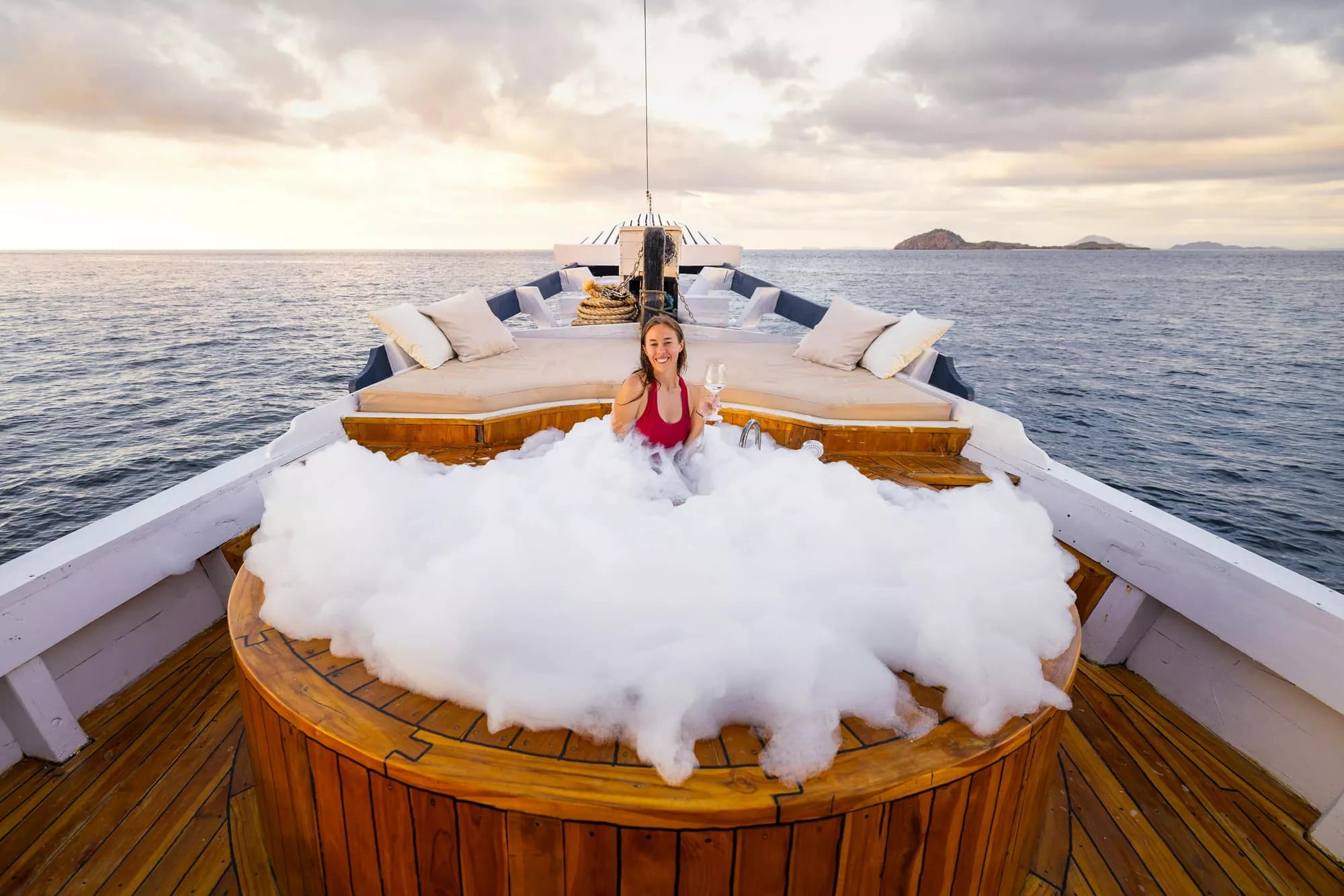
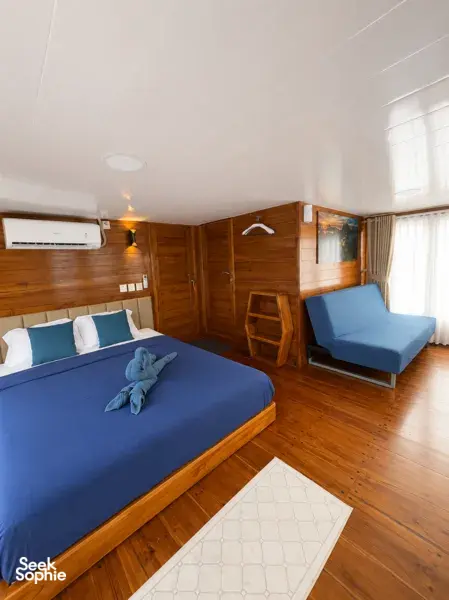
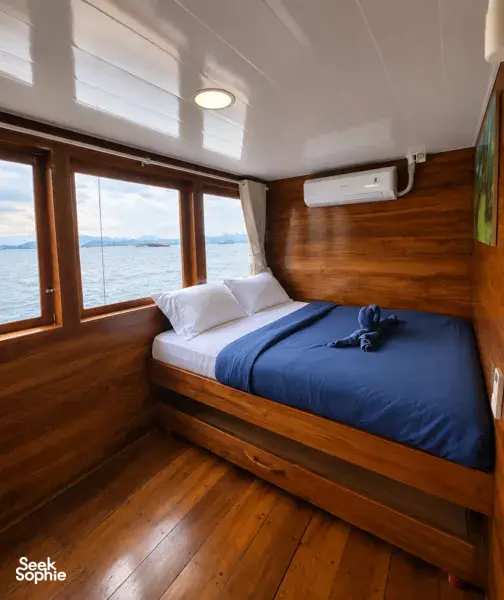
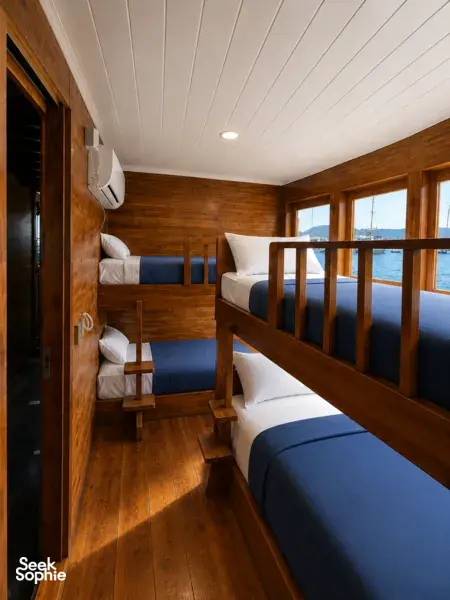
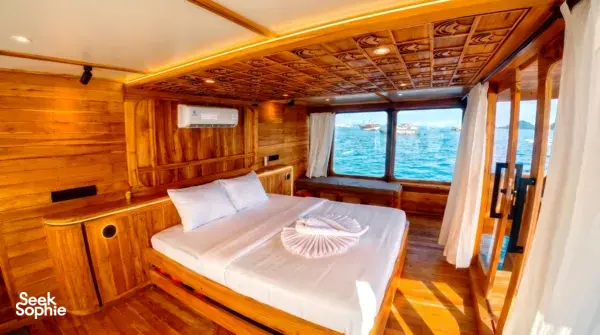
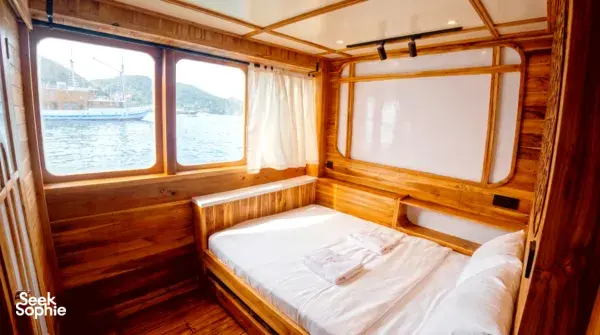
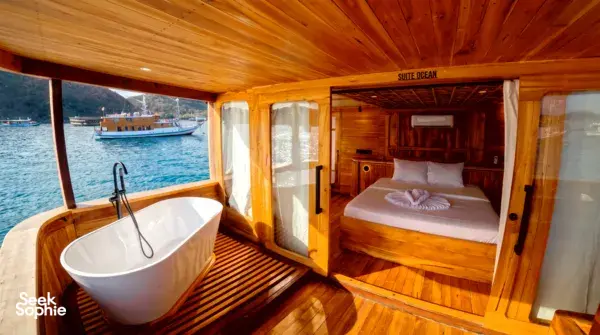
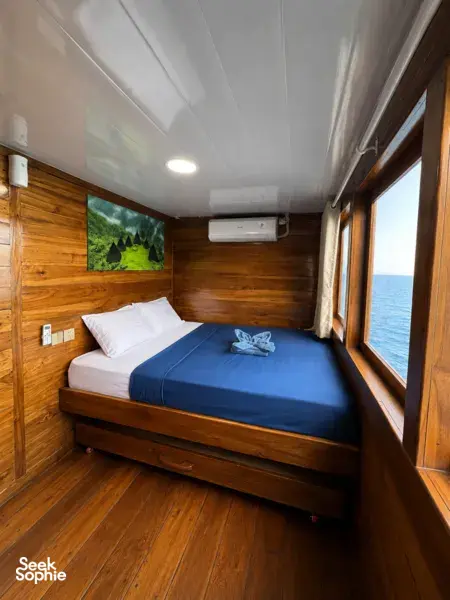
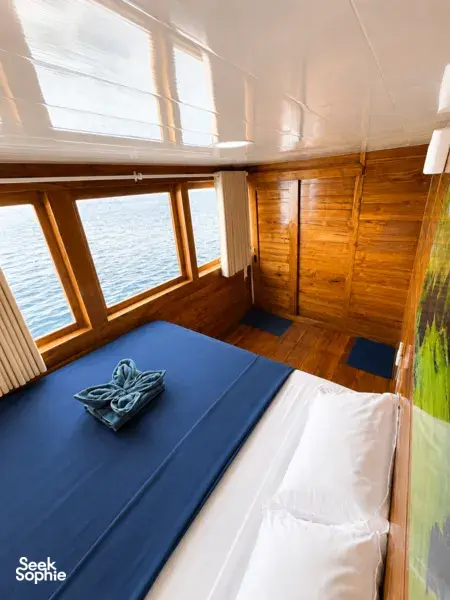
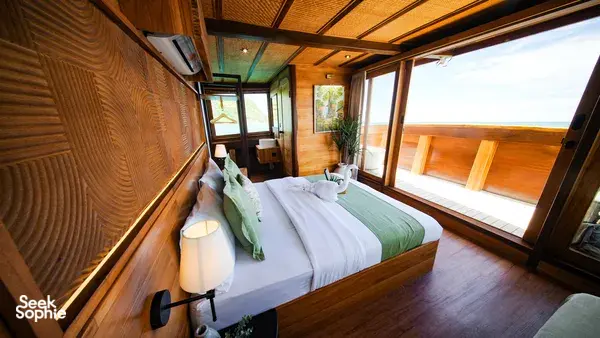
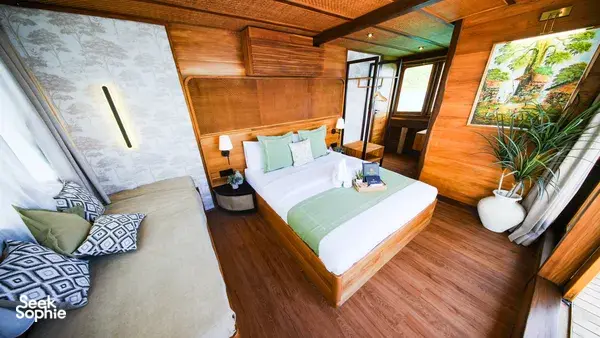
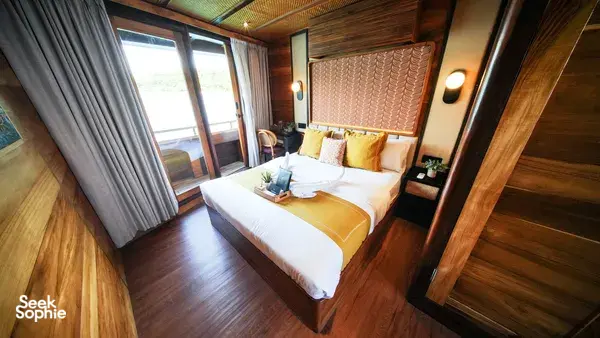
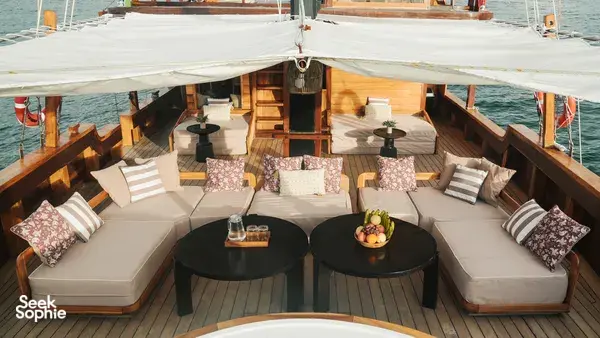
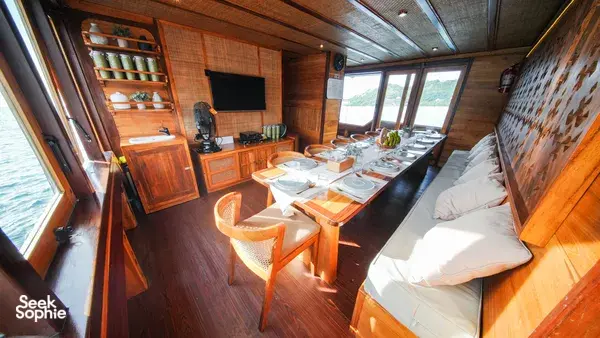
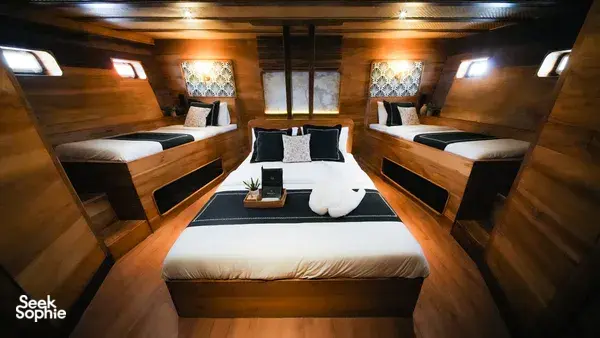
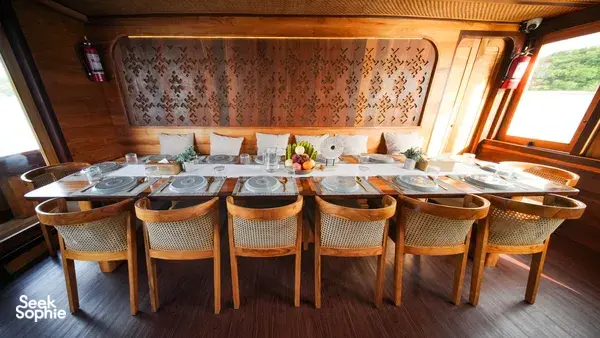
- Phinisi boats (Deluxe boats) – Like 3-4.5 star hotels on water. Private rooms, better food, and much higher safety standards.
- The 3D2N boats tend to sail weekly. Most of them sail once a week on Fridays in low season, and twice a week in peak summer season. We'd recommend a mid-week sail in peak season.
What’s the difference between visiting Komodo Island and Rinca Island?
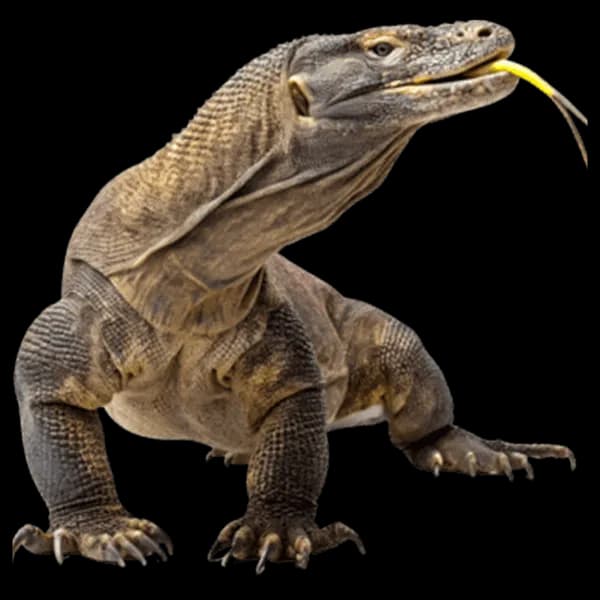
Komodo Island and Rinca Island are the only two islands in Komodo National Park where you can see wild Komodo dragons. Most tours visit one or the other, but not both.
- Rinca Island – Easier to see dragons. It’s smaller, with boardwalks and a ranger station where dragons often gather. Some travellers describe it as feeling a bit like Disneyland—more structured and accessible. Even during mating season (August), you’ll still see dragons here.
- Komodo Island – More wild, harder to spot dragons. The island is vast, and during mating season (August), adult dragons disappear into the forest to breed. If you visit during this time, you’ll likely only see smaller dragons (which look more like monitor lizards).
If seeing Komodo dragons up close is your main goal, Rinca Island is the better choice. If you prefer a more natural, untamed setting, go for Komodo Island.
Is it guaranteed to see Komodo dragons?
No, Komodo dragons are wild animals, so sightings are never 100% guaranteed—which is a good thing because it means they are truly wild. Some tips on seeing them:
- If you visit during mating season (especially on Komodo Island), it’s much harder to spot them because the adult dragons retreat into the forest to mate.
- However, most travellers still end up seeing dragons, even during mating season. If there are no adult dragons around, you’ll likely see younger dragons, which look more like monitor lizards.
- Rinca Island offers more reliable sightings because it’s smaller, and dragons tend to gather near the ranger station. So if seeing a Komodo dragon up close is your main goal, visiting Rinca Island (rather than Komodo Island) will give you a better chance.
Are there hotels on Komodo islands?
No, there are no hotels inside Komodo National Park. If you’re visiting Komodo, you have two accommodation options:
- Stay in Labuan Bajo – This is the best option if you're joining a boat tour. All join-in boat trips and liveaboards depart from Labuan Bajo, so staying here makes everything simple.
- Stay on a nearby island – Some hotels advertise themselves as being on an "island near Komodo," but these are not inside the national park—they’re on neighbouring islands.
Important to know if you stay on a nearby island:
- Join-in boat trips will not pick you up from the island. You’ll need to take a boat to Labuan Bajo early in the morning to join your tour.
- Liveaboards do not pick up from islands. All liveaboard trips depart from Labuan Bajo, so you must arrange your own transfer to town before departure.
- If you book a hotel on a nearby island, make sure they offer frequent and easy transport to Labuan Bajo. Otherwise, getting to your tour can be difficult.
Bottom line: If you're planning to join a boat tour or liveaboard, it’s much easier to stay in Labuan Bajo rather than on a neighbouring island.
Is there wifi on board?
On the luxury boats there is wifi on board but the wifi signal is very weak in Komodo National Park. So if you’re on a liveaboard, you’re going to be disconnected 80% of the time even if you have 4G. Note that for people planning to bring a drone, this could also be an issue for your drone connection!
What happens if the weather is bad? Will the boat still go?
Boat trips are usually not canceled outside of the rainy season (Jan-March). If you’re visiting between April and December, the weather is generally stable, and cancellations are rare.
During the rainy season (January–March), boat trips may be cancelled if conditions are unsafe. The harbour master decides the day before whether boats can sail. If conditions are too dangerous, all trips will be canceled for the day.
To avoid cancellations, it’s best to avoid traveling during the rainy season. If you do travel between January and March, here’s what to keep in mind:
- Plan extra buffer days in Labuan Bajo. This gives you flexibility to reschedule if your trip is canceled.
- Liveaboards are more likely to be canceled than 1-day speedboat trips. Speedboats are more stable and can often operate when slow boats cannot.
- The decision is made the day before, so be prepared for last-minute changes. You’ll only know the night before whether your boat will sail.
If you're traveling in the rainy season and want to minimize disruptions, consider booking a 1-day speedboat trip instead of a liveaboard, as speedboats are less affected by rough seas.
What if I get seasick?
The waters in Komodo aren’t very choppy outside of rainy season, but if you’re prone to seasickness, here’s how to reduce discomfort and still enjoy the trip:
- Best option: Take a 1-day speedboat – Speedboats move faster and are more stable than slow boats, making them the best choice for avoiding motion sickness.
- If you want to do a 3D2N liveaboard: Choose a larger boat (16+ person capacity) – Bigger boats are more stable and rock less in the water.
- Avoid traveling from January to March – This is rainy season, and the seas are much rougher. If you’re prone to seasickness, it’s best to visit outside this period.
- Take non-drowsy seasickness pills – Bring motion sickness medication that won’t make you sleepy, so you can still enjoy the trip.
Are Komodo dragons dangerous?
Yes, but attacks on humans are extremely rare. Komodo dragons are wild predators, but they don’t see humans as prey unless provoked. Most attacks happen when people ignore safety rules. Respect their space, and you’ll be safe.
How to stay safe:
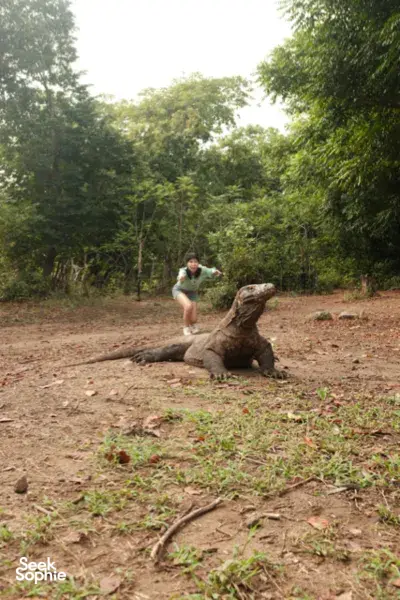
- Do not approach or chase them for selfies – They may see sudden movements as a threat.
- Never wander away from your ranger – They are trained to handle encounters.
- Move slowly if a dragon gets too close – Do not run; back away calmly.
Are there medical facilities nearby?
Yes, but medical care is basic. For serious emergencies, you may need to be evacuated to Bali.
Is it safe in Labuan Bajo for solo female travellers?
Yes Labuan Bajo is as safe as Bali and crime rates are relatively low. You can walk on the streets alone without being hassled as a female travellers. Just note that some of the streets still don’t have street lamps so just keep your wits about you like you would in any big city and you will be fine.
Are Komodo trips safe for solo female travellers?
Yes, Komodo trips are generally safe for solo female travellers. If you join a group trip, you'll be with other travellers the entire time, so you won’t be alone.
The only thing to be aware of is boat accommodation. Some dorm-style rooms on liveaboards have double beds that may be shared with another traveller. If this is the case, it will be clearly mentioned in the listing description. If you don’t want to share a bed, look for boats that offer single dorm beds or private cabins.
Are there private cabins on liveaboards, or will I have to share with strangers?
Yes there will be private cabins on liveaboards. If you book a private cabin, you will not need to share with strangers.
Is Komodo National Park suitable for kids?
Yes, but it depends on the child’s age, physical ability, and comfort with outdoor activities.
Things to consider
- Hiking – Some treks, like Padar Island, are steep, rocky, and can take up to an hour. If your child can’t hike on their own, you’ll need to carry them.
- Snorkelling – Expect 45 minutes to 1.5 hours of swimming per session. Currents are usually mild to moderate, but if your child can’t snorkel, they’ll have to sit out.
- Boat travel – The trips involve long hours on a boat and the water can get choppy. If your child gets easily seasick or restless, a 1-day speedboat trip is better than a 3D2N liveaboard.
Babies & toddlers
- We’ve seen babies on speedboat trips and toddlers on 3D2N trips, but this depends on how well they handle boats and outdoor conditions.
- Some boats offer free or discounted trips for kids under 2–5 years old. Check the tour description before booking.
If your child loves the outdoors and is comfortable with boat travel, they’ll likely enjoy Komodo National Park. If not, a shorter 1-day speedboat trip may be a better choice.
Are the Komodo tours ethical?
Most are, but some unethical practices still happen. Komodo National Park is still quite undeveloped, and many rangers and guides are not well-trained in wildlife conservation. A lot of poor practices continue because travellers expect and demand them—so the best way to help is by speaking up when you see something wrong.
❌What's not ethical (Avoid these):
- Whale shark feeding (Lombok-Komodo trips) – Some operators feed whale sharks to attract them for tourists. This disrupts their natural behaviour and makes them dependent on humans. We do not recommend the Lombok-Komodo boat trip for this reason.
- Manta ray overcrowding – Some guides allow snorkellers to chase and crowd manta rays, which stresses them out. If you see this happening, speak up—guides will usually listen if tourists raise concerns.
- Komodo dragon chasing – Some rangers on Komodo and Rinca Islands chase or provoke dragons to get them to move for better tourist photos. This stresses the dragons and is not good practice. If you see this, say something to the guide and fellow travellers.
✅What is ethical
- Komodo dragons are not fed for tourists – Unlike some other wildlife attractions, the dragons in Komodo National Park are truly wild. They are not lured with food (though they do sometimes scavenge leftovers near ranger stations).
Do the rangers drug the Komodo dragons?
No! But a lot of people think they do because the dragons often look sluggish. Here’s what’s actually happening:
- Reptiles slow down in the heat – Like all cold-blooded animals, Komodo dragons regulate their body temperature by conserving energy in extreme heat. When it’s hot, they move less to avoid overheating.
- They eat massive meals – A Komodo dragon can eat 80% of its body weight in one meal, and after that, it doesn’t need to eat for weeks. This makes them seem even lazier.
- Some stay near the ranger station – Dragons are opportunistic scavengers. Some hang around ranger huts, where they can sniff out food waste, making them even less active.
What can we do when we see unethical behaviour?
At the end of the day, many poor practices happen because tourists want to take selfies with wildlife, and guides want to please their guests. If we refuse to take part and speak up when we see something wrong, guides and rangers will stop allowing it.
If you see unethical behaviour:
- Point it out to the guide or ranger.
- Let fellow travellers know it’s not good practice.
- Respect the wildlife by keeping a safe and non-intrusive distance.
The more we push for responsible tourism, the better it will be for the animals—and future travellers!
What do I need to wear for safety and comfort?
Labuan Bajo and Komodo Islands are in Flores, which is a Christian-majority region, so dress codes are more relaxed than in other parts of Indonesia. Unlike areas with stricter Islamic customs, wearing swimwear, sleeveless tops, and shorts is fine, especially onboard a boat tour.
Can I go on my period?
Yes you can. Some people are concerned that Komodo dragons may be aggressive towards people on their periods as they can smell blood, but that is not a risk at all.
As with any wildlife, whether or not you're on your period, just keep a sensible distance away from the wildlife and you'll be ok.
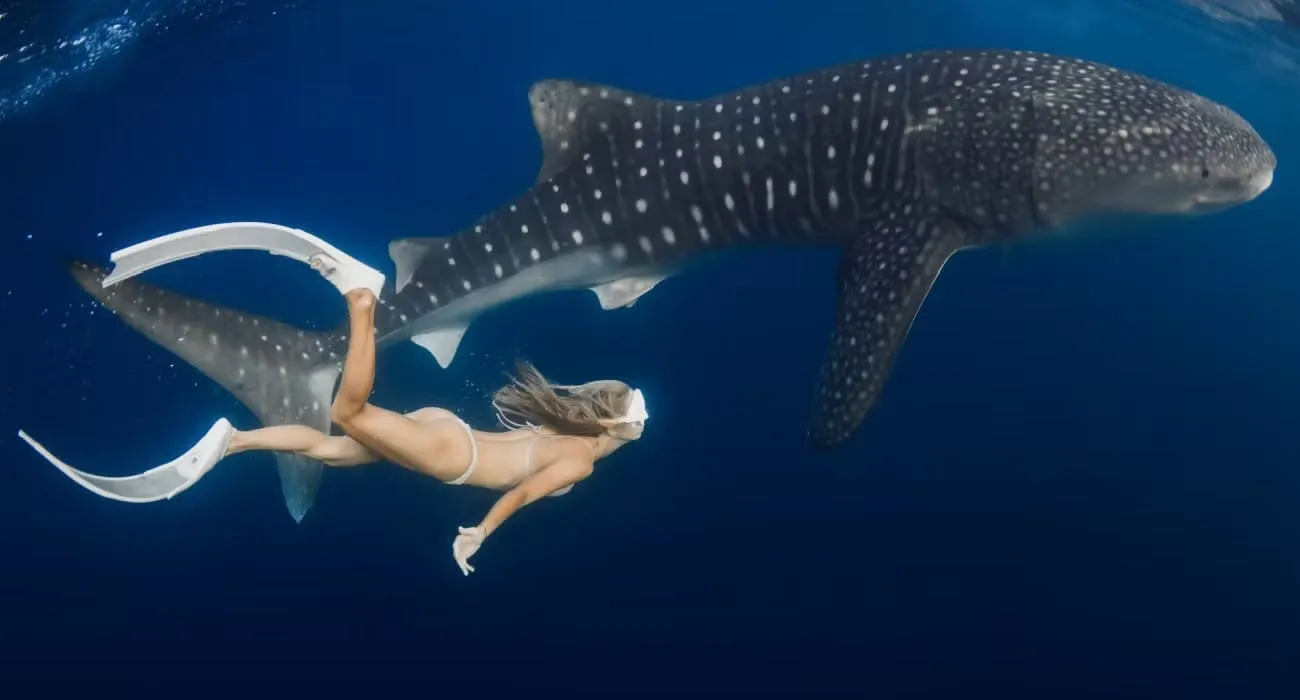
Why don't you offer the Saleh Bay whale shark experience?
We used to offer Lombok–Komodo boat trips (which includes Saleh Bay), but after looking into the Saleh Bay whale shark experience more closely, it didn’t meet our standards. So we stopped selling it.
The whale sharks there are not being seen in the wild. They are being fed by fishermen to keep them in one place for tourism.
This isn’t harmless. It changes how they behave - they stop migrating, rely on humans for food, and start approaching boats. Over time, this puts them at higher risk of injury, boat strikes, and even poaching.
On top of that, interactions are often not well controlled. It’s common for multiple boats and swimmers to crowd around the sharks, which is stressful for them and not a respectful way to experience wildlife.
For us, this crosses a line. Wildlife should be wild, not conditioned or manipulated by people for guaranteed sightings.
Once we understood what was really happening, we made the decision to stop offering it. If you want to go deeper, we’ve shared more here.
We’re really careful with wildlife experiences at Seek Sophie, so we only support ones where animals remain wild and interactions are respectful. That's why we don't offer the Saleh Bay experience here.
How long is a day trip to Komodo National Park from Labuan Bajo?
It’s a full day. Most tours pick you up from your Labuan Bajo hotel around 5–6am and return around 4–6pm, depending on the weather and sea conditions.
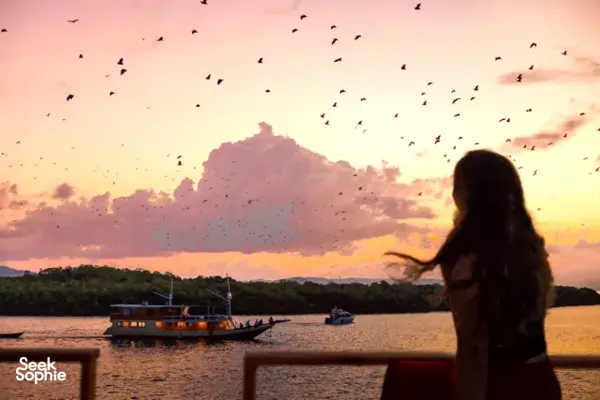
If you charter a private speedboat and add Kalong Island to see the bats at sunset, you’ll usually return at around 8pm. We recommend arriving in Labuan Bajo the day before your trip and flying out the following day, as boat timings can change.
What’s the difference between a Komodo day trip and a liveaboard?
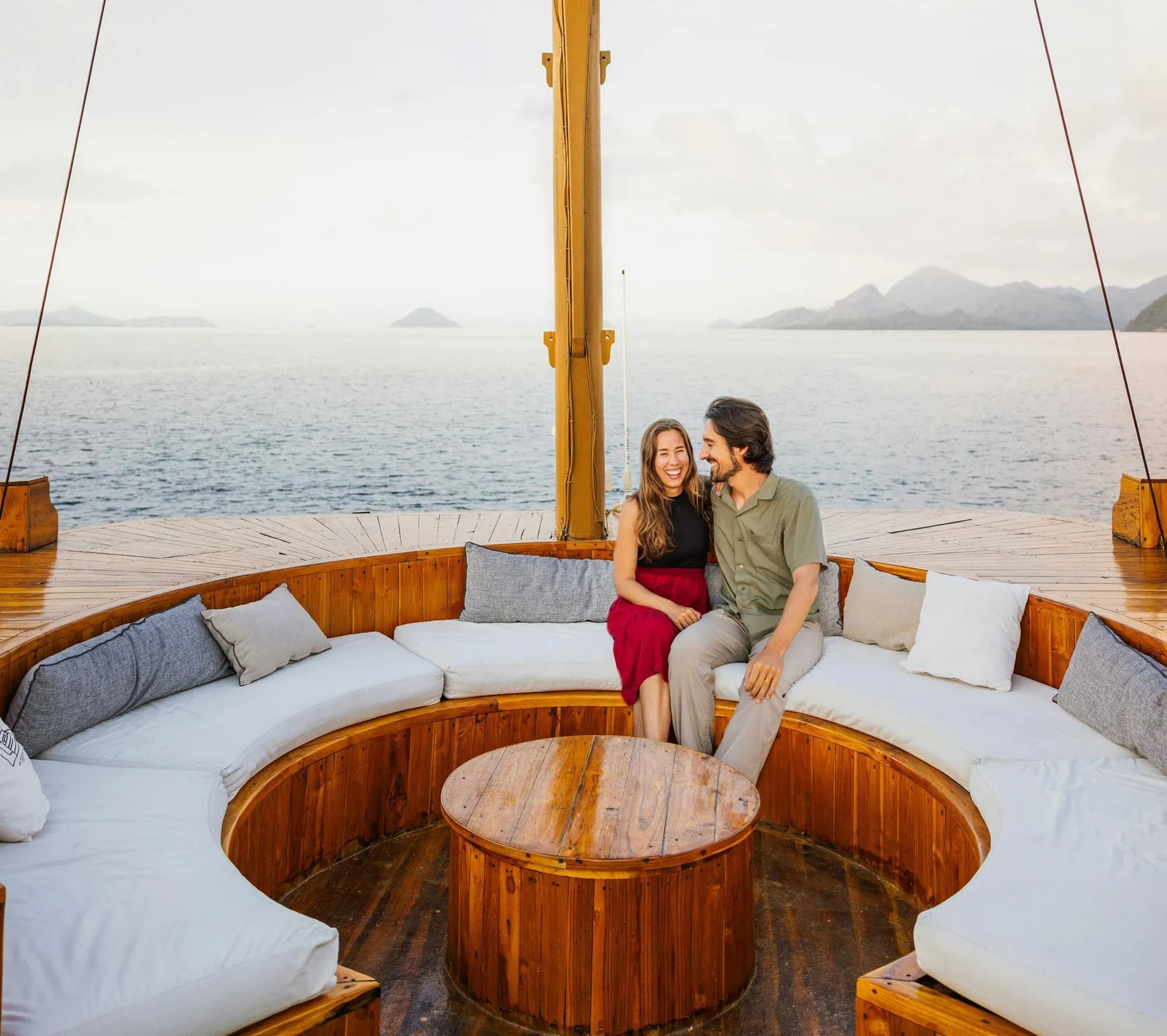
On a liveaboard, you sleep on the boat inside Komodo National Park—there are no hotels in the park. You’ll travel at a slower pace, wake up surrounded by the islands and can visit places such as Padar at sunrise and Kalong Island at sunset.
A one-day speedboat is faster and more packed, but it still covers around six stops—the same number as a typical 2D1N liveaboard. If you do a traditional 1 day slow boat, it usually covers only around three stops in a day.
So a liveaboard isn’t necessarily about seeing more places. It’s about having more time at each stop and experiencing Komodo’s quieter mornings and evenings.
Can you see Komodo dragons on a day tour, or do you need an overnight trip?
Yes, you can see Komodo dragons on a day trip. Standard sightseeing tours visit either Komodo Island or Rinca Island for a ranger-guided walk.
Rinca offers more reliable sightings and has boardwalks, while Komodo Island feels wilder and sightings can be less predictable. As the dragons are completely wild, sightings are never guaranteed. They can also be harder to spot during mating season in July and August.
What is typically included in a Komodo National Park boat tour?
Most tours include transfers from your hotel in Labuan Bajo town, the boat, fuel, crew and guide, meals and drinking water, as well as snorkelling equipment. Liveaboards also include your cabin or sleeping space onboard.
Komodo National Park fees are usually not included and must normally be paid in cash. Inclusions vary between boats, so check the individual trip page carefully—especially for park fees, towels and snorkelling gear.
However note that many Seek Sophie Komodo boats now include Komodo National Park fees - please check in the inclusions when you book!
Is Komodo National Park worth visiting without staying overnight?
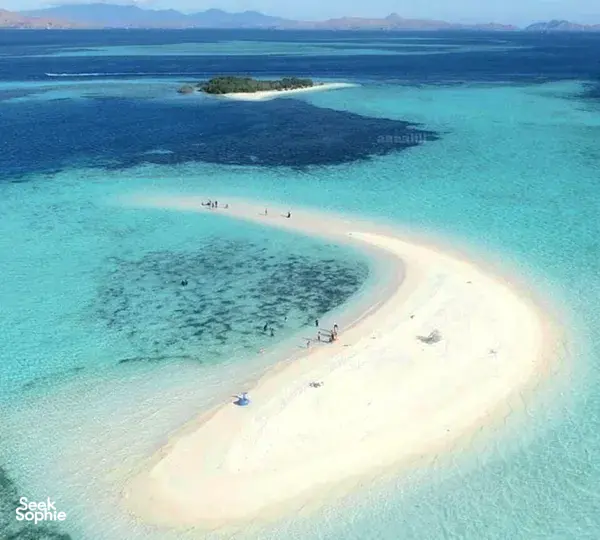
Definitely. A one-day speedboat covers around six stops—the same number as a typical 2D1N liveaboard. You’ll usually still see the dragons, hike Padar Island, visit a Pink Beach and go snorkelling.
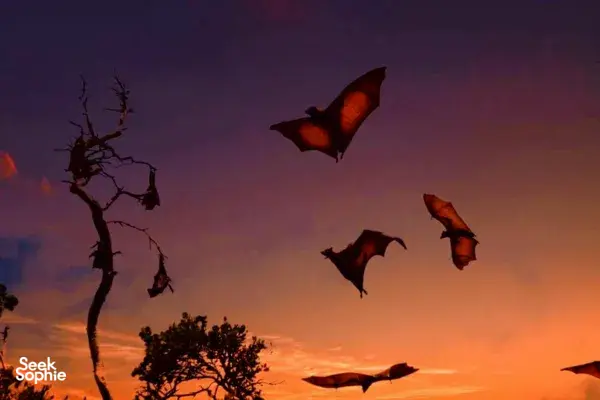
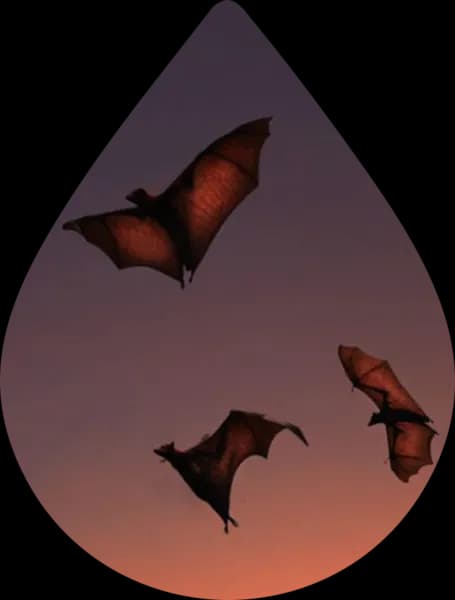
An overnight trip gives you a slower pace, quieter mornings and evenings, and the chance to see the bats flying from Kalong Island at sunset.
If you only have one day and don’t want to miss Kalong, book a private speedboat that can stay for sunset. You’ll usually return to Labuan Bajo at around 8pm.
How many islands do you visit on a Komodo boat tour?
It depends on the type of boat and the length of your trip:
- Traditional slow boat day trip: around three stops
- Speedboat day trip: around six stops
- 2D1N liveaboard: around six stops
- 3D2N liveaboard: around nine stops
Operators often say “islands,” but some are actually snorkelling spots, beaches or viewpoints—for example, Manta Point isn’t an island. Exact itineraries can also change with the weather, currents and park conditions, so it’s better to check which places are included rather than looking only at the number of stops.
Is it safe to be near Komodo dragons during a guided tour?
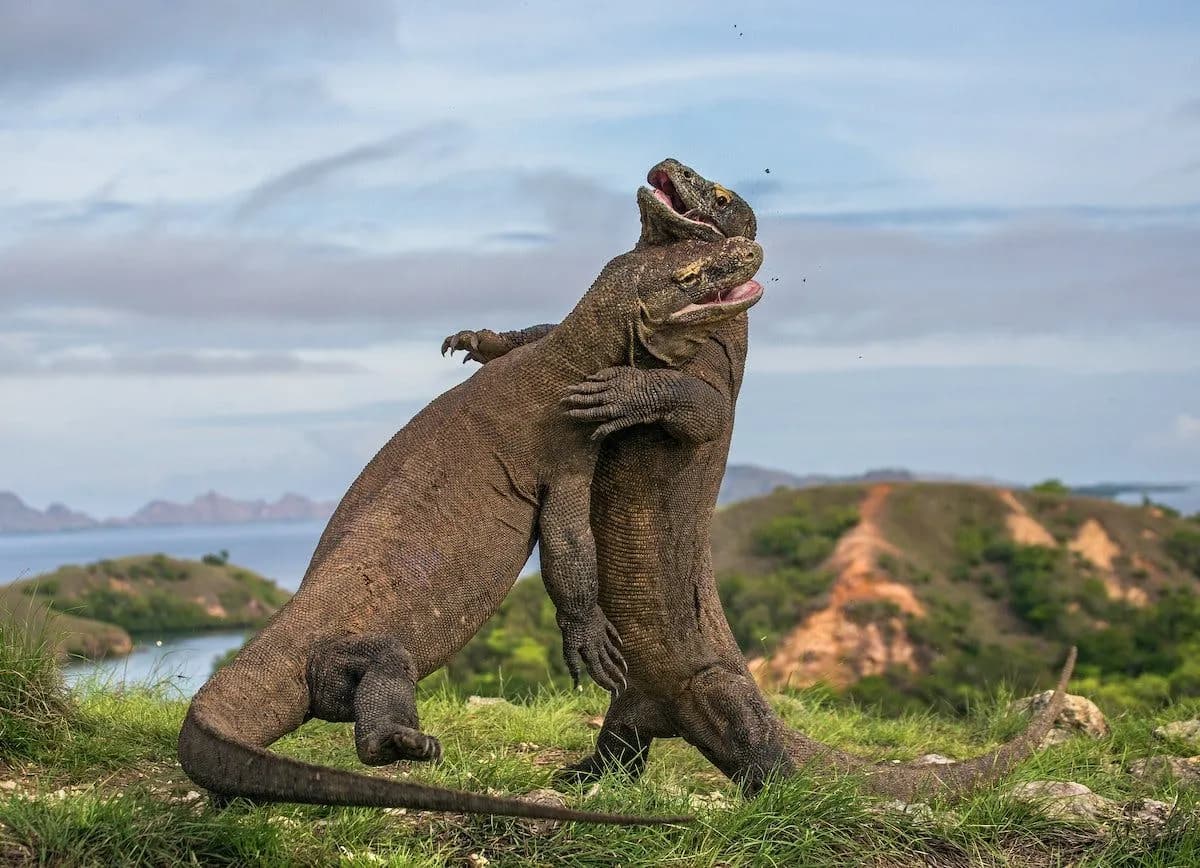
It’s generally safe to see Komodo dragons with a park ranger, but we’d still keep a good distance. No close-up selfies and keep at least 5 metres away! The dragons may look slow and sleepy, but they can move surprisingly fast and have a dangerous venomous bite.
It’s also worth knowing that rangers are appointed by the national park, not by your boat operator, and often are not trained in conservation. Some local rangers are comfortable getting very close because the indigenous Ata Modo people traditionally regard the dragons as their siblings. And less well-trained rangers may also crowd or chase a dragon to get a photo for visitors.
Please don’t follow their lead if this happens. Ask them to stop and give the dragon space: chasing and crowding causes stress and disrupts its natural behaviour. The best encounter is one where you quietly observe these incredible animals in the wild, on their terms.
Can I bring my own food and drinks?
Yes! You can bring your own food and drinks aboard. Most boats will allow you to bring your own alcoholic beverages but please do check in advance to make sure.
What is a Phinisi boat?
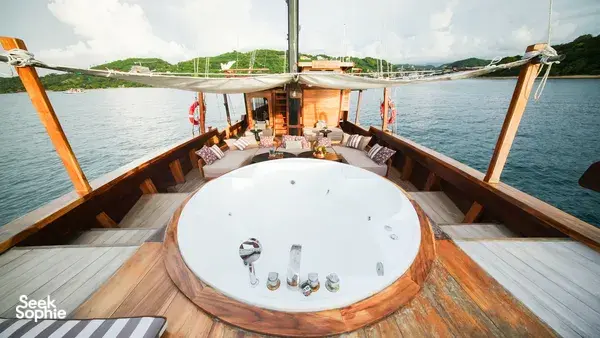
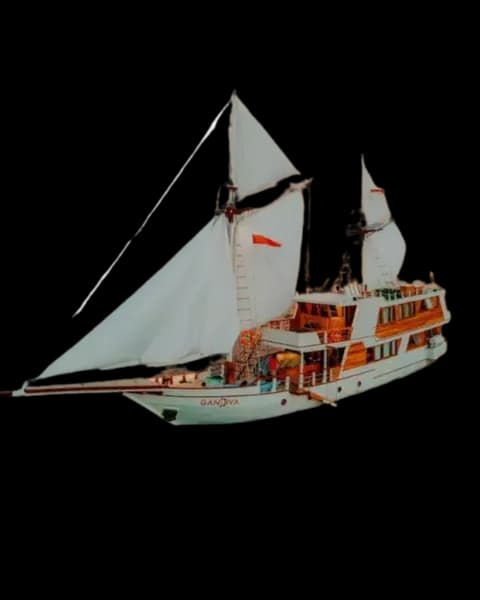
A Phinisi is a traditional Indonesian wooden sailing boat. It’s used for longer liveaboard trips (3 days or more) and is much better than basic slow boats in every way—comfort, safety, food, and crew.
Here’s how they compare:
- Phinisi boats – Like a 3 to 4.5-star hotel on water. Private rooms, better food, trained crew, and higher safety standards.
- Basic slow boats – More like a floating hostel (1-star standard). Dorm-style sleeping, simple meals, and poor safety standards. Some sink every year.
If you want a safe and comfortable experience, a Phinisi is the best choice for a 3D2N trip.
Are there private tours available?
Yes! A private boat is perfect if you want flexibility and fewer crowds.
- You can customise your itinerary to avoid the busiest times (join-in tours all follow the same schedule).
- Ideal for families with kids or elderly travellers—go at your own pace.
- Spend more time at your favourite spots for photography, relaxing, or exploring.
Is there a limit on the number of visitors to Komodo Islands per day?
No official limit, but some spots get very crowded in peak season (July–August).
How to avoid the crowds at Komodo?
We’ve been to Komodo over 15 times, and it’s changed a lot—from having hardly anyone and no streetlights, to queues at Padar Island! Here’s how to dodge the crowds:
1. Skip peak season: Avoid June to August and steer clear of Indonesian public holidays, especially Raya.
2. Go midweek: Weekdays are quieter than weekends. Most 3D2N boats leave on Fridays, but there are weekday options too.
3. Pick the right boat: Choose one that avoids the usual crowd-heavy spots. For instance, head to Padar at sunset instead of sunrise—it’s a game-changer.
![Komodo Islands: Everything You Need to Know & How to Avoid the Crowds [2026]](/_next/image?url=https%3A%2F%2Fd18sx48tl6nre5.cloudfront.net%2Fwebp_xl_d9b99943af4ed7cc753b66ce9ba57eda.webp&w=3840&q=75)